
Popular Dystopian Books: From Orwell to The Hunger Games

Introduction
The concept of utopia—a perfect, harmonious society—has long served as a blueprint for human aspiration. Dystopia, however, functions as its shadow. Rather than presenting a perfected world, dystopian literature depicts a terrifying existence where the individual is often crushed by a central tyranny or a decaying social structure, even when the surface appearance of that world seems stable, shiny, or even prosperous [1]. While utopias ask us what we might become at our best, dystopias ask us what we might become at our most controlled, most desperate, or most dehumanized.
To read a dystopia is to engage in a form of social autopsy. These narratives dissect contemporary anxieties—be they technological, political, or environmental—and project them to their most extreme, logical conclusions. From the surveillance states of the mid-twentieth century to the high-stakes survivalism of modern young adult fiction, the genre has evolved from a warning about totalitarianism into a vast spectrum of speculative possibilities.
The Foundational Trinity: Pillars of the Genre
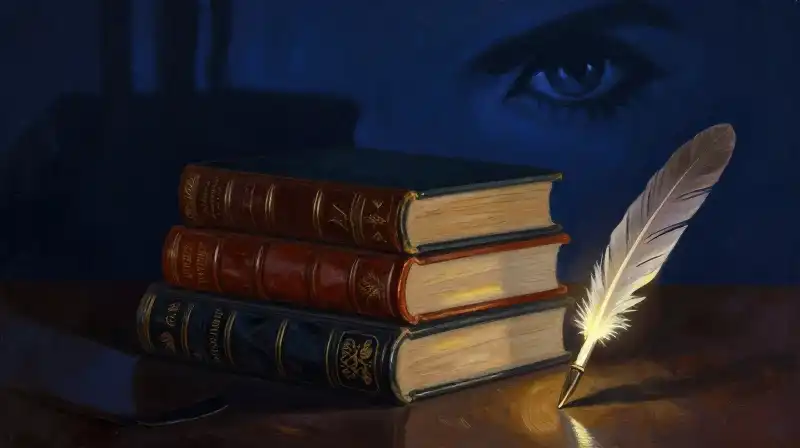
Before the genre expanded into the diverse subgenres we recognize today, a “holy trinity” of texts established the parameters of dystopian storytelling [2]. These works do not merely describe bad futures; they define the mechanisms of oppression that subsequent authors would build upon.
- George Orwell’s 1984: Often cited as the foundational text that kickstarted the modern genre, Orwell’s work focuses on the psychological and linguistic erosion of the individual [1]. Through the figure of Winston Smith, Orwell illustrates how a state can control not just actions, but thoughts, through constant surveillance and the manipulation of truth.
- Aldous Huxley’s Brave New World (1939): Where Orwell feared the pain of oppression, Huxley feared the pleasure of it. His dystopia is one of biological engineering and hedonistic distraction, where citizens are conditioned to love their servitude through stability and instant gratification [2].
- Ray Bradbury’s Fahrenheit 451: Bradbury explores the death of intellect and empathy through the lens of censorship. In this world, “firemen” do not put out fires; they burn books, targeting the very source of critical thought and cultural memory.
The Evolution of Dystopia: From Social Commentary to YA Rebellion
As the genre matured, it branched into different modes of storytelling, moving from the “hapless average man” placed at the center of systemic shifts, as seen in the works of Philip K. Dick [2], to high-octane narratives focused on systemic rebellion.
Young Adult Dystopian Fiction
In recent decades, dystopian themes have become a staple of young adult literature, often utilizing high-stakes tension to mirror the adolescent struggle for identity and autonomy. These stories frequently center on young protagonists fighting to dismantle oppressive regimes:
- Suzanne Collins’ The Hunger Games: A quintessential example that focuses on the struggle against a Capitol that treats its citizens as fodder for televised entertainment [1].
- Veronica Roth’s Divergent: This narrative utilizes a futuristic Chicago divided into five personality-based factions—Abnegation, Amity, Candor, Dauntless, and Erudite—to explore themes of social stratification and the fear of being “unclassifiable” [1].
Literary and Speculative Perspectives
Beyond the blockbuster narratives, many authors use the genre to explore more nuanced or “weird” speculative premises, often blending social critique with magical realism or profound existential dread.
- Margaret Atwood: A towering figure in the genre, Atwood’s The Handmaid’s Tale and the Maddaddam trilogy (beginning with Oryx and Crake) offer searing critiques of patriarchy and environmental collapse [2].
- N.K. Jemisin: In the Broken Earth trilogy, specifically The Fifth Season, Jemisin presents a world where characters like Essun must navigate a dying land and a collapsing empire, blending geological catastrophe with systemic oppression [1, 2].
- Cormac McCarthy: His novel The Road is widely considered a masterpiece of the post-apocalyptic subgenre, stripping the world of everything but the most primal, desperate instincts for survival [2].
- Speculative Twists: Some modern works move away from traditional political tyranny toward more singular, uncanny premises. Neal Shusterman’s Scythe imagines a world where death has been conquered, leaving “Scythes” to cull the population as a grim necessity [1]. Similarly, Peng Shepherd’s The Book of M explores a world where characters lose their memories alongside their shadows, and Nikki Erlick’s The Measure uses boxes that predict lifespans to examine the fragility of human existence [1].
| Genre Approach | Primary Focus | Key Characteristics |
|---|---|---|
| Classic Dystopia | Totalitarianism & State Control | Surveillance, loss of history, suppression of thought (e.g., Orwell, Huxley). |
| YA Dystopia | Rebellion & Identity | High-stakes survival, factionalism, fighting the establishment (e.g., Collins, Roth). |
| Post-Apocalyptic | Survival & Decay | Collapsing civilizations, scarcity of resources, primal human nature (e.g., McCarthy). |
| Speculative/Weird | Conceptual/Existential Shifts | Uncanny premises, magical realism, unique biological or social rules (e.g., Shusterman, Erlick). |
Frequently Asked Questions
What is the best-selling dystopian novel of all time?
While sales figures fluctuate and can be difficult to verify across all global markets, George Orwell’s 1984 and Suzanne Collins’ The Hunger Games series are consistently cited as among the most commercially successful and widely read dystopian works in history.
Why Dystopia Matters
Dystopian literature is rarely about the future; it is almost always about the present. By magnifying current trends—the erosion of privacy, the rise of hyper-consumerism, or the degradation of the environment—these stories force us to confront the potential trajectories of our own society. Whether through the “villain story” of President Snow in The Ballad of Songbirds and Snakes or the unique perspective of a valet robot in Adrian Tchaikovsky’s Service Model [1, 2], the genre provides a mirror. It challenges us to recognize the cracks in our own world before they become the foundations of a new, darker reality.
Sources
- 20 Dystopian Books That Will Keep You Up All Night — rachelagreco.com
- Suggest me a dystopian book or book series : r/suggestmeabook — reddit.com
Frequently Asked Questions
What is the best selling dystopian novel of all time?
The article does not name a single best-selling novel, noting that sales figures are difficult to verify. However, it states that George Orwell’s 1984 and Suzanne Collins' The Hunger Games series are consistently cited as among the most commercially successful and widely read works.
Related Articles