Little Dorrit Analysis: Social Critique, Class & Bureaucracy

Introduction
To step into the world of Charles Dickens’s Little Dorrit is to enter a labyrinth of fog, debt, and crushing bureaucracy. Published in serial form between 1855 and 1857, the novel is often regarded as one of Dickens’s most ambitious and structurally complex works [1, 2]. Unlike his earlier, more episodic adventures, Little Dorrit is a sprawling, interconnected web that aims to dissect the very marrow of Victorian society. It is a story where the microscopic struggles of a single family are inextricably linked to the macroscopic failures of a nation’s governing institutions [1].
At its heart, the novel follows Amy Dorrit—known affectionately as “Little Dorrit”—a woman born and raised within the confines of the Marshalsea debtors’ prison [1, 2]. Her life, defined by the walls of the prison, stands in stark contrast to the high-society intrigues and the labyrinthine mysteries that haunt Arthur Clennam, a man returning to London to uncover the secrets of his late father [1, 2]. Through their intertwining lives, Dickens builds a devastating critique of a world where human value is measured by solvency and where the systems meant to manage society instead serve to entangle it in endless, circular futility [1].
The Architecture of Stagnation: Debt and Bureaucracy
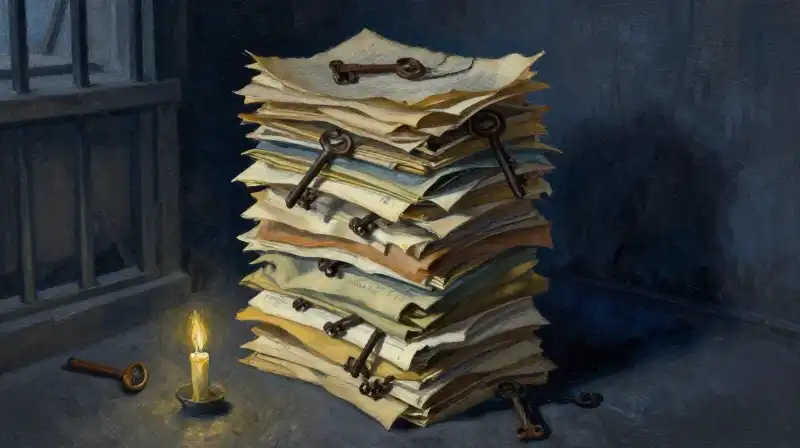
Dickens uses setting not merely as a backdrop, but as a physical manifestation of social paralysis. The novel operates on two primary levels of institutional failure: the literal confinement of the debtor and the metaphorical confinement of the bureaucrat.
The Marshalsea and the Prison of Debt
The Marshalsea debtors’ prison serves as the novel’s moral and physical anchor [1]. Through the Dorrit family, Dickens satirizes the absurdity of an institution that incarcerates individuals for their inability to pay debts, effectively ensuring they can never work to settle them [1]. This creates a cycle of stagnation that defines the characters’ identities; for Amy Dorrit, the prison is not just a location, but the only reality she has ever known [1].
The Circumlocution Office
If the Marshalsea represents physical imprisonment, the fictional “Circumlocution Office” represents the mental and social imprisonment caused by government inefficiency [1]. Dickens crafts a biting satire of the British bureaucracy through this institution, which is defined by its specialized expertise in “how not to do it” [1]. The Office is a machine designed to produce nothing, a place where progress is actively discouraged by a web of red tape and redirection. This serves as a crucial thematic link: whether through the law (debt) or the state (bureaucracy), the individual is constantly being thwarted by systems that prioritize their own survival over any actual service [1].
Class, Wealth, and the Fragility of Status
A central tension in Little Dorrit is the destabilizing effect of social mobility. Dickens explores how class systems dictate personal identity and how the sudden acquisition of wealth can be as much a trap as poverty.
The Dorrit family provides a primary case study in this social volatility. When it is discovered that the patriarch, William Dorrit, is actually a lost heir to a significant fortune, the family’s transition from the prison to a “respectable” life in Europe is marked by intense internal friction [1]. This shift highlights a recurring Dickensian theme: that true character is independent of bank balances, yet society refuses to see it any other way [1, 2].
This exploration of class is further complicated by the novel’s examination of how wealth is built and lost:
- The Illusion of Stability: The character of Merdle represents the dangerous allure of speculative wealth. His rise and subsequent catastrophic suicide trigger a massive financial collapse, proving that the prosperity of the upper classes is often built on hollow foundations [1].
- The Criminal Underbelly: Through subplots involving figures like the criminal Rigaud (Blandois) and John Baptist Cavalletto, Dickens connects the highest social strata to the lowest through the shared threads of crime and chance [1].
- The Weight of Secrets: Social standing is often maintained through the suppression of truth. The mystery of the “DNF” (do not forget) silk paper and the secrets held by Mrs. Clennam illustrate how family legacies are often constructed on a foundation of hidden shame [1].
Common Reader Questions

Is Little Dorrit worth reading?
For readers interested in profound social commentary and complex character studies, the answer is a resounding yes. While the novel’s length and its dense, sometimes repetitive prose can be intimidating, the payoff lies in its structural brilliance and its ability to connect the smallest human emotion to the largest societal failures. It is not just a story; it is an autopsy of a civilization [1, 2].
Was Tattycoram black in the book?
In the text of the novel, the character of Tattycoram is depicted within the racial and social contexts of Victorian England. While Dickens’s descriptions of race can be complex and are subject to modern critical scrutiny, the character’s primary function is to highlight themes of social ostracization and the struggle for respectability within a rigid class system [1].
Synthesis: Why Little Dorrit Matters
Little Dorrit remains a monumental work because it captures a fundamental truth about human systems: they are often designed to preserve themselves rather than to serve the people within them. By weaving together the lives of the impoverished Dorrits and the wealthy Clennams, Dickens demonstrates that no one is truly insulated from the systemic failures of their society [1, 2].
The novel’s resolution—the linking of the families through a long-hidden codicil in a will and the eventual marriage of Arthur and Amy—offers a sense of personal restoration [1]. However, this individual happiness does not erase the critique of the Circumlocution Office or the Marshalsea. Instead, the novel leaves the reader with a lingering realization: while individuals may find their way through the fog, the institutions themselves remain as opaque and obstructive as ever. It is this tension between personal resilience and systemic failure that gives Little Dorrit its enduring, haunting relevance [1, 2].
Sources

- Little Dorrit — en.wikipedia.org
- Little Dorrit by Charles Dickens — gutenberg.org
Frequently Asked Questions
Was Tattycoram black in the book?
The article states that Tattycoram is depicted within the racial and social contexts of Victorian England. However, it does not explicitly confirm the character's race, focusing instead on how the character highlights themes of social ostracization and the struggle for respectability.
Is Little Dorrit worth reading?
Yes, for readers interested in profound social commentary and complex character studies. Although the length and dense prose can be intimidating, the novel offers structural brilliance and a deep connection between human emotion and societal failure.
Related Articles