Classic Books for Men: A Curated Guide to Essential Reading

Introduction
The transition from reading for pure entertainment to engaging with the “Great Conversation” of literature is rarely a sudden leap. For many men looking to build a foundation in classic literature, the sheer volume of the Western canon can feel less like an invitation and more like a barrier. The intimidating weight of thousand-page Russian epics or the dense, syntactically complex prose of the 19th century often leads readers to wonder where the entry point actually lies. However, the path to literary literacy is not a monolith; it is a series of strategic gateways—ranging from the high-stakes tension of science fiction to the sparse, muscular prose of the mid-century modernists.
Building a reading life is about finding works that offer more than just a plot; it is about finding texts that provide a lens through which to view politics, morality, and the self. Whether it is through the speculative warnings of dystopian fiction or the visceral survivalism of adventure narratives, these books serve as intellectual scaffolding, preparing the reader for the deeper philosophical inquiries of the masters.
The Speculative Gateway: Science Fiction and Dystopia
Science fiction is often the most accessible entry point into complex social and political philosophy. Because it utilizes “what if” scenarios, it can bypass the reader’s immediate political biases to examine the core mechanics of power and human nature. Dystopian fiction, in particular, acts as a crucible for testing the limits of individual agency against the state.
- George Orwell’s 1984: This is the quintessential study of a totalitarian state. Orwell examines how language and surveillance can be weaponized to erode independent thought and objective truth [1, 2].
- Aldous Huxley’s Brave New World: Where Orwell fears the whip, Huxley fears the velvet glove. His vision of a highly stratified society governed by biological engineering and constant, formulaic entertainment offers a stark contrast to Orwellian oppression [1, 2].
- Orson Scott Card’s Ender’s Game: For those seeking high-engagement narratives, Card utilizes well-paced action and a significant plot twist to hook readers into the genre, demonstrating how science fiction can function as both a page-turner and a study of leadership and empathy [1].
Mastering Prose: Style, Resilience, and the Counter-Culture
For readers interested in the “how” of writing—the actual texture of the sentences on the page—certain authors serve as essential studies in stylistic intent. Moving from commercial fiction to literary fiction often requires an appreciation for how an author’s specific rhythm can mirror the psychological state of their characters.
The Hemingway School of Precision
Ernest Hemingway remains a central figure for those interested in prose style and themes of resilience. His “Iceberg Theory”—where the majority of the meaning lies beneath the surface of sparse, direct language—is foundational [2].
- The Sun Also Rises: A semi-autobiographical exploration of expatriates in Spain, using understated prose to navigate the physical and emotional wounds of a “Lost Generation” [2].
- For Whom the Bell Tolls: This work demonstrates Hemingway’s ability to marry intense, gritty realism with the high stakes of the Spanish Civil War [2].
The Search for Authenticity
The Beat Generation offers a different kind of prose, one that prioritizes the rhythm of experience and the search for freedom. Jack Kerouac’s work captures the mid-century American counter-culture through a lens of restless movement.
- On the Road: A quintessential novel of the search for authenticity through travel and cultural rebellion [2].
- The Dharma Bums: This text expands the search for truth into the realms of mountaineering and Zen Buddhism, blending physical adventure with spiritual inquiry [2].
Philosophical Depth and Social Hierarchy

Once a reader is comfortable with varied prose styles, they can move toward works that use narrative as a vehicle for profound moral and social debate. This stage of reading moves away from “what happens next” and toward “what does this mean for the soul and the state.”
| Work | Author | Primary Focus | Core Inquiry |
|---|---|---|---|
| The Brothers Karamazov | Fyodor Dostoevsky | Moral/Spiritual Drama | The intersection of free will, ethics, and the existence of God [2]. |
| Notes from Underground | Fyodor Dostoevsky | Philosophical Inquiry | The psychology of isolation and the irrationality of human nature [1, 2]. |
| The Great Gatsby | F. Scott Fitzgerald | Social Hierarchy | The impossibility of reliving the past and the corruption of the American Dream [2]. |
| The Prince | Niccolo Machiavelli | Political Statecraft | Whether the ends justify the means in the maintenance of power [2]. |
Navigating the Transition: Strategies for the New Reader
The jump from “commercial” books to “classics” can be jarring. It is a mistake to attempt a marathon of heavy texts without a strategy. To build cultural literacy and participate in the “Great Conversation,” consider these tactical approaches:
- Start Small: If long texts are intimidating, look for classics under 200 pages. Orwell’s Animal Farm or Leo Tolstoy’s The Death of Ivan Ilyich provide manageable entry points into profound themes without the daunting page count [1].
- Use Bridges: “Classic Comics” or graphic novel adaptations can act as a bridge. Reading a visual summary of Dracula or The Time Machine can provide the necessary plot context before you commit to the full, complex prose [1].
- Vary the Genre: Don’t feel obligated to read only “heavy” philosophy. Adventure and survival narratives, such as Jack London’s The Call of the Wild or the community-building dynamics in Swiss Family Robinson, offer a way to engage with classic storytelling structures through high-stakes action [2].
- Contextualize with Non-Fiction: To understand the world that produced these stories, supplement your fiction with foundational texts of thought, such as Adam Smith’s The Wealth of Nations or Plato’s The Republic [2].
The Human Condition in Conflict
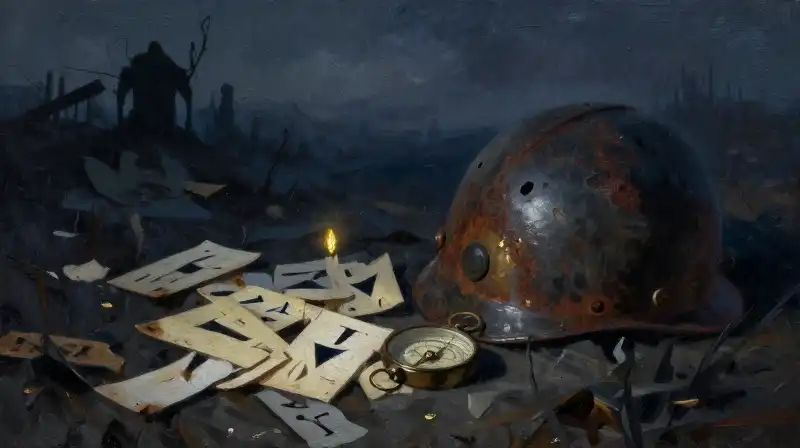
Finally, war literature provides a unique vantage point for observing the human condition under extreme pressure. These works range from the gritty and realistic to the surreal and absurdist.
- Kurt Vonnegut’s Slaughterhouse-Five: A non-linear, absurdist approach to the trauma of war, following the character Billy Pilgrim through time [2].
- Stephen Ambrose’s Band of Brothers: A work of historical realism that chronicles the lived experiences of the men of Easy Company during WWII, grounding the abstract concept of “war” in specific human struggle [2].
Synthesis: Why the Classics Matter
The reason these books remain essential is not because they are “old,” but because they are durable. They address the recurring tensions of human existence: the struggle for autonomy against authority, the search for meaning in a chaotic world, and the tension between our individual desires and our social obligations. By engaging with these works—whether through the accessible lens of science fiction or the rigorous challenge of Dostoevsky—a reader does more than just finish a book; they acquire a toolkit for navigating the complexities of life itself.
Sources

- classic iconic books to read for a dude (who should’ve read more when younger) trying to get in to books : r/suggestmeabook — reddit.com
- 100 Books Every Man Should Read — artofmanliness.com
Related Articles