
Great New Sci-Fi Books: From James S.A. Corey to Adrian Tchaikovsky

Introduction
Science fiction has always been a genre of mirrors, reflecting our most profound anxieties and highest aspirations through the distorted lens of the impossible. In the current literary landscape, this mirroring is becoming increasingly sophisticated. We are moving away from the simple “alien invasion” tropes of the mid-century toward a more nuanced exploration of identity, interstellar politics, and the very nature of consciousness. Whether it is the sprawling, high-stakes space opera that captures the imagination of millions or the claustrophobic, mind-bending novellas that challenge our perception of reality, the genre is currently undergoing a period of intense, vibrant expansion.
For readers looking for great new sci-fi books, the challenge is no longer finding content, but navigating the sheer diversity of voice and style. The contemporary era is defined by a tension between the “hard” science that grounds us in physics and the “soft” speculative leaps that allow us to explore sociology and mental health. From the established titans of the field to the experimental voices pushing the boundaries of prose, the current state of science fiction offers a roadmap for understanding where humanity might be headed—or what we might leave behind.
The New Titans: Scale and World-Building
Modern science fiction often relies on the ability to build worlds that feel lived-in, politically complex, and scientifically plausible. Several authors have become the standard-bearers for this kind of immersive storytelling.
- James S.A. Corey: Following the massive success of The Expanse series, Corey remains a central figure for readers of modern space opera. His recent release, The Mercy of Gods, marks the start of a highly anticipated new trilogy, signaling a continued mastery of large-scale conflict and character-driven tension [1].
- Adrian Tchaikovsky: Known for his incredible productivity and ability to blend biological concepts with epic narrative, Tchaikovsky has carved out a significant niche. While his Children of Time series remains a high-water mark for evolutionary sci-fi, his The Final Architecture trilogy and shorter works like the Elder Race and The Expert System duologies demonstrate a restless, inventive intellect [1].
- Kim Stanley Robinson: A master of the “hard” science tradition, Robinson’s work, such as Aurora, continues to expand the scope of what speculative fiction can achieve by grounding grand cosmic journeys in rigorous environmental and social realities [1].
Experimental Voices and the Postmodern Turn
Not all science fiction seeks to build a stable, coherent world. A significant portion of the genre’s most exciting work is currently happening at the intersection of speculative ideas and experimental form. These authors use non-linear structures and stylistic play to mirror the disorientation of the future.
Nick Harkaway stands as a primary example of this trend. His work often leans into postmodern, non-linear, and experimental styles. While his novel Gnomon is widely praised for its immense complexity, his ability to pivot between genres is notable; for instance, in Titanium Noir, he explores the intersection of science fiction and noir, though some critics note that adopting a tighter genre style can sometimes come at the expense of the “mad creativity” found in his more experimental narratives [1].
Similarly, the literary landscape is being reshaped by “mind-bending” and “mind trip” narratives. Authors like Adam Roberts, particularly in his novel The Thing Itself, focus on profound philosophical concepts, while the novellas of qntm, such as There Is No Antimemetics Division, push the boundaries of how much information a reader can process before the narrative itself becomes a puzzle [1].
Thematic Shifts: Politics, Identity, and the Mind
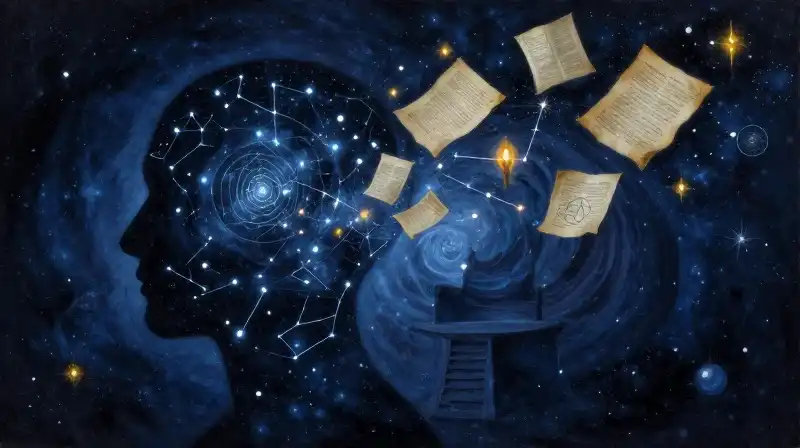
As we move further into the 2020s, the “what if” of science fiction is increasingly turning inward toward the human psyche and outward toward the structures of power. We can categorize these emerging themes into three distinct movements:
1. The Sociopolitical and the Interstellar
Political science fiction is finding new life by looking at how power scales from the individual to the galactic. James Cambias’s The Miranda Conspiracy (arriving February 2025) exemplifies this, blending a deep-space treasure hunt with the intricate political conspiracies of the ice moon Miranda [2]. Similarly, Edward Ashton’s upcoming The Fourth Consort (late February 2025) promises a focused look at the interstellar politics between the “Unity” and “the Assembly” [2].
2. Afrofuturism and Diverse Perspectives
The genre is also undergoing a necessary and vital diversification. Anthologies like The Black Fantastic: 20 Afrofuturist Stories, edited by André M. Carrington, bring together heavyweights like N.K. Jemisin and Nalo Hopkinson to explore speculative futures through diverse cultural lenses [2]. This movement ensures that the “future” being imagined is not a monolith, but a tapestry of varied human experiences.
3. Technology and Mental Health
Perhaps the most intimate shift is the exploration of how technology alters our internal lives. Upcoming 2025 releases like Koji A. Dae’s Casual examine the consequences of using neural implants to manage anxiety and depression, turning the tools of progress into tools of psychological negotiation [2]. This reflects a growing literary interest in how the “hard” technology of the future affects the “soft” reality of human emotion.
Comparing Contemporary Sci-Fi Approaches
To better understand where a book might sit on the spectrum of science fiction, it is helpful to contrast the different stylistic priorities of modern authors.
| Approach | Primary Focus | Key Authors/Works | Reader Experience |
|---|---|---|---|
| Hard Science Fiction | Scientific accuracy, physics, and logical extrapolation. | Adam Roberts, Kim Stanley Robinson | Intellectual rigor and grounded realism. |
| Space Opera | Scale, adventure, interstellar politics, and epic conflict. | James S.A. Corey, Adrian Tchaikovsky | Immersive world-building and high stakes. |
| Experimental/Postmodern | Non-linear narrative, linguistic play, and cognitive disruption. | Nick Harkaway, qntm | Complexity and psychological disorientation. |
| Speculative/Social Sci-Fi | Sociology, identity, and the impact of technology on the self. | Koji A. Dae, N.K. Jemisin | Emotional resonance and cultural inquiry. |
Synthesis: Why the Current Era Matters
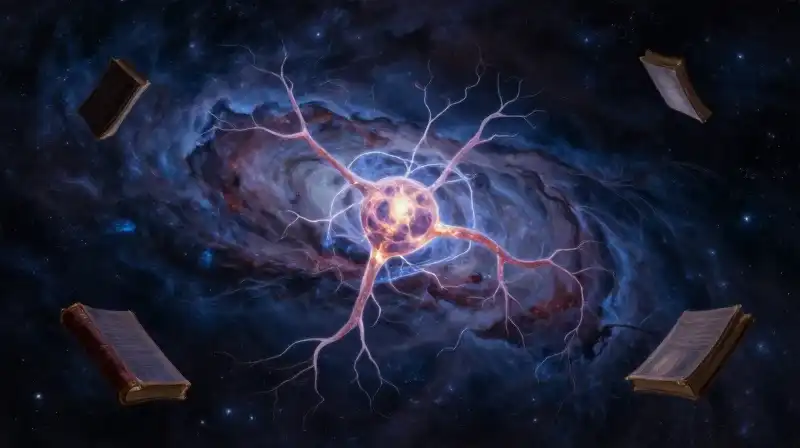
The strength of contemporary science fiction lies in its refusal to settle into a single mode of operation. We are witnessing a simultaneous flourishing of the epic and the intimate. While one author builds a galaxy to host a thousand-year war, another uses a single neural implant to dissect a moment of human anxiety. This duality is what makes the genre essential. It provides the tools to visualize not just the technology we might invent, but the people we might become in the process of using it. Whether through the authoritarian warnings of Fernando A. Flores’s Brother Brontë—where reading is outlawed—or the philosophical deep-dives of Ted Chiang, science fiction continues to serve as the ultimate laboratory for the human condition [1, 2].
Sources
- Science fiction books: what’s hot *right now*? : r/printSF — reddit.com
- 21 new sci-fi and fantasy books to read in February 2025 — andrewliptak.com
Related Articles