

Black Sci-Fi Authors: Essential Voices from Butler to Jemisin


Introduction
Speculative fiction has long been a laboratory for exploring the limits of human identity, but for Black authors, the genre serves a dual purpose: it is both a mirror reflecting the realities of systemic struggle and a telescope peering into radical, reimagined futures. To read Black science fiction and fantasy is to encounter a literary tradition that refuses to separate the “speculative” from the “sociological.” Whether through the lens of Afrofuturism—which weaves African diaspora history and technology into a cohesive vision of the future—or through high fantasy that reconstructs mythology, these writers use the “unreal” to interrogate the very real.
Tracing this lineage requires moving beyond the idea of a monolithic “Black sci-fi” genre. Instead, we find a rich, diverse tapestry of voices ranging from the foundational, prescient warnings of Octavia Butler to the genre-defying, award-winning triumphs of N.K. Jemisin. From the integration of Caribbean folklore to the deconstruction of Black masculinity and LGBT themes, this body of work challenges the traditional boundaries of what science fiction can achieve.
The Architects: From Butler to Delany

To understand the contemporary landscape, one must first ground themselves in the foundational figures who established the intellectual rigor of the field. These authors did not merely write stories; they expanded the vocabulary of the genre.
Octavia Butler: The Prophet of Change
Octavia Butler stands as an elder statesperson of the genre, a writer whose work is characterized by its “chillingly prescient” nature [2]. Her Parable series, beginning with Parable of the Sower, uses dystopian settings to explore survival, community-building, and the inevitable shifts in social structures. Butler was a trailblazer, becoming the first science fiction author to receive a MacArthur Foundation Genius Grant [2]. Her craft is notable for its unflinching look at human biology and social evolution, often forcing readers to confront the uncomfortable intersections of power and vulnerability.
Samuel R. Delany: The Linguistic Architect
If Butler provided the social blueprint, Samuel R. Delany provided the structural complexity. An SFWA Grand Master and a member of the Science Fiction and Fantasy Hall of Fame, Delany’s work brought a level of linguistic and philosophical sophistication that reshaped the genre [2]. His influence is seen in the way modern authors approach world-building not just as a backdrop, but as a complex system of language, culture, and sexuality.
The New Vanguard: Breaking Records and Boundaries
The current era of Black speculative fiction is marked by unprecedented critical and commercial success, with authors moving from the margins of the genre to its very center.
| Author | Key Works | Literary Contribution |
|---|---|---|
| N.K. Jemisin | The Broken Earth trilogy | The only author to win three consecutive Hugo Awards for books within the same series [2]. |
| Nnedi Okorafor | Binti series, Lagoon | Blends science fiction and fantasy, often utilizing “first contact” scenarios set in African contexts [1, 2]. |
| Marlon James | Black Leopard, Red Wolf | Brings a “deep point of view” and Man Booker Prize-winning literary depth to the fantasy genre [2]. |
| Tade Thompson | Rosewater | Creates hybrid narratives that evoke the atmosphere of both Annihilation and Neuromancer [1]. |
Thematic Landscapes: Folklore, Trauma, and Identity
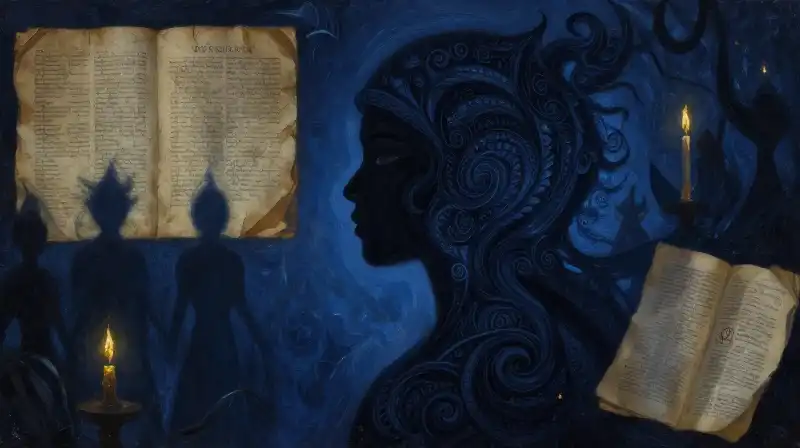
A recurring strength in this literature is the seamless integration of cultural heritage with speculative concepts. This is not “magic” for magic’s sake, but a method of reclaiming narratives.
- Folklore and Mythology: Authors like Nalo Hopkinson weave Caribbean folklore and Afro-Caribbean culture directly into the fabric of their speculative worlds, as seen in Midnight Robber and The Salt Roads [1, 2]. Similarly, P. Djèli Clark uses historical elements to ground his narratives, such as the “top-tier” novella Ring Shout [1, 2].
- The Representation of Trauma: Writers such as Rivers Solomon use the short novel and novella forms to represent “trauma and struggle” with profound nuance, specifically in works like An Unkindness of Ghosts and Sorrowland [1].
- Intersectionality: Modern speculative fiction frequently explores the complexities of Black masculinity, LGBT themes, and the intersections of identity within fantastical or futuristic settings [1, 2].
Understanding the Landscape: Frequently Asked Questions
Who are the main Afrofuturist authors?
While Afrofuturism is a broad movement, it is often anchored by the legacy of Octavia Butler and expanded by contemporary voices like Nnedi Okorafor, who uses African settings and technologies to reimagine the future. The movement is characterized by its use of science fiction to explore the African diaspora’s relationship with technology and time.
Who is the most successful Black author in sci-fi?
Success in this genre is often measured by critical milestones and industry recognition. N.K. Jemisin holds a historic distinction as the only author to win three consecutive Hugo Awards for a single series (*The Broken Earth*) [2]. However, “success” also encompasses the massive cultural impact of pioneers like Butler and the crossover literary prestige of authors like Marlon James.
A Reader’s Path: Where to Begin

Because the genre is so diverse, the best place to start depends on what draws you to speculative fiction.
- For the Social Philosopher: Start with Octavia Butler. Her work is essential for understanding how speculative fiction can act as a profound critique of human nature and social systems.
- For the Epic World-Builder: Turn to N.K. Jemisin or Marlon James. These authors provide immense, richly textured worlds that demand—and reward—deep immersion.
- For the Myth-Seeker: Explore Nalo Hopkinson or Nnedi Okorafor. Their work is ideal for readers who want to see how ancient folklore and cultural traditions can be revitalized through a sci-fi or fantasy lens.
- For the Young Adult Reader: Look to Tomi Adeyemi, Jordan Ifueko (*Raybearer*), or Justina Ireland (*Dread Nation*), who are shaping the next generation of speculative readers through high-stakes, culturally resonant storytelling [1].
Synthesis: Why These Voices Matter
The importance of Black science fiction and fantasy lies in its ability to expand the “possible.” By reclaiming the future and re-examining the past, these authors do more than just entertain; they perform a vital act of literary reclamation. They prove that the speculative genre is not a vacuum, but a space where the most pressing questions of identity, history, and survival can be asked with unprecedented clarity. To read these authors is to see the human experience not just as it is, but as it could—and must—be reimagined.
Sources

- Favorite Black fantasy & sci-fi writers who aren’t Octavia Butler? : r/Fantasy — reddit.com
- Black Sci-Fi & Fantasy Authors — diymfa.com
Frequently Asked Questions
Who are the main Afrofuturist authors?
Afrofuturism is anchored by the legacy of Octavia Butler and expanded by contemporary voices like Nnedi Okorafor. The movement uses science fiction to explore the African diaspora's relationship with time and technology.
Who is the most successful Black author?
N.K. Jemisin holds a historic distinction as the only author to win three consecutive Hugo Awards for a single series. However, success also includes the cultural impact of Octavia Butler and the literary prestige of Marlon James.
Related Articles