
Classic Literature Graphic Novels: From Frankenstein to 1984

The Visual Translation of the Canon
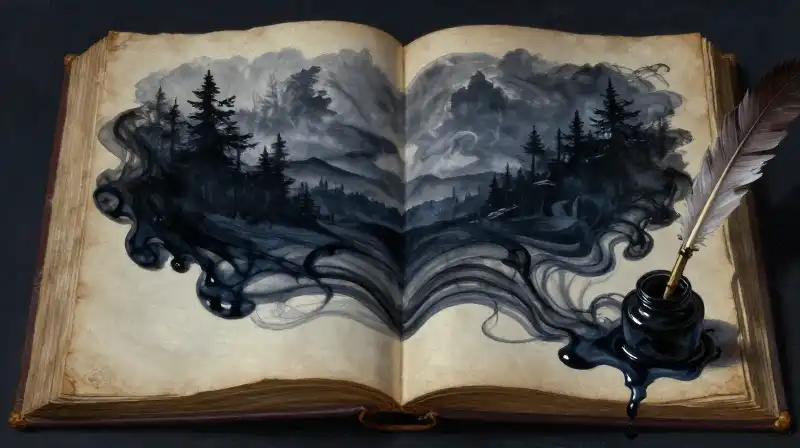
When a novelist like George Orwell or Mary Shelley crafts a world, they rely on the reader’s internal eye to build the architecture of dread or the claustrophobia of a totalitarian state. The graphic novel adaptation of classic literature takes this internal process and externalizes it, replacing or augmenting the written word with a deliberate visual grammar. This transition is not merely a process of simplification or “dumbing down”; rather, it is a complex act of translation. A successful adaptation must decide what to preserve in the text and what to surrender to the image, often discovering new emotional resonances in the gap between the two.
These adaptations range from extremely truncated versions, such as Bill Sienkiewicz’s interpretation of Moby Dick, to expansive, faithful reimaginings that serve as companion pieces to the original prose [1]. Whether through the surrealist distortions of a postmodernist text or the stark realism of a memoir, the medium of sequential art allows readers to encounter the “classics” through a lens that is simultaneously familiar and startlingly new.
Translating Genre: From Gothic Horror to Dystopian Dread
Different literary genres demand different visual strategies. A masterwork of horror relies on atmosphere and the “unseen,” while a dystopian novel relies on the systemic scale of its setting. The success of an adaptation often hinges on how the artist interprets these specific tonal requirements.
The Gothic and Horror Tradition
Gothic literature thrives on the sublime and the grotesque. In adapting Mary Shelley’s Frankenstein, artists face the challenge of moving away from the “Universal Monster” iconography—the heavy brow and bolts in the neck—to capture the deeper philosophical horror of the novel. Junji Ito provides a “disturbing” and “refreshing” departure from these tropes, using his signature detailed, unsettling linework to evoke the creature’s existential isolation [1]. Similarly, Bernie Wrightson has utilized his mastery of pen-and-ink to bring the same classic to life, leaning into the atmospheric shadows essential to the genre [1]. For the cosmic horror of H.P. Lovecraft, artists like Gou Tanabe have become notable for their ability to visualize the incomprehensible scale and madness inherent in the source material [1].
Dystopia and Speculative Fiction
Dystopian classics require a visual language of surveillance, scarcity, and social control. The medium is uniquely suited to showing the “macro” view of a crumbling society alongside the “micro” view of a suffering individual:
- George Orwell’s 1984: Xavier Coste’s adaptation uses visual pacing to mirror the crushing weight of Big Brother’s regime [1].
- George Orwell’s Animal Farm: Shotaro Ishinomori’s version translates the allegorical nature of the fable into a visual narrative that emphasizes the corruption of power [1].
- Margaret Atwood’s The Handmaid’s Tale: Renee Nault uses color and composition to convey the sensory deprivation and heightened terror of the Gilead regime [1].
- Octavia Butler’s Parable of the Sower: Damian Duffy’s adaptation brings the speculative, harrowing reality of Butler’s near-future sociology to life through sequential art [1].
The Weight of Philosophy and History

Beyond the visceral thrills of horror and dystopia, the graphic novel has proven capable of navigating the abstract terrains of existentialism and the vast timelines of ancient history. This requires a shift from narrative action to symbolic representation.
Existentialism and Modernism
How does one draw the “absurd”? Jacques Fernandez’s adaptation of Albert Camus’s The Stranger demonstrates that the graphic medium can function as a sophisticated companion to philosophical prose, translating Meursault’s emotional detachment into visual stillness [1]. Similarly, the fragmented, non-linear structures of modernist and postmodernist works find a natural ally in comics. Ryan North and Albert Monteys’s adaptation of Kurt Vonnegut’s Slaughterhouse-Five utilizes the medium’s ability to jump through time and space, mirroring the protagonist’s “unstuck” experience [1].
Ancient Texts and Social Realism
When dealing with foundational texts, artists often employ stylistic shifts to honor the “spirit” of the work rather than a literal transcription. For example, R. Crumb’s The Book of Genesis uses a more subversive, idiosyncratic style, while Kevin and Kent Dixon’s Epic of Gilgamesh utilizes a “cartoony” approach to convey the ancient, mythic energy of the tale [1]. In the realm of social realism, the medium provides a profound way to handle lived history. David Polonsky and Ari Folman’s adaptation of Anne Frank’s Diary transforms the intimacy of the written diary into a visual testament, bridging the gap between private thought and public history [1].
Approaches to Adaptation
Not all adaptations seek the same goal. The following table illustrates the varying methodologies used by artists when approaching classic texts.
| Approach Type | Primary Goal | Example Work |
|---|---|---|
| Faithful/Comprehensive | To expand or mirror the original text as closely as possible. | David Wenzel’s The Hobbit [1] |
| Stylistic/Interpretive | To use a specific art style (e.g., airbrush) to evoke the book’s mood. | Peter Kuper’s The Jungle [1] |
| Truncated/Condensatory | To distill the core narrative into a brief, high-impact visual summary. | Bill Sienkiewicz’s Moby Dick [1] |
| Tonal/Comedic | To maintain the specific “humor” or “spirit” of the original. | Rob Davis’s Don Quixote [1] |
Common Reader Inquiries
What is the most famous graphic novel of all time?
While “fame” is subjective, works like Art Spiegelman’s Maus or Alan Moore’s Watchmen are frequently cited as the most significant. However, in the context of classic adaptations, the “top” graphic novels are often those that successfully bridge the gap between high literature and visual storytelling, such as the works of Jack Kirby in his adaptation of 2001: A Space Odyssey [1].
What comic books are classics illustrated?
The term “classics illustrated” refers to a broad movement where established literary canon—ranging from the adventure of The Hobbit to the epic scope of The Epic of Gilgamesh—is re-envisioned through the lens of comic art [1]. This includes both high-concept science fiction and ancient religious texts.
The Value of the Visual Canon
The movement of classic literature into the graphic novel medium is not a reduction of the original work, but an expansion of its accessibility and interpretive depth. By translating prose into a combination of text and image, these adaptations offer a dual entry point: they provide a visual scaffolding for those intimidated by dense prose, while offering seasoned readers a new way to “see” the subtext of works they thought they already knew. Whether it is the airbrushed grit of The Jungle or the surrealist jumps of Slaughterhouse-Five, these works prove that the “classics” are not static monuments, but living stories capable of evolving alongside new technologies of storytelling.
Sources
- I’m looking for good graphic adaption of classic books (for example 1984) : r/graphicnovels — reddit.com
Frequently Asked Questions
What is the most famous graphic novel of all time?
While fame is subjective, works such as Art Spiegelman's "Maus" or Alan Moore's "Watchmen" are frequently cited as the most significant. In the context of classic adaptations, notable works include Jack Kirby's adaptation of "2001: A Space Odyssey".
What are the top 10 graphic novels?
The provided article does not contain a list or ranking of the top 10 graphic novels.
What comic books are classics illustrated?
"Classics illustrated" refers to a broad movement where the established literary canon is re-envisioned through comic art. This encompasses works ranging from the adventure of "The Hobbit" to the epic scope of "The Epic of Gilgamesh".
Related Articles