

African American Sci-Fi Authors: From Octavia Butler to Nnedi Okorafor


Beyond the Horizon: The Evolution of Black Speculative Fiction

For decades, science fiction was often framed as a genre of the “white space”—of sterile starships, Euclidean geometry, and a future that felt culturally disconnected from the historical realities of the African diaspora. However, a lineage of writers has spent the last half-century dismantling that vacuum. By weaving together the speculative and the ancestral, these authors do not merely predict the future; they reclaim it. They use the tools of the genre—alien biology, temporal shifts, and advanced technology—to interrogate the complexities of bodily autonomy, colonization, and social hierarchy.
To understand this movement, one must look past the broad label of “science fiction” and recognize the specific, vibrant threads of Afrofuturism and African-centered speculative fiction. These are not just stories about gadgets; they are profound explorations of what it means to exist within—and outside of—systems of power. From the telepathic hierarchies of Octavia E. Butler to the post-apocalyptic landscapes of Nnedi Okorafor, the genre has moved from the periphery to the very center of contemporary literary discourse.
The Architectural Pillars: Octavia E. Butler
No discussion of African American sci-fi authors is complete without Octavia E. Butler, whose work serves as the bedrock for much of what follows. Butler’s brilliance lay in her ability to use biological and sociological “what ifs” to strip characters down to their most essential, often vulnerable, selves.
- Biological Imperatives and Autonomy: In her 1976 novel Mind of My Mind, Butler explores the terrifying and intimate implications of telepathic networks, using mental connection as a metaphor for the struggle to maintain individual agency within a collective [2].
- Subverting the Colonizer Narrative: Her 1984 short story Bloodchild is a masterclass in subverting traditional tropes. Rather than a standard “alien invasion” story, it utilizes graphic body horror to examine themes of symbiosis, dependency, and the often-uncomfortable realities of coexistence [2].
Defining the Lens: Afrofuturism and Its Nuances
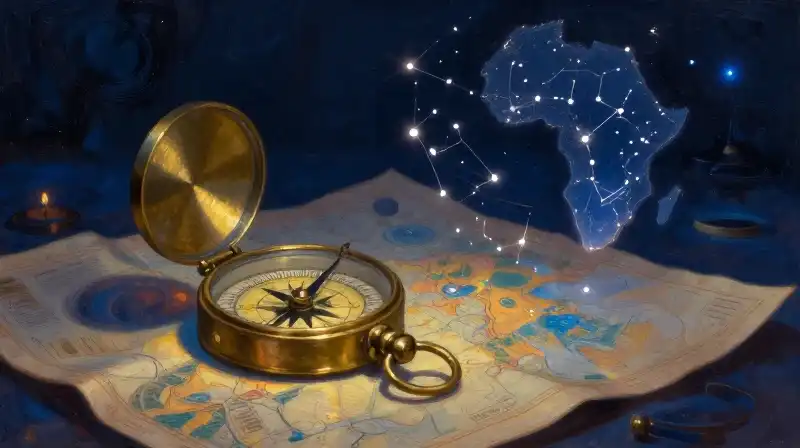
Readers often ask: Who are the main Afrofuturist authors? To answer this, we must first understand the term itself. Coined in 1994 by Mark Dery in his essay Black to the Future, “Afrofuturism” describes a movement that uses speculative fiction to examine the Black experience through a futuristic, often technological, lens [2].
However, the genre is not a monolith. It branches into several distinct stylistic and thematic territories:
| Genre/Approach | Core Characteristics | Representative Authors & Works |
|---|---|---|
| Afrofuturism | Intersection of technology, African diaspora history, and speculative futures. | Mark Dery (theory); various contemporary practitioners. |
| African-Centered Sci-Fi | Speculative settings rooted in African geography, myth, and sociology. | Nnedi Okorafor (Lagoon, Who Fears Death); Tade Thompson (Rosewater) [1, 2]. |
| Caribbean Magical Realism | Blending high-tech or speculative elements with Caribbean folklore and oral traditions. | Nalo Hopkinson (Midnight Robber) [2]. |
| Speculative Horror/Thriller | Using the fantastic to explore trauma, immortality, and domesticity. | Tananarive Due (My Soul to Keep); Rivers Solomon [1, 2]. |
The New Vanguard: Diversity of Vision
The current landscape of Black speculative fiction is characterized by an incredible breadth of setting and tone. We are seeing a move away from the “outer space” trope toward “inner space”—the psychological and social landscapes of the Earth itself.
The African and Diaspora Landscapes
Authors like Nnedi Okorafor have redefined the genre by grounding high-concept science fiction in Nigerian and Sudanese settings. Her work, such as the first-contact narrative Lagoon or the post-nuclear Who Fears Death, avoids the Western-centric “desert wasteland” clichés, offering instead a richly textured, culturally specific vision of the future [1, 2]. Similarly, Tade Thompson blends the high-concept scientific inquiry found in works like Annihilation with the rhythmic, gritty complexity of Neuromancer in his novel Rosewater [1].
Social Hierarchy and Identity
Other writers utilize speculative devices to critique modern social structures. Alaya Dawn Johnson, in Love is the Drug, employs a science fiction plague as a narrative engine to dissect government surveillance and social stratification [2]. In the realm of Young Adult (YA) fiction, authors like Tracey Deonn (reimagining Arthurian legend in Legendborn) and Namina Forna are proving that the speculative lens is a powerful tool for exploring identity and heritage for a new generation [1].
The Body and the Blood
The theme of biological destiny remains a potent thread. N.E. Davenport explores this in The Blood Trials, where magic is literally a gift flowing through the veins of the protagonist [2]. Meanwhile, Andrea Hairston offers a starkly different take on the invasion trope in Mindscape, where the “alien” threat is manifested as a physical barrier that fractures the Earth into warring, gang-run states [2].
Common Inquiries

Which African American sci-fi novelist won the Hugo Awards?
While many authors in this lineage have been nominated or have won various prestigious awards, readers should look to the broader history of the Hugo Awards to see how names like Octavia Butler paved the way for a consistent presence of Black authors in the speculative community. The genre’s recognition has grown in tandem with the diverse voices being heard.
How can I start reading this genre?
For those feeling intimidated by the depth of the field, we recommend a tiered approach:
- The Foundation: Start with Octavia Butler. Her prose is precise and her themes are universal.
- The Contemporary Entry: Move to Nnedi Okorafor or Nalo Hopkinson. Their works offer a vibrant, immediate sense of how culture and technology intersect.
- The Deep Dive: Explore anthologies like Sheree Renée Thomas’s Dark Matter: A Century of Speculative Fiction from the African Diaspora to see the breadth of the movement across different eras and styles [2].
Synthesis: Why This Matters
The significance of these authors lies in their refusal to treat the future as a blank slate. For the writers discussed here, the future is a palimpsest—a surface that is constantly being rewritten over the histories, traumas, and triumphs of the past. By centering Black experiences within the most expansive genres of imagination, they do more than just provide escapism; they provide a map. They remind us that the “speculative” is not just about what might happen, but about understanding the profound implications of what is already happening to our bodies, our societies, and our identities.
Sources

- Favorite Black fantasy & sci-fi writers who aren’t Octavia Butler? : r/Fantasy — reddit.com
- 10 Science Fiction Books by Black Women Writers — electricliterature.com
Frequently Asked Questions
Who are the main Afrofuturist authors?
The article identifies Mark Dery as the theorist who coined the term, noting that various contemporary practitioners exist. It also lists several authors within related branches, such as Nnedi Okorafor, Tade Thompson, Nalo Hopkinson, Tananarive Due, and Rivers Solomon.
Which African American sci fi novelist won the Hugo Awards?
The article does not name a specific novelist who won a Hugo Award. It suggests looking to the broader history of the awards to see how authors like Octavia Butler paved the way for Black authors in the speculative community.
Related Articles