
Best New Science Fiction Books: From Classics to 2026 Releases

Introduction
Science fiction is often misunderstood as a genre of mere gadgetry or distant starships. In reality, it functions as a literary laboratory—a space where authors strip away the familiarities of our current social and physical laws to observe how humanity reacts to the unexpected. Whether a reader seeks the visceral escapism of a sprawling space opera or a sociological interrogation of gender and diplomacy, the genre provides a unique distance that allows us to examine ourselves more clearly. To navigate this vast landscape, one must understand that science fiction is not a monolith, but a spectrum ranging from the rigorous technicality of “Hard SF” to the mythic resonance of speculative fables.
The Pillars of the Genre: Establishing the Canon
Before exploring the horizon of 2026, it is essential to recognize the foundational works that have shaped the genre’s vocabulary. These “classics” are not merely old books; they are the frameworks through which modern writers continue to build. For those seeking a starting point, these titles offer deep thematic substance:
- Frank Herbert’s Dune: A masterwork of ecology, politics, and religion that proves science fiction can possess the density and scale of an epic historical saga.
- Ursula K. Le Guin’s The Left Hand of Darkness: A vital text for understanding how speculative settings can be used to explore interplanetary diplomacy and the fluidity of gender [2].
- Max Brooks’s World War Z: An example of how the “oral history” format can elevate a genre trope—the zombie outbreak—into a profound study of global sociology and human resilience [2].
Mapping the Landscape: Subgenres and Styles
Science fiction is categorized by its relationship to scientific reality and its narrative tone. Understanding these distinctions helps readers find the specific “flavor” of speculative fiction they prefer.
| Subgenre | Defining Characteristic | Primary Focus |
|---|---|---|
| Hard Science Fiction | Strict adherence to known scientific laws and technical accuracy. | The “how” of technology and physics [1, 2]. |
| Space Opera | Grand-scale adventures, often featuring interstellar empires and melodrama. | Epic conflict and character-driven spectacle. |
| Cyberpunk | High tech meets low life; often focuses on AI and corporate dominance. | Societal decay and the merging of human and machine. |
| Dystopian Fiction | Exploration of broken, oppressive social structures. | Political warning and survival [2]. |
| Solarpunk | A more optimistic vision of a future integrated with nature and sustainable tech. | Solution-oriented speculation and harmony. |
The Horizon: High-Profile Releases for 2026
The literary landscape for 2026 suggests a continued trend toward blurring the lines between rigorous science and speculative elements [1]. As readers increasingly seek “hard SF” that maintains technical integrity while offering profound narrative arcs, several upcoming titles have generated significant anticipation within the community [1].
Established Voices Returning
Many of the genre’s heavy hitters are set to release works that expand their existing mythologies or explore entirely new conceptual territories:
- Adrian Tchaikovsky, Children of Strife: A highly anticipated continuation within the Children of Time series, likely to explore complex evolutionary and sociological themes [1].
- Ann Leckie, Radiant Star: Following her groundbreaking work in space opera, Leckie continues to be a major figure for readers interested in complex social structures [1].
- James S. A. Corey, The Faith of Beasts: A release that carries significant weight for fans of high-stakes, character-driven interstellar drama [1].
- Peter F. Hamilton, A Hole in the Sky: A staple for readers of expansive, large-scale space epics [1].
Emerging Voices and Contemporary Shifts
Beyond the established names, the 2026 landscape is shaped by authors who are pushing the boundaries of prose and concept:
- George Saunders, Vigil: A notable inclusion that suggests the genre’s increasing overlap with high-literary fiction [1].
- S. L. Huang, The Language of Liars: An author known for blending speculative elements with deep, nuanced character studies [1].
- Martha Wells, Platform Decay: A key title for those following the evolution of modern science fiction narratives [1].
- Gareth L. Powell, Jitterbug: Likely to appeal to readers looking for modern, sharp speculative storytelling [1].
- Isabel J. Kim, Sublimation: A work generating notable community discussion among contemporary readers [1].
How to Approach Science Fiction: A Guide for the Curious
If you are wondering where to start or how to read these works more deeply, consider these three approaches to the craft:
- The Scientific Approach (Hard SF): If you enjoy technical rigor, look for authors like Peter Watts. In these works, the “science” is not just a backdrop but the primary driver of the plot’s constraints.
- The Sociological Approach: If you prefer seeing how humans behave under pressure, look to dystopian or sociological SF. Here, the technology is a tool to reveal truths about power, gender, and survival.
- The Escapist Approach: If you seek the “sense of wonder,” prioritize Space Operas. These stories emphasize the vastness of the cosmos and the epic nature of the human spirit.
Synthesis: Why Science Fiction Matters
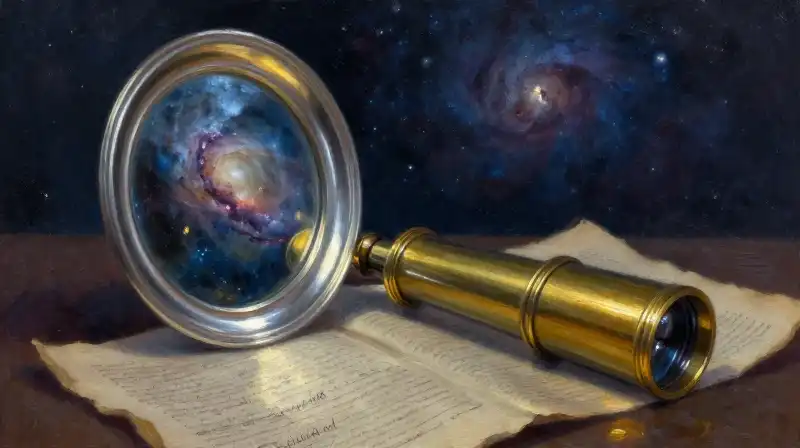
The enduring appeal of science fiction lies in its dual capacity to serve as both a mirror and a telescope. As a mirror, it reflects our contemporary anxieties—climate change, artificial intelligence, and political instability—back at us through the safe lens of the “other.” As a telescope, it allows us to peer into potential futures, helping us decide which paths are worth taking and which should be avoided. Whether through a short story collection or a sprawling trilogy, the genre asks the most fundamental of questions: given what we know about the universe, what will we become?
Sources
- The best new (or most high profile) science fiction books of 2026 : r/printSF — reddit.com
- Best Science Fiction Books — fivebooks.com
Related Articles