
Modern Plays and Their Themes: From Sweat to Prima Facie

Introduction
In the traditional theater of the nineteenth century, the stage was often a place of grand gestures, clear moral arcs, and the polished artifice of the well-made play. Modern drama, however, has dismantled that pedestal. Today’s most vital plays do not merely seek to entertain; they seek to interrogate the very fabric of our social and psychological reality. Whether it is through the gritty, hyper-realistic struggles of the working class or the surrealist deconstruction of corporate greed, contemporary playwrights have moved toward an “intense naturalism” that makes the theatrical experience feel immediate, visceral, and often uncomfortably close to home [2].
To engage with modern plays is to engage with the friction of the present moment. We see this in the way writers use the stage to process geopolitical shifts, the erosion of economic stability, and the fractured nature of the human psyche. This transition from the archetypal to the specific is what defines the current era of drama: a move away from “once upon a time” toward the “right here, right now.”
Thematic Pillars of Contemporary Drama

Modern playwrights often move beyond simple plot progression to act as social and psychological anatomists. Several recurring themes define the landscape of the most popular modern plays.
Socio-Economic Disruption and the American Dream
A significant portion of contemporary work focuses on how macro-economic shifts devastate micro-level human connections. Playwrights examine how systemic failures manifest as personal tragedies.
- The Death of Opportunity: In Lynn Nottage’s Pulitzer Prize-winning Sweat, the focus is on the erosion of the working class and the dissolution of community under economic pressure [2].
- Geopolitical Fallout: Simon Stephens’ Motortown explores the alienation of a veteran returning to an England transformed by his service in Afghanistan, highlighting the disconnect between the individual and the state [2].
- Economic Recession: Works like The Boys of Foley Street use specific regional struggles, such as the Irish recession, to ground global economic instability in local human experience [3].
The Interior Landscape: Mental Health and Identity
The stage has become a uniquely effective medium for visualizing the invisible. Modern drama frequently bridges the gap between the external world and the internal “phantasmagoria” of the mind [3].
- Dissociative States: Anthony Neilson’s The Wonderful World of Dissocia explores the complexities of dissociative disorder, using the theatrical medium to represent a fractured consciousness [2].
- The Architecture of Grief: Feildlim Cannon’s Have I No Mouth utilizes a sense of phantasmagoria to depict the overwhelming and often surreal nature of loss [3].
- Shifting Perspectives: Suzie Miller’s one-woman play Prima Facie utilizes a tight, specialized structure to force the audience into the perspective of a barrister navigating the trauma of sexual assault, making the legal and personal dimensions inseparable [2].
The Craft of Modernity: Beyond the Script
Modern drama is defined as much by how a story is told as by what is being told. Playwrights have expanded the toolkit of the theater, moving away from standard dialogue to incorporate silence, technology, and non-traditional staging.
| Technique | Function | Representative Example |
|---|---|---|
| Intentional Silence | To create tension, awkwardness, or a sense of profound realism through what is left unsaid. | Annie Baker’s The Aliens, which explicitly mandates significant periods of silence [2]. |
| Theatrical Surrealism | To mirror chaotic or corrupt systems through heightened, non-naturalistic imagery. | Lucy Prebble’s Enron, which uses stylized staging to depict corporate corruption [2]. |
| Technological Mediation | To explore how digital or mechanical tools facilitate (or hinder) human intimacy. | Phil Porter’s Blink, which uses a baby monitor to build a “wordless romance” [2]. |
| Non-Traditional Staging | To challenge the boundaries of the “live” performance and the role of the actor. | Beckett’s Room, which uses puppetry and lighting to create a masterpiece of illusion without live performers [3]. |
Subverting the Familiar: Dark Comedy and the Family Drama
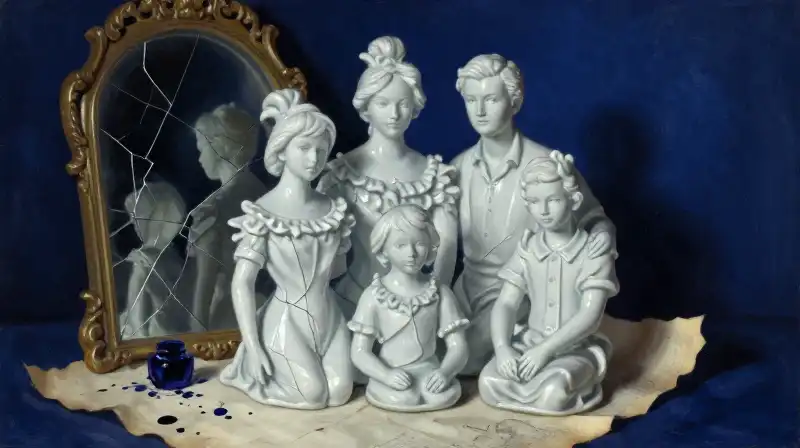
Even when modern plays use traditional structures like the “family drama,” they rarely follow the old rules of domestic stability. Instead, they often use these settings to explore much darker or more complex territories.
The “family drama” remains a staple, but writers like Stephen Karam subvert it by using intense naturalism to portray families in a state of “emotional freefall” (The Humans) [2]. Similarly, the “dark comedy” has become a vital tool for tackling heavy subjects. George F. Walker’s Suburban Motel series and Suzan Lori Parks’ Topdog/Underdog use grit and stylized elements—such as specific soundtracks—to examine the African-American experience and the absurdity of modern survival [1, 2].
Understanding Modernist and Contemporary Plays
A common question for readers and students of theater is: “What are some modernist plays?” To answer this, one must distinguish between the “Modernist” era (late 19th to mid-20th century) and “Contemporary” drama. While Modernism laid the groundwork by breaking from Victorian structures, contemporary drama continues this evolution by incorporating postmodern elements like non-linear narratives and the blurring of reality and illusion.
For those looking for modern plays to read or popular modern plays for high school, the distinction often lies in the balance of accessibility and depth. While high school curricula may lean toward plays with clear social messages, a broader reading includes the “untold stories” championed by playwrights like Lauren Gunderson, who blend scientific inquiry with historical or social nuance [1].
Why Modern Drama Matters

The shift toward modern drama is a shift toward radical empathy. By stripping away the “artifice” of classical theater, contemporary playwrights allow us to see the raw mechanics of human struggle—whether that struggle is against a global economic collapse, a legal system, or the internal chaos of a grieving mind [2]. These plays do not provide easy answers or neat resolutions; instead, they provide a mirror. They demand that we witness the discomfort of the present, making the theater not just a place of escape, but a place of profound, unvarnished encounter.
Sources
- Contemporary/Modern Play Recommendations? : r/Theatre — reddit.com
- Best Modern Plays — stagemilk.com
- 25 Best Plays of the 21st Century — feelinggood.substack.com
Frequently Asked Questions
What are some modernist plays?
The article distinguishes between the Modernist era and contemporary drama but does not provide a specific list of plays from the Modernist era. It focuses instead on contemporary works like Lynn Nottage's "Sweat" and Anthony Neilson's "The Wonderful World of Dissocia."
Related Articles