Aesop’s Ant and the Grasshopper: Themes, Debates, and Interpretations

The Moral Calculus of Summer and Winter
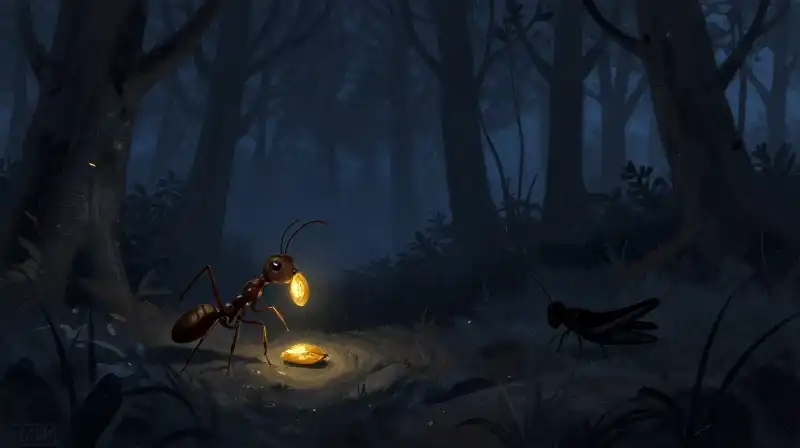
Most readers encounter the story of the Ant and the Grasshopper as a playground staple: a simple, stern lesson in the necessity of labor. In the traditional narrative, a grasshopper spends the summer making music while a family of ants works tirelessly to store grain; when the frost arrives, the starving musician is met with the chilling rebuke, “Making music, were you? Very well; now dance!” [1, 2]. It is a story that feels settled, a foundational pillar of the fable genre intended to instill foresight and industriousness in the young [2].
Yet, beneath this surface-level instruction on hard work lies a complex literary friction that has fueled centuries of debate. While the fable ostensibly celebrates the ant’s prudence, it simultaneously raises uncomfortable questions about the social value of art, the ethics of charity, and the definition of a life well-lived [2]. To look closely at Aesop’s work is to see more than a lesson in survival; it is to see a conflict between the functional requirements of a society and the intangible contributions of culture [2].
The Foundation: Industry as Survival
The most common interpretation of the fable aligns with the virtues of the ant. This perspective is deeply rooted in historical and religious frameworks that prize preparation and self-reliance. For much of Western tradition, the ant has served as a model of the “ideal citizen”—one who provides for themselves and their community through disciplined effort.
- Biblical Parallels: The pro-ant viewpoint finds historical reinforcement in the Book of Proverbs, which commends the ant’s ability to gather supplies in the summer without the need for an overseer [2].
- Maxims of Thrift: The fable has been distilled into various pithy warnings designed to encourage foresight, such as “Work today to eat tomorrow” and “July is follow’d by December” [2].
- The Moral of Improvidence: In its simplest form, the story functions as a cautionary tale against idleness, suggesting that an “idle soul shall suffer hunger” [2].
The Grasshopper as Artist: A Cultural Debate
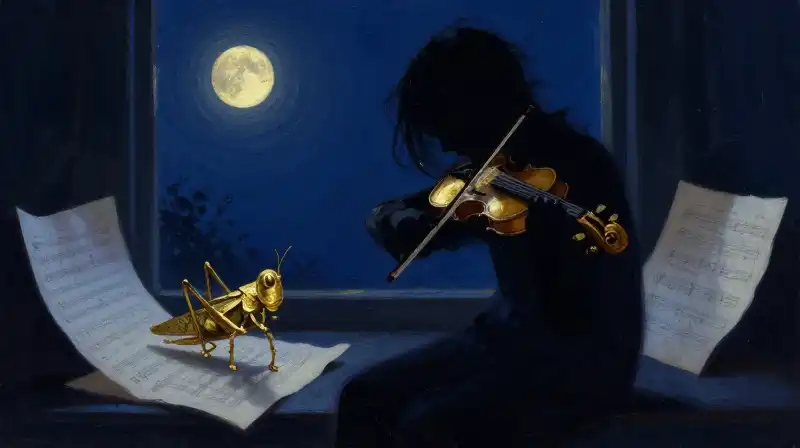
As the fable migrated from simple moral instruction into the realm of literary analysis, the character of the grasshopper underwent a profound transformation. No longer merely a symbol of laziness, the grasshopper has evolved to represent the “type of the artist” [2]. This shift moves the debate from a question of character to a question of sociology: What is the place of the musician, the poet, or the dreamer in a world built on grain and labor? [2]
This tension is perhaps most visible in the evolution of the fable through different literary eras and styles:
| Era/Style | Perspective/Interpretation | Key Contribution |
|---|---|---|
| Classical/Traditional | The Ant is the hero; the Grasshopper is a cautionary failure of planning. | Established the moral of industriousness [2]. |
| Jean de la Fontaine | Introduced irony and social critique through his French retellings, La Cigale et la Fourmi [2]. | Moved away from definitive moral judgment toward ambiguity [2]. |
| 20th Century Art | Artists like Jacob Lawrence suggested that poverty is not always a result of personal improvidence [2]. | Challenged the idea that the grasshopper is solely to blame for his plight [2]. |
| Modern Subversion | Plays like Jean Anouilh’s La Cigale portray the cicada as a nightclub singer [2]. | Explores the gritty, lived reality of an artistic life [2]. |
Shadows of the Fable: Greed and Transformation
While the most famous version of the story focuses on the contrast between work and play, the Perry Index reveals a darker, alternative tradition that complicates our view of the characters. In a “counter-fable” attributed to Aesop (Perry Index 166), the roles are not merely reversed by temperament, but by moral corruption [2].
In this darker interpretation, the ant was originally a man whose greed and habit of plundering his neighbors’ crops led the gods to transform him into an insect [2]. This version shifts the focus from the grasshopper’s laziness to the ant’s predatory nature, suggesting that the “industrious” character may actually be driven by a lack of social empathy and a desire to hoard at the expense of others [2].
Visual and Satirical Evolutions
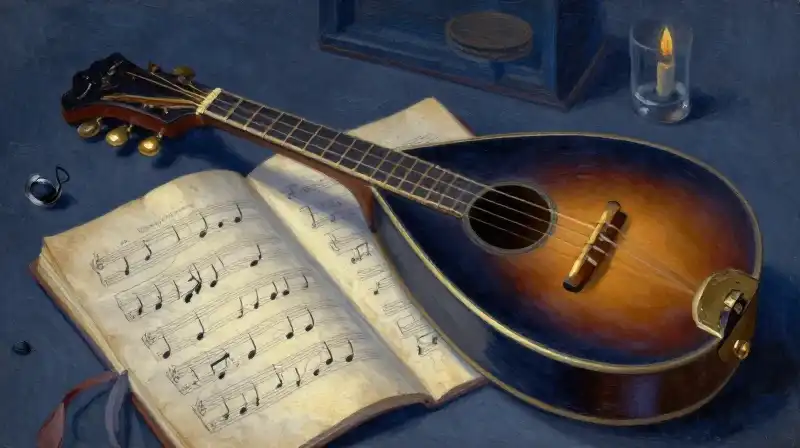
The fable’s journey through the visual arts and popular culture further demonstrates how its themes shift according to the era’s values. In art history, the gender of the characters often shifts due to the linguistic nuances of Romance languages, where the insect names carry feminine genders; consequently, the grasshopper is frequently depicted as a female musician with a mandolin or guitar [2].
In the modern era, the fable has even been used for sharp social satire. Pierre Perret’s 1990 version utilizes urban slang to reimagine the grasshopper as a “queen of the hit parade” [2]. This parody suggests a cynical modern moral: in a commercialized world, it is better to be the impresario managing the talent than the performer struggling to survive [2].
Why the Fable Endures
The reason “The Ant and the Grasshopper” remains a staple of global literature is not because its moral is settled, but because it is fundamentally unsettled. It presents us with an eternal conflict between two essential modes of existence: the necessity of sustenance and the necessity of expression.
Whether we view the ant as a pillar of stability or a symbol of unfeeling greed, or whether we see the grasshopper as a fool or a misunderstood creator, the fable forces us to confront how we value different types of contribution. It asks us to decide where the boundary lies between being a productive member of society and being a person who provides the “music” that makes a society worth living in. Because this tension remains unresolved in our own lives, the fable remains endlessly relevant.
Sources
- Library of Congress Aesop Fables — read.gov
- The Ant and the Grasshopper — en.wikipedia.org
Related Articles