
Aesop’s Sun and the Wind: Themes, History, and Interpretations


The Force of a Gentle Beam
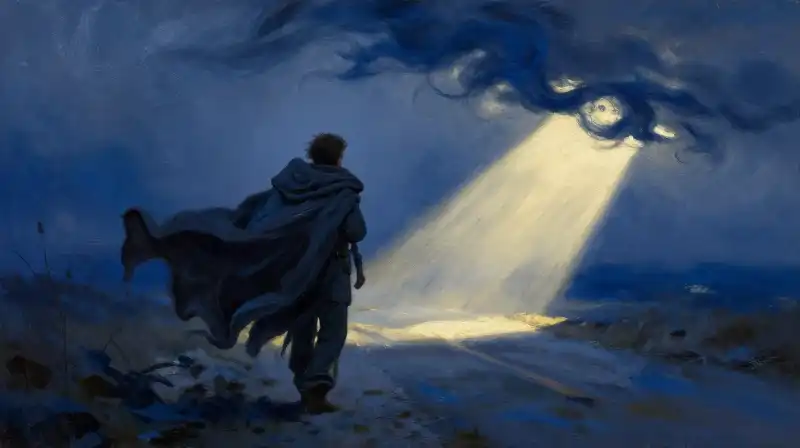
A traveler walks along a road, wrapped tightly in a heavy cloak against the elements. Suddenly, the North Wind begins to howl, unleashing cold, violent blasts in an attempt to strip the man of his garment [1]. The harder the Wind blows, the more tightly the traveler clutches his cloak, seeking refuge from the chill. Then comes the Sun. Instead of a tempest, the Sun offers only gentle beams and steady warmth. Gradually, the heat becomes so intense that the traveler, seeking shade from the blazing sunshine, unfastens his cloak and removes it entirely [1].
This brief encounter between two elemental forces is one of the most enduring examples of the Aesop fable. While it functions as a simple children’s story, “The North Wind and the Sun” operates as a sophisticated psychological and political miniature. It presents a competition not of physical strength, but of efficacy, demonstrating how the method of an approach can determine the success of an outcome.
Defining the Fable: A Structural Overview
To understand why this specific story persists, one must first look at its genre. Many readers ask: Is the Wind and the Sun considered a fable? The answer is a definitive yes. It is categorized as a type 298 folktale in the Aarne–Thompson classification system [2].
A fable is distinguished from other folk genres—such as fairy tales or legends—by its specific structural goals. While a fairy tale often focuses on magic and the hero’s journey, a fable is designed to deliver a “moral,” a concise lesson regarding human behavior or social dynamics. “The North Wind and the Sun” utilizes personification—attributing human qualities like “heat and bluster” or “gentle” intent to natural forces—to make abstract concepts like power and persuasion tangible [1].
Themes: Persuasion Versus Brute Force

The core tension of the narrative lies in the contrast between two opposing modes of influence. The fable suggests that coercion often triggers resistance, whereas gentleness invites cooperation.
- The Failure of Coercion: The North Wind represents “brute force” and “violence” [1]. In the narrative, the Wind’s aggression is counterproductive; it creates a defensive reaction in the traveler, causing him to withdraw and tighten his defenses.
- The Efficacy of Persuasion: The Sun represents “persuasion” and “gentleness” [1, 2]. Rather than attacking the traveler, the Sun changes the environment in a way that makes the traveler’s desired action—removing the cloak—the most logical and comfortable response.
- The Lesson of Moderation: Historically, interpretations of this theme have shifted. While Victorian readers often saw it as a simple lesson that “persuasion is better than force” [2], the 1667 Barlow edition viewed it through a Stoic lens, emphasizing the importance of moderation in one’s actions [2].
Interpretive Evolutions
Because the fable is so economical, it provides a vacuum that different eras and disciplines have filled with their own values. The story is not a static relic; it is a mirror for the culture reading it.
Theological and Psychological Readings
In the 18th century, Johann Gottfried Herder offered a theological interpretation, suggesting the Sun’s warmth served as a metaphor for “Christ’s love” [2]. By the late 19th century, the focus shifted toward the internal workings of the mind. In 1887, Walter Crane provided a psychological reading, arguing that the fable teaches that “true strength is not bluster” [2], moving the lesson from the realm of divine grace to the realm of character and temperament.
Political and Diplomatic Applications
The fable’s logic extends into the halls of modern governance. Scholars have noted how the conclusion—“They cannot win who start with threats”—has echoed in international relations. A notable example is South Korea’s “Sunshine Policy,” which sought to engage North Korea through economic and social engagement rather than purely through military or confrontational pressure [2].
Beyond the Page: A Multi-Disciplinary Legacy
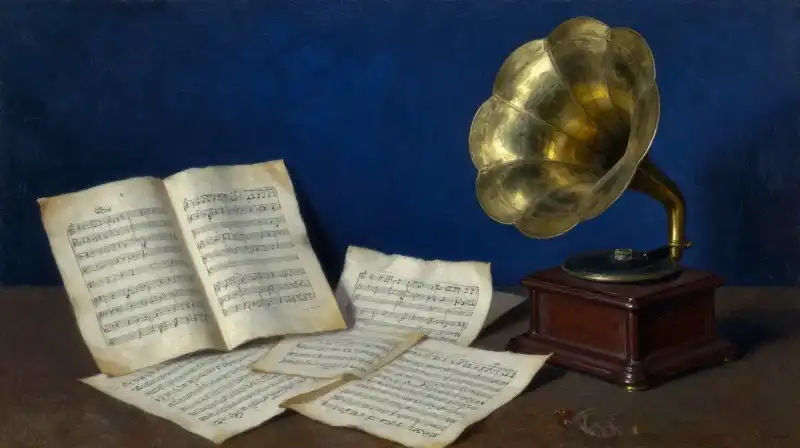
The reach of “The North Wind and the Sun” extends far beyond literary analysis, manifesting in art, music, and even the technical study of language.
| Field | Application / Example |
|---|---|
| Visual Arts | Jean Restout’s 1738 painting for the Hôtel de Soubise and a 1972 National Film Board of Canada animation [2]. |
| Music | Compositions by Anthony Plog (1989/93) for narrator, piano, and horn, and Bob Chilcott (2008) for choir and piano [2]. |
| Linguistics | Used by the International Phonetic Association (IPA) to illustrate spoken language contrasts [2]. |
| Comparative Linguistics | Used to study dialectal differences, such as the American “shined” versus the British “shone” [2]. |
Why the Fable Endures
Aesop’s “The North Wind and the Sun” survives because it captures a fundamental truth about human nature: we are rarely moved by the things that force us, but we are often transformed by the things that welcome us. It is a masterclass in narrative economy, using only a few characters and a single conflict to illustrate a principle that applies to a child’s tantrum, a diplomat’s negotiation, and a philosopher’s ethics. By stripping away the complexities of plot, the fable leaves us with the pure mechanics of influence, making it as relevant in a modern political briefing as it was in the streets of Ancient Greece.
Sources
- Library of Congress Aesop Fables — read.gov
- The North Wind and the Sun — en.wikipedia.org
Frequently Asked Questions
What was Aesop's story about the Wind and the Sun?
The story depicts a competition between the North Wind and the Sun to see who can strip a traveler of his heavy cloak. While the Wind's violent blasts cause the traveler to clutch his garment more tightly, the Sun's gentle warmth eventually leads the traveler to remove it.
Is the Wind and the Sun considered a fable?
Yes, it is definitively considered a fable and is categorized as a type 298 folktale in the Aarne–Thompson classification system. It is distinguished from other genres by its use of personification to deliver a concise moral lesson regarding human behavior.
Related Articles