
Aesop and the Fox: Deception, Reciprocity, and Moral Lessons


Introduction
The figure of the fox in Western literature is rarely a creature of innocence. Instead, he arrives as a master of the social game—a creature of wit, cunning, and often, a predatory sort of intelligence. While the historical existence of Aesop himself remains a matter of scholarly debate and no original manuscripts survive from his hand, the tales attributed to him have coalesced into a singular, enduring tradition of moral instruction [2]. Within this body of work, the fox serves as a primary archetype, a literary tool used to dissect human behavior, social hierarchies, and the mechanics of deception.
To study Aesop and the fox is to study the darker impulses of the human psyche through a zoomorphic lens. Whether through the verbal manipulation of a bird or the physical prank played on a neighbor, the fox embodies the ways in which individuals navigate power and consequence. By examining specific fables, we can move past simple “moral of the story” readings and begin to see how these ancient narratives function as sophisticated explorations of social dynamics.
The Mechanics of Verbal Deception: The Fox and the Crow

One of the most enduring examples of the fox’s character is found in “The Fox & the Crow.” This narrative explores how language can be weaponized to bypass logic and target the ego. In this fable, the conflict is not driven by physical strength, but by a psychological vulnerability: the Crow’s desire for social status [1].
The Fox employs a specific technique of flattery to achieve his ends. Rather than using threats, he utilizes praise, specifically targeting the Crow’s vanity by complimenting her “splendid wings” and “beautiful form” [1]. The goal is to provoke a specific physical reaction—the opening of the beak—which results in the loss of her breakfast. The Crow, hoping to be hailed “Queen of Birds,” falls victim to her own vanity when she attempts to “utter her loudest caw” [1].
The traditional moral of this tale serves as a pragmatic warning about the nature of manipulation: “the flatterer lives at the expense of those who will listen to him” [1]. From a literary perspective, the Fox represents the social predator who uses the victim’s own aspirations against them, turning their desire for recognition into a mechanism for their own downfall.
Reciprocity and Poetic Justice: The Fox and the Stork
While “The Fox & the Crow” focuses on the deception of the tongue, “The Fox and the Stork” examines the consequences of social behavior and the principle of reciprocity. In this tale, the Fox is defined by a mischievous, perhaps even malicious, desire to play tricks on his neighbors [2].
The structure of this fable is built upon a cycle of actions and reactions:
- The Initial Slight: The Fox invites the Stork to dinner but serves soup in a low, shallow bowl. Because of the Stork’s long neck, she cannot access the food, leaving her hungry while the Fox eats his fill [2].
- The Retaliation: The narrative utilizes a structure of poetic justice. The Stork responds in kind, serving the Fox soup in a tall, narrow jar that his snout cannot reach, effectively mirroring his original cruelty [2].
- The Moral Outcome: Standard interpretations suggest a lesson in reciprocity: “be ready for the things you do to come back to you” or “don’t play tricks on your neighbors unless you can stand the same treatment yourself” [2].
Alternative Interpretations: Perspective vs. Morality
Beyond the binary of “good” and “bad” behavior, contemporary readings offer a more nuanced look at the Stork’s retaliation. Rather than viewing the story solely as a lesson in karma, one can interpret it through the lens of perspective. In this reading, the different vessels used by the Fox and the Stork represent the reality that individuals “thrive in very different circumstances” [2]. What is a functional tool for one creature is an obstacle for another; the fable thus becomes a study in how social structures and “tools” are not universal, but are deeply tied to the specific needs and physical realities of the individual [2].
What does the fox symbolize in fables?

In the context of Aesopic tradition, the fox is a character archetype used to explore complex social dynamics. He is rarely a hero, but he is almost always an active participant in the lesson. The symbolism typically splits into two categories:
- The Intellectual Predator: As seen in “The Fox & the Crow,” the fox symbolizes the use of intellect and language to bypass the defenses of others. He represents the “sly” manipulator who understands that vanity is often a more effective entry point than force.
- The Social Disrupter: As seen in “The Fox and the Stork,” the fox symbolizes the individual who fails to respect the boundaries or needs of the community, eventually learning that social cohesion requires empathy and mutual consideration.
Comparing the Fox’s Methods
To better understand how these stories function differently, we can contrast the two primary modes of the Fox’s interaction with other characters:
| Feature | The Fox & the Crow | The Fox and the Stork |
|---|---|---|
| Primary Tool | Verbal flattery and psychological manipulation [1] | Physical tricks and social exclusion [2] |
| Target Vulnerability | The victim’s ego and desire for status [1] | The victim’s physical/biological needs [2] |
| Narrative Function | To warn against deceptive language [1] | To illustrate reciprocity and perspective [2] |
| The “Lesson” | The danger of the flatterer [1] | The inevitability of consequences [2] |
Synthesis: Why the Fables Endure
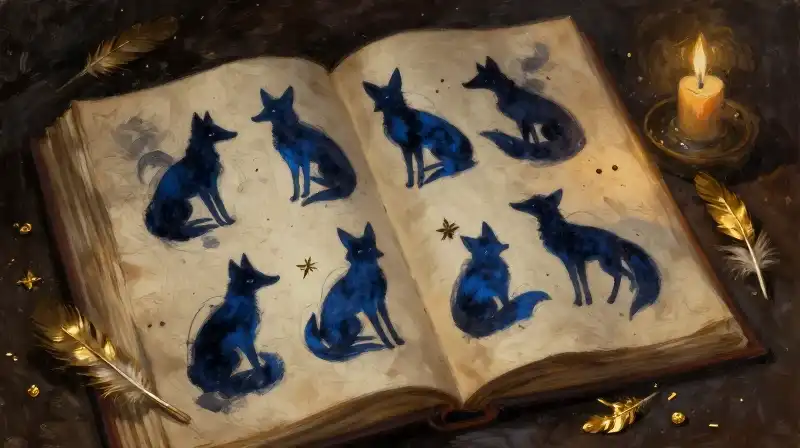
The enduring power of Aesop’s fables lies in their ability to distill vast, complex human truths into brief, digestible encounters. By using the fox—a creature that is both recognizable and slightly “other”—the narratives allow readers to examine social cruelty, vanity, and justice without the immediate discomfort of a direct human critique. Whether we are reading the Fox as a warning against the sweet words of a manipulator or as a lesson in the necessity of social reciprocity, these stories provide a framework for understanding how our actions and our words echo back to us in a complex social world.
Sources
- Library of Congress Aesop Fables — read.gov
- A Little Happier: Aesop’s Fable about the Fox and the Stork — gretchenrubin.com
Frequently Asked Questions
What is Aesop's fable about the fox?
The article discusses two specific fables: "The Fox & the Crow," which involves verbal manipulation through flattery, and "The Fox and the Stork," which explores reciprocity and social tricks. These tales use the fox to examine themes of deception, vanity, and the consequences of one's actions.
What does the fox symbolize in fables?
The fox symbolizes two primary archetypes: the intellectual predator who uses language and wit to manipulate others' vanities, and the social disrupter who fails to respect community boundaries. Ultimately, he serves as a literary tool to dissect human behavior and social dynamics.
Related Articles