
Science Fiction Horror: From Cosmic Dread to Biological Terror

Introduction
The terror of science fiction horror does not stem merely from the threat of death, but from the dissolution of the laws we rely on to understand reality. In a traditional ghost story, the haunting is often localized to a specific room or a family lineage; in science fiction horror, the haunting is systemic. It is found in the fundamental wrongness of a mutated cell, the crushing indifference of a vacuum, or a piece of technology that begins to mimic the human psyche. By bridging the gap between speculative advancement and psychological dread, this subgenre transforms the wonders of human ingenuity into engines of existential terror [1].
To engage with science fiction horror is to confront the “what if” of our greatest achievements and our most primal fears. Whether it is the claustrophobia of a dying starship or the unsettling realization that our own biology can be rewritten by an alien influence, the genre succeeds by making the impossible feel devastatingly plausible.
The Dimensions of Dread: Mapping the Subgenre
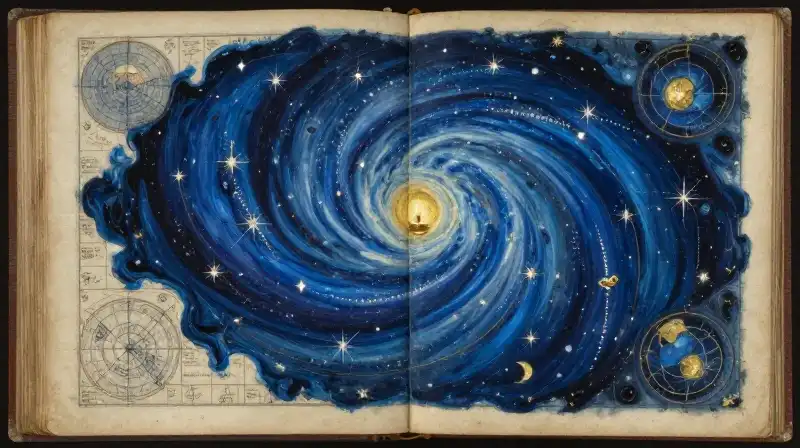
Science fiction horror is rarely a monolith. It functions as a spectrum, stretching from the visceral, “body horror” of biological mutation to the abstract, “cosmic horror” of an incomprehensible universe. Understanding these distinctions helps readers navigate the varied ways authors deploy speculative elements to induce fear.
Cosmic and Space-Based Horror
At one end of the spectrum lies cosmic horror, a mode of storytelling where the primary antagonist is not a monster, but the scale of the universe itself. This brand of dread suggests that humanity is an insignificant speck in a vast, often hostile, cosmos. This theme is echoed in the atmospheric tension of the Dead Space video game, where the scale of the threat feels both otherworldly and overwhelming [1].
Space-based horror often utilizes the concept of isolation to heighten tension. When characters are removed from the safety of Earth and placed in the vacuum of deep space, the setting itself becomes a predator. We see this in S.A. Barnes’s Dead Silence, which explores the haunting silence of derelict vessels [1]. Other works, such as Paul E. Cooley’s Station 3, shift this survivalist focus from the ship to the planet, maintaining the core feeling of being trapped in an environment that does not care if you live or die [1].
Biological and Evolutionary Terror
If cosmic horror attacks the mind, biological horror attacks the flesh. This subgenre focuses on the terrifying malleability of life and the horror of being “unmade” by evolution or infection. Notable examples include:
- Nick Cutter’s The Troop: A visceral exploration of biological horror involving parasitic evolution [1].
- Scott Smith’s The Ruins: A study in how nature can become an active, predatory participant in a survival narrative [1].
- Technological Mimicry: Some narratives explore entities that absorb or mimic matter, such as the entities found in Paul E. Cooley’s The Black series, which evoke the shape-shifting dread of the T-1000 from Terminator 2 [1].
Temporal and Reality-Bending Horror
Some of the most sophisticated science fiction horror moves away from the physical and toward the structural. These stories use time travel or shifts in reality to create a sense of disorientation. Tom Sweterlitsch’s The Gone World utilizes time travel as a vehicle for a detective narrative, where the investigation of a crime is inextricably linked to the unraveling of temporal stability [1]. Similarly, experimental writers like Brian Evenson use “reality-bending” techniques to challenge the reader’s perception of what is real, as seen in The Glassy, Burning Floor of Hell [1].
Comparing Narrative Approaches
To better understand how these elements interact, it is helpful to contrast the primary modes of science fiction horror.
| Subgenre Mode | Primary Source of Fear | Key Literary Technique | Representative Example |
|---|---|---|---|
| Cosmic Horror | The vastness/indifference of the universe | Scale and existential insignificance | Dead Space (Atmospheric influence) [1] |
| Biological Horror | Loss of bodily autonomy/mutation | Visceral, sensory descriptions of decay | The Troop by Nick Cutter [1] |
| Technological Horror | Misuse of science/AI/Mimicry | The “Uncanny Valley” and loss of control | The Black by Paul E. Cooley [1] |
| Temporal Horror | The breakdown of causality/time | Non-linear plotting and disorientation | The Gone World by Tom Sweterlitsch [1] |
The Intersection of Science and Thriller
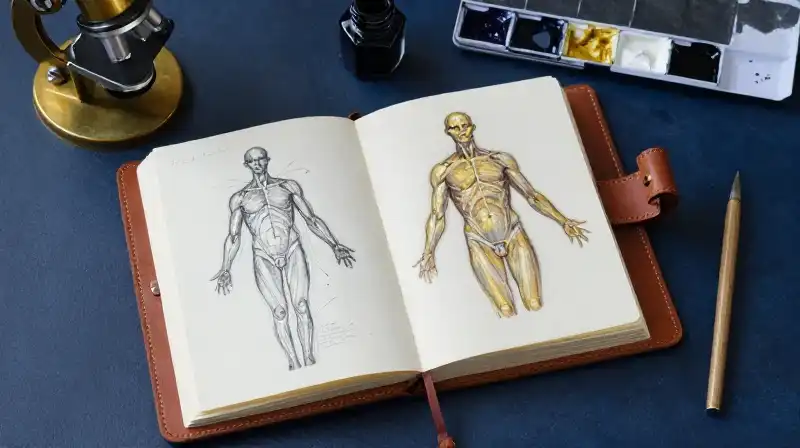
A significant portion of science fiction horror leans into the “techno-thriller” space, where the horror is grounded in research-based science rather than pure fantasy. Michael Crichton is perhaps the most prominent architect of this intersection. In works like Sphere and Prey, Crichton utilizes scientific concepts—such as deep-sea discovery or genetic engineering—to build a foundation of realism that makes the subsequent horror feel inevitable [1].
This approach is shared by authors like Douglas Preston and Lincoln Child, who often explore the boundary where rigorous scientific research meets the inexplicable or the monstrous, as seen in Relic [1]. By grounding the narrative in the “how” of science, these authors ensure that the horror feels like a logical, if terrifying, extension of human progress.
Modern Mythologies and High-Concept Themes
As the genre evolves, it is increasingly drawing from new cultural wells. We are seeing the rise of science fiction horror rooted in internet-born mythologies, such as the SCP Foundation or the “Backrooms” concept, where the horror is found in liminal spaces and anomalous, documented entities [1].
Furthermore, the genre is occasionally used to explore profound literary questions regarding identity. While not always classified as “horror,” Kazuo Ishiguro’s Never Let Me Go uses science fiction elements to probe the ethics of existence and the fragility of the self, demonstrating how the speculative can serve as a mirror for the human condition [1]. Whether through the lens of Koji Suzuki’s Ring series, which weaves sci-fi into a larger horror framework [1], or through claustrophobic, urban settings like an apartment building plunged into chaos [2], the genre continues to find new ways to unsettle our sense of place in the world.
Synthesis: Why Science Fiction Horror Matters
Science fiction horror is more than a collection of jump scares or monster encounters. It is a vital literary mode because it forces us to confront the consequences of our own expansion—intellectually, technologically, and biologically. It takes the very tools we use to master our environment and turns them against us, suggesting that our greatest vulnerabilities may lie in the very things we create to protect ourselves. By exploring the edges of the known, these works allow us to process our anxieties about the future, the unknown, and the fundamental nature of what it means to be human.
Sources
- Looking for horror/sci-fi horror recommendations (getting back into reading) : r/horrorlit — reddit.com
- Scary Science Fiction Books For Lovers Of Horror And Sci-Fi — owlcrate.com
Related Articles