Classic Books for Young Readers: A Guide to Essential Genres

Introduction
There is a distinct, often visceral threshold that a book crosses when it moves from being a mere story to becoming a “classic” for young readers. It is the moment a narrative ceases to be just a pastime and begins to function as a mirror or a map. Whether it is the survivalist grit of a child alone on an island or the whimsical logic of a journey through a dreamscape, these works do more than entertain; they provide the foundational vocabulary for how a child perceives agency, morality, and the passage of time.
Categorizing these works is rarely a matter of simple age brackets. Instead, it requires an understanding of how different genres approach the development of a young reader’s psyche. A classic children’s novel is often defined by its ability to pair a gripping narrative with prose that is beautiful enough to demand attention, yet clear enough to invite immersion [1]. By examining the specific sub-genres that have stood the test of time, we can better understand why certain stories remain essential touchstones for successive generations.
The Architecture of Adventure: Fantasy and Speculative Fiction
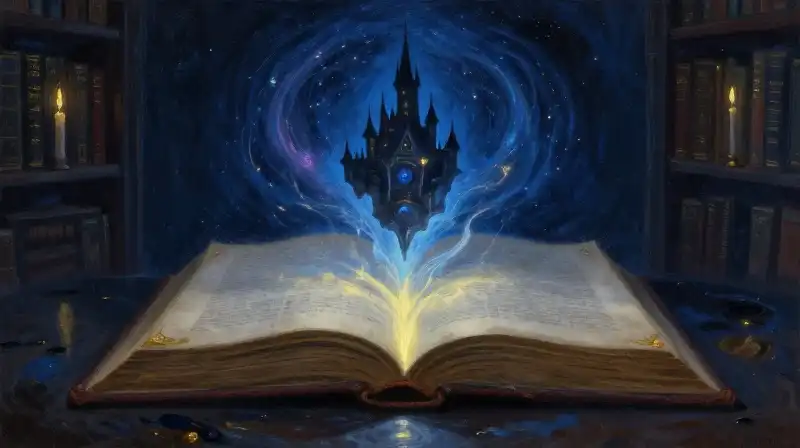
For many young readers, the first encounter with profound literary themes occurs through the lens of the impossible. Fantasy and adventure serve as the bedrock of the genre, providing a safe distance from which to examine complex realities.
- High Fantasy and Portal Narratives: Works like The Chronicles of Narnia by C.S. Lewis or Alice’s Adventures in Wonderland by Lewis Carroll establish worlds with their own internal logic and moral stakes. These stories often use a “portal” to transport the reader from the mundane to the extraordinary, teaching that the world is larger and more mysterious than it appears.
- Speculative and Science Fiction: The genre introduces more abstract concepts through works like Madeleine L’Engle’s A Wrinkle in Time series or the cerebral puzzles of The Phantom Tollbooth [1]. These stories use speculative elements to explore physics, philosophy, and the nature of reality, challenging the reader’s intellect.
- Magical Realism and Whimsy: Not all fantasy seeks to build vast empires. The gentle, often surrealist enchantment found in Winnie-the-Pooh, Mary Poppins, or the Moomin tales by Tove Jansson focuses on the wonder of the immediate, magical details of life [1].
The Mirror of Experience: Survival, Realism, and Coming-of-Age
While fantasy explores what *could* be, realistic classics often grapple with what *is*. These narratives ground the reader in the human experience, offering models of resilience and identity formation.
Survival and the Natural World
Survival stories are a potent sub-genre, often focusing on the intersection of human will and the indifference of nature. Books such as Island of the Blue Dolphins, Julie of the Wolves, and My Side of the Mountain use isolation to strip a character down to their most essential traits [1]. This genre teaches resourcefulness and the profound connection between humans and their environment.
Coming-of-Age and Domestic Realism
Character-driven narratives often focus on the transition from childhood to adolescence. These stories frequently feature strong female protagonists navigating the constraints of their social or historical eras. Examples include the spirited independence of Anne of Green Gables, the familial complexities of Louisa May Alcott’s Little Women, and the quiet resilience found in Heidi or A Little Princess [1].
In a different vein, historical realism—seen in Laura Ingalls Wilder’s Little House on the Prairie series or the contemporary domesticity of Beverly Cleary—provides a sense of continuity, showing how the “small” moments of daily life and historical shifts shape an individual’s growth [1].
The Complexity of the Animal Narrative
One of the most enduring motifs in children’s literature is the use of animal protagonists. This technique allows authors to explore intense emotions or social structures through a lens that is both accessible and allegorical.
| Tone and Theme | Representative Works | Literary Function |
|---|---|---|
| Gentle/Sentimental | Charlotte’s Web, The Velveteen Rabbit | Explores friendship, empathy, and the softness of early childhood emotions [1]. |
| Intense/Mature | Watership Down, Black Beauty, The Rats of NIMH | Addresses mortality, societal struggle, and survival with significant psychological depth [1]. |
It is important to note the distinction in reading maturity here. While a book may be classified under “children’s literature,” works like Watership Down are considered quite mature pieces due to their visceral handling of death and leadership [1].
Mastering the Craft: Why Some Stories Endure
Why do we return to Roald Dahl or Antoine de Saint-Exupéry? The answer lies in the marriage of voice and theme. Dahl, through works like Matilda and Charlie and the Chocolate Factory, mastered a tone that is irreverent, darkly humorous, and deeply sympathetic to the underdog [1]. He creates a world where the small have power, a theme that resonates across all ages.
Conversely, authors like Saint-Exupéry in The Little Prince utilize philosophical and allegorical depth to create stories that function on multiple levels. A child might enjoy the whimsical plot, while an adult finds themselves moved by the meditations on loneliness and the essence of love [1].
Finally, some classics gain their power through their treatment of heavy themes. The poignancy of Tuck Everlasting or The Bridge to Terabithia lies in their refusal to shy away from mortality and the passage of time [1]. By addressing these truths, these books prepare young readers for the complexities of the real world, teaching them that even in loss, there is meaning to be found.
Synthesis: The Enduring Value of the Classic
The “classic” status of these books is not merely a result of their age, but of their ability to adapt. A truly great book for young readers functions as a living thing. It meets the reader where they are—whether they are five years old and seeking the whimsy of Winnie-the-Pooh, or twelve and looking for the survivalist stakes of Julie of the Wolves. By spanning genres from the speculative to the historical, these works provide a comprehensive toolkit for understanding the world, the self, and the profound beauty of the human (and sometimes animal) experience.
Sources
- What book would you recommend as a classic children’s novel? : r/suggestmeabook — reddit.com
Related Articles