
A Rose for Emily Literary Devices: Themes, Symbols & Style


The Decay of a Monument: An Introduction to Faulkner’s Southern Gothic
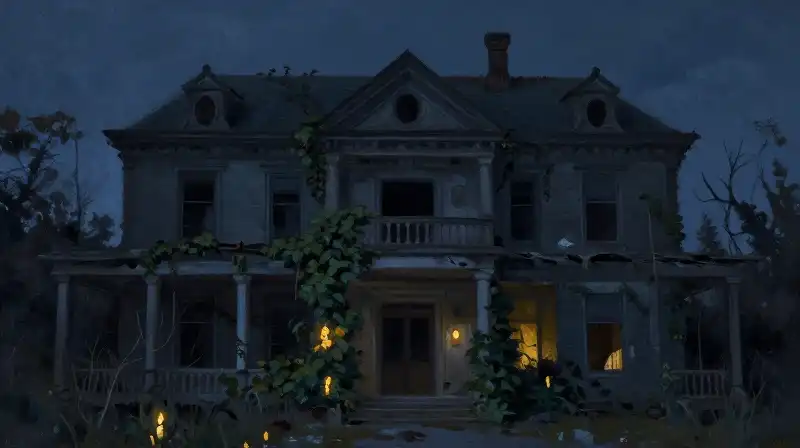
In the dusty, stagnant air of Jefferson, Mississippi, a single house stands as a stubborn defiance against the march of time. This is the setting of William Faulkner’s “A Rose for Emily,” a cornerstone of the Southern Gothic tradition that uses the decaying life of a single woman to mirror the crumbling social structures of the American South. The story does not merely recount a local scandal; it utilizes a carefully constructed toolkit of literary devices to explore how a community grapples with a past it cannot quite let go of, and a history it is ultimately forced to pay for [1].
To read “A Rose for Emily” is to navigate a landscape of sensory discomfort and psychological tension. Faulkner employs an eerie, curious tone to draw the reader into the intimate yet distant observations of a community that both watches and judges its most eccentric resident. By dissecting the specific rhetorical and symbolic choices made in the text, we can begin to see how Faulkner transforms a grotesque tale into a profound meditation on memory, class, and the inevitability of change.
Understanding the Southern Gothic Context
A common question for readers is: What literary movement is A Rose for Emily in? The answer lies in the Southern Gothic genre. This subgenre of Gothic fiction is characterized by a preoccupation with the decaying grandeur of the Old South, the psychological instability of its characters, and a pervasive sense of unease. Rather than ghosts in castles, the “monsters” here are found in the social pressures of small towns and the mental fractures caused by isolation and poverty [1].
Faulkner uses Emily Grierson not just as a character, but as a vessel for these themes. She is described through metaphor as a “fallen monument” in the opening paragraph, suggesting that she is a relic of a bygone era—a living piece of history that is slowly being reclaimed by the earth [1].
A Toolkit of Tension: Literary Devices and Style

Faulkner’s mastery of craft is evident in how he uses specific linguistic tools to control the reader’s perception. His prose is rarely simple; it is layered with devices that create a sense of claustrophobia and inevitability.
Rhetorical Pacing and Rhythm
The rhythm of the narrative is often manipulated to reflect the heavy, dragging nature of time in Jefferson. Faulkner utilizes several rhetorical techniques to achieve this:
- Polysyndeton: By using repeated conjunctions (e.g., “with nigros and mules and machinery and a foreman”), Faulkner slows the reader down, creating a sense of accumulation and weight [1].
- Anaphora: The repetition of phrases at the beginning of successive clauses (such as “she will kill herself…she will marry him…she will persuade him”) builds a rhythmic, almost incantatory momentum that underscores the inevitability of Emily’s actions [1].
- Asyndeton: Conversely, the omission of conjunctions in sequences like “daily, monthly, yearly” creates a sense of rapid, unrelenting passage of time [1].
Imagery and Figurative Language
The physical world of the story is as alive and decaying as the characters themselves. Faulkner employs personification and oxymoron to blur the lines between the human and the inanimate:
- Personification: The Grierson house is not merely old; it possesses a “stubborn coquettish decay,” giving the architecture a sense of human agency and failing dignity [1].
- Oxymoron: Faulkner describes Emily’s surroundings as “heavily lightsome,” a contradiction that captures the surreal, dreamlike, and unsettling atmosphere of her existence [1].
- Hyperbole: To emphasize the house’s alienation from the modernizing town, it is described as “an eyesore among eyesores” [1].
- Simile: Atmosphere is heightened through comparisons that evoke stillness and death, such as describing something “like a body submerged in motionless water” [1].
Themes, Symbols, and the Weight of the Past
Beyond the mechanics of prose, the story is driven by deep symbolic resonance. Readers often ask, what is a metaphor in A Rose for Emily? One of the most potent metaphors is the house itself, which serves as an extension of Emily’s psyche and the South’s refusal to modernize [1].
Symbolism and Motifs
Faulkner weaves symbols into the fabric of the narrative to provide subtextual meaning:
- Color Symbolism: The color white is utilized to represent purity—perhaps a tragic or forced purity—while the color yellow may signify a complex mix of happiness, caution, or friendship [1].
- The Motif of Poverty: The narrative suggests a link between the abnormalities in Emily’s character and the crushing effects of poverty, highlighting how social and economic decline can warp the human spirit [1].
The Burden of History
A central theme is the South’s relationship with its history. Through historical allusions to the Union and Confederate soldiers who fell during the battle of Jefferson, Faulkner grounds the story in a real, violent past [1]. The narrative suggests that the region cannot simply ignore its history; it must either outlive it or suffer the consequences of its refusal to change [1].
Irony, Foreshadowing, and the Narrative Reveal

For many, the most striking element of the story is the conclusion. What is an example of irony in A Rose for Emily? The central irony is the discrepancy between Emily’s public persona—a dignified, albeit eccentric, lady of high standing—and the gruesome reality of her private life. The town views her as a monument to be respected, while she is actually a creature of profound, morbid isolation.
This shock is earned through meticulous foreshadowing. Before the final reveal, Faulkner plants subtle clues, such as the pervasive “smell” that haunts the Grierson property just as Emily “vanquished their fathers thirty years before” [1]. This sensory clue serves as an early, unsettling hint of the decay—both literal and moral—hidden behind closed doors.
Why It Matters: The Endurance of the Monument
“A Rose for Emily” remains a vital piece of literature because it refuses to provide easy answers. Through his sophisticated use of literary devices—from the rhythmic pulse of polysyndeton to the unsettling personification of a decaying house—Faulkner forces the reader to confront the grotesque intersection of tradition and madness. The story matters because it captures a universal truth: that when we attempt to freeze time or live solely within the shadows of the past, we do not preserve history; we merely invite decay. Emily Grierson is not just a character in a Southern Gothic tale; she is a cautionary study of what happens when the “monuments” we build to our own heritage become our prisons.
Sources

- A Rose for Emily Literary Devices Flashcards | Quizlet — quizlet.com
Frequently Asked Questions
What literary movement is A Rose for Emily in?
The story belongs to the Southern Gothic genre. This subgenre is characterized by a focus on the decaying grandeur of the Old South, psychological instability, and a pervasive sense of unease.
What is a metaphor in A Rose for Emily?
One of the most potent metaphors is the house itself, which represents an extension of Emily's psyche and the South's refusal to modernize. Additionally, Emily is described through the metaphor of a "fallen monument" to suggest she is a relic of a bygone era.
What is an example of irony in A Rose for Emily?
The central irony is the discrepancy between Emily's public persona as a dignified lady of high standing and the gruesome, morbid reality of her private life. While the town respects her as a monument, she is actually living in profound isolation.
Related Articles