Aesop’s Animals: Literary Archetypes vs. Biological Reality

Introduction
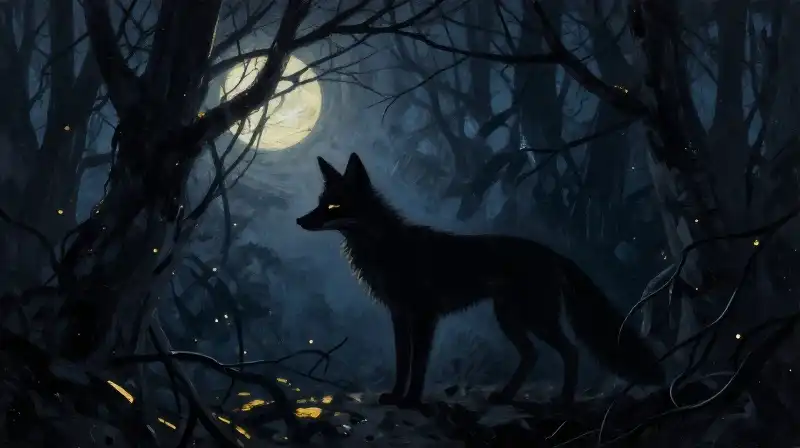
In the literary imagination, the wolf is rarely a creature of biological nuance; it is a shadow in the brush, a symbol of predatory malice. The fox is not merely a canine, but a master of deception, and the tortoise is less a reptile and more a vessel for the virtue of persistence. These are the inhabitants of the Aesopic tradition—a world where the animal kingdom serves as a mirror for human morality, stripped of the complexities of biology to better illuminate the sharp edges of character [2].
While we often speak of “Aesop’s Fables” as the work of a single Greek storyteller active between 620 and 564 BCE, the reality is more akin to a literary lineage than a single bibliography [2]. Modern scholars view “Aesop” as a monumental catch-all name for a vast collection of oral traditions and short narratives that lacked a specific author [2]. These stories, which moved from oral tradition to Greek and Latin manuscripts before settling into European vernaculars, have functioned as more than just bedtime stories [2]. They have served as ethical guides, political satires, and even aetiological tools—stories that explain why the natural world behaves as it does [2]. By examining the tension between the literary archetypes of these animals and their biological counterparts, we gain a deeper understanding of how the fable uses metaphor to shape human perception.
The Versatility of the Fable Genre
To understand why Aesop’s animals are so enduring, one must first understand that the fable is a multi-tool of literature. It is not a monolithic genre; rather, it adapts its shape to the needs of the storyteller and the era [2].
- Ethical Instruction: Perhaps the most common contemporary view is that fables serve as moral compasses for children, teaching virtues like temperance or the dangers of pride through simple, digestible narratives [2].
- Extended Proverbs: Some fables act as narrative expansions of existing folk wisdom, providing a concrete scenario to illustrate an abstract saying [2].
- Aetiological Explanations: Many tales function as “why” stories, offering mythological or folkloric reasons for animal traits—such as why an ant is perceived as a thieving creature [2].
- Social and Political Satire: Historically, especially prior to the Renaissance, these stories were often directed at adult audiences to critique social hierarchies and political power structures [2].
Literary Archetypes vs. Biological Reality
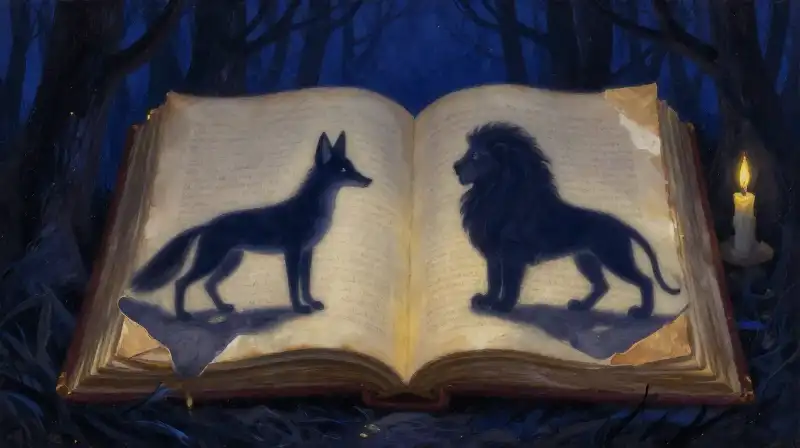
The power of the fable lies in its ability to flatten an animal’s identity into a single, recognizable trait. This creates a “literary archetype”—a character that represents a concept rather than a living being. However, this simplification often stands in direct opposition to scientific reality [3].
| Animal | Literary Archetype (The Fable) | Biological Reality (The Science) |
|---|---|---|
| The Wolf | A villainous, malevolent predator driven by cruelty [3]. | A highly social, intelligent, and loyal animal that hunts for survival, not malice [3]. |
| The Crow | Often depicted as a scavenger or a cunning trickster [3]. | Highly intelligent corvids capable of complex problem-solving, such as using stones to raise water levels [3]. |
| The Pigeon | Often cast as a simple or foresightless creature [3]. | Possess exceptionally strong vision and advanced discriminative abilities [3]. |
| A symbol of industriousness or, conversely, a thieving creature [2, 3]. | Driven by complex instinctive responses and biological imperatives rather than individual “planning” [3]. |
This gap between the “literary animal” and the “biological animal” is where the craft of the fable lives. When a writer like Aesop uses a crow, they are not interested in the bird’s plumage or its exact diet; they are interested in the crow’s ability to demonstrate a point about persistence or wit [3]. The tension arises when we mistake the metaphor for the creature itself.
Why did Aesop use animals?
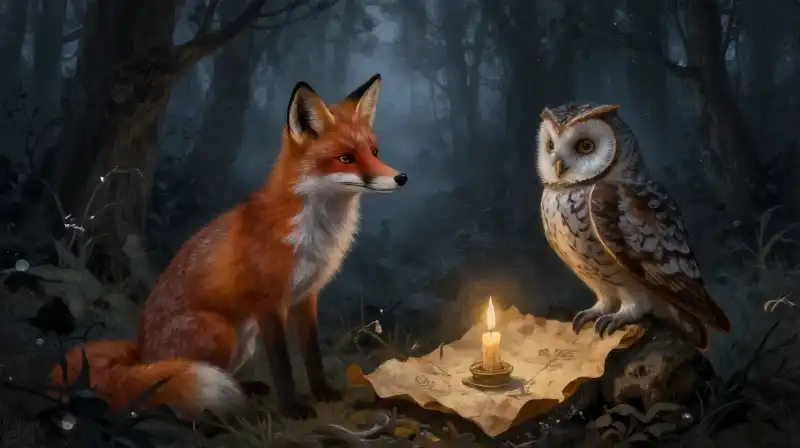
A common question regarding this genre is why the storyteller chooses animals over human characters. The answer lies in the concept of distancing. By removing the narrative from the human sphere, the author can critique human flaws without the immediate sting of direct accusation. It is much easier to discuss the greed of a fox or the vanity of a peacock than to address the greed or vanity of a king or a neighbor. Animals provide a neutral stage upon which the drama of human nature can be performed safely [2].
The Myth of Animal Foresight
One of the most significant literary tropes in Aesop’s work is the concept of “mental time travel”—the ability of an animal to plan for a future need. In The Ants and the Grasshopper, the ants are lauded for their foresight, while the grasshopper is condemned for his lack of it [3].
From a literary standpoint, this is a perfect allegory for the human virtues of discipline and preparation. However, from a biological perspective, this is a simplification of complex evolutionary behaviors. Scientists note that what looks like “planning” for winter—such as grain storage or migration—is often a series of highly sophisticated instinctive responses rather than the individual, conscious cognitive planning seen in humans [3]. The fable takes a biological impulse and reinterprets it as a moral choice.
A Global and Enduring Legacy
The transmission of these tales is a testament to their structural efficiency. Moving from oral traditions to Greek and Latin manuscripts, the stories eventually permeated European vernaculars [2]. Yet, they were not isolated to the West; many Aesopic motifs share deep commonalities with Eastern traditions, such as the Hindu Panchatantra and the Buddhist Jataka tales [2].
Today, the “Aesopica” continues to exist far beyond the printed page. They have been reinterpreted through sculpture, painting, drama, and song, reinforcing the ethical dimensions of these short narratives in the adult world even as they are used to teach children [2]. Whether we are reading The Tortoise & the Hare or The Lion & the Mouse, we are engaging with a framework that has helped humanity categorize its own virtues and vices for over two millennia [1, 2].
Synthesis: Why the Fable Endures
The Aesopic tradition survives because it understands a fundamental truth about storytelling: a character does not need to be “real” to be true. By sacrificing biological accuracy, the fable gains psychological accuracy. The wolf does not need to be a social mammal for the story to work; it only needs to represent the threat of the unknown or the cruelty of the powerful. The fable is a masterclass in economy—using the shortest possible narrative to deliver the deepest possible insight. It turns the natural world into a lexicon of human behavior, ensuring that as long as humans struggle with morality, the animals of Aesop will remain relevant.
Sources
- Library of Congress Aesop Fables — read.gov
- Aesop’s Fables — en.wikipedia.org
- IF Oxford Science Festival — oxmag.co.uk
Frequently Asked Questions
What is the animal in many of Aesop's fables?
The article does not specify one single animal, but mentions various animals used as archetypes, including the wolf, fox, tortoise, crow, pigeon, and ant. These animals serve as mirrors for human morality rather than biological representations.
Why did Aesop use animals?
Aesop used animals to provide "distancing," allowing the storyteller to critique human flaws without direct accusation. Animals act as a neutral stage where the drama of human nature can be performed safely.
Related Articles