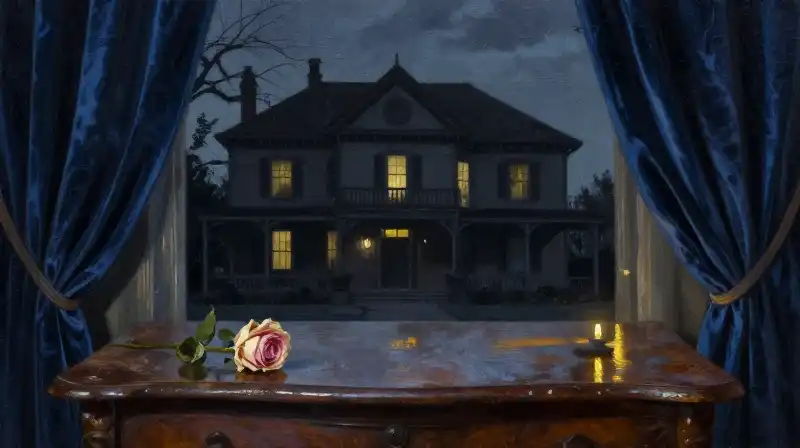
Literary Devices in To Kill a Mockingbird: A Comprehensive Guide


Introduction
When we read Harper Lee’s To Kill a Mockingbird, we often find ourselves swept up in the moral gravity of Atticus Finch’s defense of Tom Robinson or the childhood wonder of Scout and Jem’s fascination with Boo Radley. However, the enduring power of the novel does not rely solely on its heavy themes of racial injustice and the loss of innocence; it relies on the precision of Lee’s prose. The story of Maycomb, Alabama, is not merely told; it is constructed through a sophisticated architecture of literary devices that transform a regional setting into a living, breathing, and often claustrophobic world.
To understand why this novel remains a cornerstone of American literature, one must look beneath the surface of the plot to see how Lee employs language to manipulate mood, build character, and anchor the reader in a specific historical reality. By examining the metaphors, symbols, and structural choices Lee makes, we can see how she moves the reader from the simple observations of a child to the profound, often painful realizations of an adult.
Building the World: Atmosphere and Sensory Detail

Lee does not simply describe Maycomb; she gives the town a temperament. Through personification and vivid imagery, she establishes a setting that feels both permanent and exhausted, mirroring the social stagnation of the Deep South during the Great Depression.
- Personification: Lee breathes life into the inanimate to establish a sense of weary history. She describes Maycomb as “tired” and depicts the courthouse in the square as “sagging” [1]. This technique suggests that the town itself is burdened by its own traditions and social weight.
- Simile and Imagery: To ground the reader in the sensory experience of the South, Lee uses sharp, evocative comparisons. She might describe shadows as “crisp as toast” or compare the sound of Zeebo’s reading voice to the “rumble of distant artillery” [1]. These comparisons do more than create a picture; they set a tone that fluctuates between domestic comfort and underlying tension.
- Onomatopoeia: To punctuate the rhythm of specific scenes, Lee utilizes sound-mimicking words—such as “punk, punk, punk” or “bam, bam, bam”—to heighten the immediacy of the narrative experience [1].
Structural Craft: Time and Tension
A novel’s impact is often determined by how information is revealed. Lee utilizes specific narrative structures to manage the reader’s emotional engagement and to bridge the gap between the child’s perspective and the adult’s retrospective understanding.
Flashback and Narrative Perspective
The narrative frequently employs flashback to provide essential context. By having Scout recall specific events, such as the details of Jem’s broken arm at the elbow, Lee allows the reader to understand the present through the lens of the past [1]. This retrospective viewpoint is crucial; it allows the story to maintain the innocence of a child’s perception while providing the clarity of an adult’s memory.
Foreshadowing and Tension
Lee is a master of the slow build. She uses foreshadowing to signal that the idyllic childhood of the Finch children is nearing an end. The ominous note that “a nightmare was upon us” or the subtle, nervous interactions between Atticus and the judge serve to prepare the reader for the inevitable shift from a coming-of-age tale to a legal and moral drama [1].
The Language of Social Reality

One of the most effective ways Lee distinguishes her characters is through the specific way they use language. The social hierarchy of Maycomb is not just described; it is heard through the dialogue and the cultural markers embedded in the text.
- Dialect and Idioms: Lee incorporates regional dialect to reflect the social and regional realities of the setting [1]. This is supplemented by the use of naturalistic idioms, such as “counting his chickens” or “fought him tooth and nail,” which ground the dialogue in a believable, lived-in reality [1].
- Hyperbole: Character traits are often magnified to emphasize their impact on the children. Characters might seem “seven feet high” or possess an “infinite capacity for calming turbulent seas,” using exaggeration to mirror the way children perceive the larger-than-life figures in their world [1].
- Allusion: To place Maycomb within the broader tapestry of history, Lee uses allusions. References to the “Battle of Hastings,” the “War Between the States,” and political sentiments like “nothing to fear but fear itself” ground the localized struggle of the trial in the larger historical and cultural currents of America [1].
Deepening the Meaning: Metaphor, Symbol, and Irony
Beyond the surface level of the story, Lee uses advanced literary tools to weave together the book’s complex themes of justice, prejudice, and morality.
| Device | Function in the Novel | Example/Application |
|---|---|---|
| Metaphor | To provide conceptual frameworks for abstract ideas. | Describing the school system as a “treadmill” or the town as an “island in a patchwork sea” [1]. |
| Symbolism | To represent larger thematic truths through objects or motifs. | The use of the “Hot Steams” or specific recurring actions to represent deeper social tensions [1]. |
| Irony | To highlight the contradictions in social behavior. | Situational irony, such as Jem using Aunt Alexandra’s own views on family heritage to mock the Ewells’ standing [1]. |
Why These Devices Matter

The brilliance of To Kill a Mockingbird lies in the fact that its literary devices are never merely ornamental. They are functional. The metaphors don’t just decorate the prose; they explain the stifling nature of social institutions. The dialect doesn’t just provide “flavor”; it establishes the rigid class and racial boundaries that Atticus Finch must navigate. The foreshadowing doesn’t just create suspense; it prepares the reader for the inevitable collision between childhood idealism and adult reality.
By mastering these elements, Harper Lee ensures that the reader does not just observe the trial of Tom Robinson or the mystery of Boo Radley, but experiences the weight of the world they inhabit. The devices allow the novel to function simultaneously as a tender memoir of childhood and a sharp, devastating critique of social injustice.
Sources
- To Kill A Mockingbird ALL literary elements Flashcards | Quizlet — quizlet.com
Frequently Asked Questions
What literary devices are used in To Kill a Mockingbird?
The novel employs a variety of devices including personification, simile, imagery, onomatopoeia, flashback, and foreshadowing. Additionally, Lee utilizes dialect, idioms, hyperbole, allusion, metaphor, symbolism, and irony to build the story's themes.
Related Articles