
Best Modern Plays: Essential Works and Essential Playwrights

Introduction
The stage of the twenty-first century has undergone a profound transformation, shifting away from the sweeping, grandiloquent gestures of the previous century toward a more granular, intimate, and often unsettling exploration of contemporary life. While the “classics” offer us a mirror of universal truths, modern plays—specifically those written after 2000—function more like a microscope, magnifying the quiet anxieties, economic precarity, and psychological fractures of our immediate era [1]. From the hyper-realistic silence of a New England living room to the surrealist frenzy of a corporate boardroom, the best modern plays do not merely tell stories; they inhabit the specific textures of modern existence.
To engage with contemporary drama is to encounter a landscape that is increasingly versatile. We see playwrights utilizing “theatrical surrealism” to depict the chaos of capitalism [1], employing puppetry to reconstruct the lives of historical icons [3], or breaking the fourth wall to cast the audience as active participants in the narrative [3]. This article examines the essential works and playwrights defining this era, categorizing them by the ways they challenge our perception of reality, identity, and society.
The Architecture of Silence and Interiority
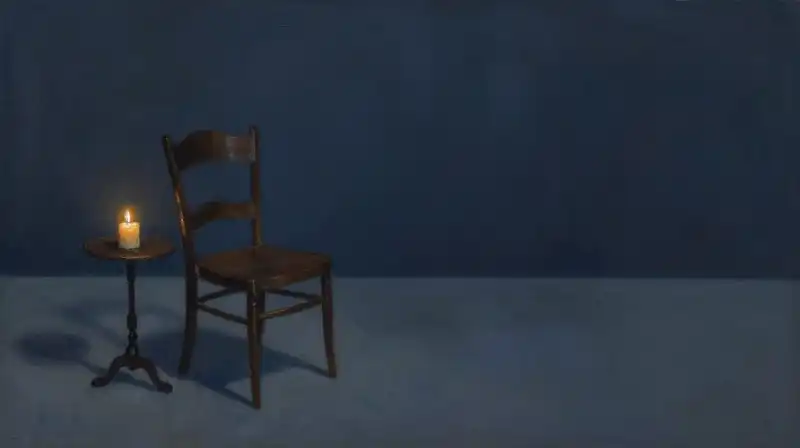
One of the most significant shifts in modern drama is the movement toward “hyper-realism,” where the drama lies not in what is said, but in the agonizing space between words. This style often favors intimate theaters and smaller companies, allowing for a level of psychological nuance that larger spectacles cannot sustain [1].
- Annie Baker and the Power of Pause: Baker has become a definitive voice in contemporary drama through her mastery of pacing. In her 2010 play The Aliens, she utilizes a text that specifies one-third of the performance should be silent [1]. This “famously slow, awkward” pacing is a deliberate craft choice used to capture the aimlessness of youth and the fragile nature of male bonding, forcing the audience to sit within the discomfort of the unsaid.
- The Anatomy of Grief: Modern plays frequently move away from the “melodrama” of loss, opting instead to examine the ripple effects of tragedy on the community at large. David Lindsay-Abaire’s Rabbit Hole (2005) exemplifies this, providing a precise look at how a single death reconfigures the lives of those left behind [1]. Similarly, Feildlim Cannon’s Have I No Mouth (2012) uses a “phantasmagoria” style to explore the surreal, often nightmarish quality of family tragedy [1, 3].
- Psychological Manifestation: Rather than merely describing a mental state, modern playwrights often manifest psychological conditions through stagecraft. Anthony Neilson’s The Wonderful World of Dissocia (2004) uses a “bizarre” landscape to visually and physically represent the experience of dissociative disorder, turning an internal struggle into an external, theatrical reality [1].
Sociopolitical Tensions and Economic Drivers
While some modern plays turn inward, others use the stage to dissect the external forces—politics, class, and capitalism—that shape human behavior. The “death of the American Dream” and the volatility of global markets have become central dramatic engines.
| Theme | Representative Work | Dramatic Approach |
|---|---|---|
| Class & Labor | Sweat by Lynn Nottage (2017) | Explores the erosion of the working class within the context of an American bar [1]. |
| Capitalism & Debt | Love and Money by Dennis Kelly (2006) | A dissection of consumerism and the destructive nature of debt [1]. |
| Corporate Conspiracy | Enron by Lucy Prebble (2009) | Uses “theatrical surrealism,” including on-stage velociraptors, to depict corporate greed [1]. |
| Race & Identity | Topdog/Underdog by Suzan Lori Parks (2002) | A dark comedy examining the complexities of the African-American experience [1]. |
Historical Reimagining and Genre Fluidity

Modern playwrights often look backward to find the language necessary to discuss the present. By placing contemporary dialogue into historical settings, or using historical styles to imagine the future, they highlight the cyclical nature of power and conflict.
Ava Pickett’s 1536 uses the setting of Tudor England to explore the reigns of Henry VIII and Anne Boleyn, but it distinguishes itself through “razor-sharp” contemporary dialogue that allows for a modern critique of historical power structures [1]. In a reversal of this trend, Mike Bartlett’s King Charles III (2015) utilizes a Shakespearean history style to project a potential future for the British monarchy, demonstrating how the tools of the past can be used to interrogate the anxieties of the future [1].
We also see a rise in experimental and immersive formats that challenge the traditional “observer” role of the audience:
- Immersive Environments: Louise Lowe’s The Boys of Foley Street (2012) employs a “breakneck immersive” style that pulls the audience into the narrative space [3].
- Audience Participation: Alexander Wright’s The Great Gatsby (2017) casts the audience members as actual party guests, blurring the line between the performance and the spectator [3].
- Non-Human Performance: Dead Centre’s Beckett’s Room (2019) is a “masterpiece of stage illusions” that utilizes puppetry and lighting to tell the story of Samuel Beckett, eschewing live performers to create a ghostly, ethereal atmosphere [3].
Essential Playwrights for the Contemporary Reader
For those looking to build a contemporary library or study the current state of the craft, certain names serve as pillars of the repertoire. These authors are noted for their versatility and their ability to tackle complex, often underserved narratives.
- Rajiv Joseph: Frequently cited by practitioners as a “must-read,” Joseph is celebrated for his versatility. His work, such as Bengal Tiger at the Baghdad Zoo (2010), masterfully navigates the search for meaning amidst the chaos of war [1, 2].
- Lauren Gunderson: Known for an emphasis on science, minority voices, and “untold stories,” Gunderson represents a vital trend in modern drama toward inclusive and intellectually rigorous storytelling [2].
- The Pillars: Playwrights like Sarah Ruhl and Tracy Letts are considered essential reading for understanding the structural and thematic breadth of the modern era [2].
Contemporary Plays for Students and Researchers
If you are looking for contemporary plays for college students or high school students, the focus often shifts toward works that balance intense emotional stakes with accessible, though not simplistic, themes. The works of Rajiv Joseph or the socially resonant plays of Lynn Nottage are often ideal entry points for academic study due to their rich subtext.
To discover new works outside of the established canon, researchers and enthusiasts are encouraged to utilize resources like the New Play Exchange (NPX), which provides access to a vast database of contemporary scripts, or specialized subscription services like the DPS book club [2].
The Evolution of the Dramatic Voice
The “best modern plays” are not defined by a single style, but by a shared willingness to break the traditional molds of storytelling. Whether through the quiet, crushing realism of Annie Baker or the surreal, high-concept corporate critique of Lucy Prebble, contemporary drama is characterized by its ability to make the specific feel universal. These works matter because they do not just reflect our world; they provide a vocabulary for our most complex, unspoken experiences—the silence of grief, the absurdity of debt, and the persistent, searching struggle for identity in an increasingly fragmented age.
Sources
- Best Modern Plays — stagemilk.com
- Contemporary/Modern Play Recommendations? : r/Theatre — reddit.com
- 25 Best Plays of the 21st Century — feelinggood.substack.com
Related Articles