
The Fox and the Grapes: Moral, Meaning, and Cultural Legacy


Introduction
A fox, driven by hunger and desire, eyes a cluster of ripe, succulent grapes hanging high from a vine. He leaps, he stretches, and he runs with desperate vigor, yet the fruit remains perpetually out of reach [1, 2]. Faced with the stinging reality of his own failure, the fox does not lament his lack of skill or reach. Instead, he turns his nose up at the prize, declaring that the grapes were likely “sour” all along [1, 2].
In just a few lines, this Aesop fable accomplishes something profound: it captures a fundamental glitch in human psychology. What began as a simple moral tale for children has evolved into a cornerstone of Western idiom and a masterclass in the depiction of cognitive dissonance. To understand “The Fox and the Grapes” is to understand how we use language and attitude to shield our egos from the discomfort of inadequacy.
The Purpose and Moral Message of the Fable
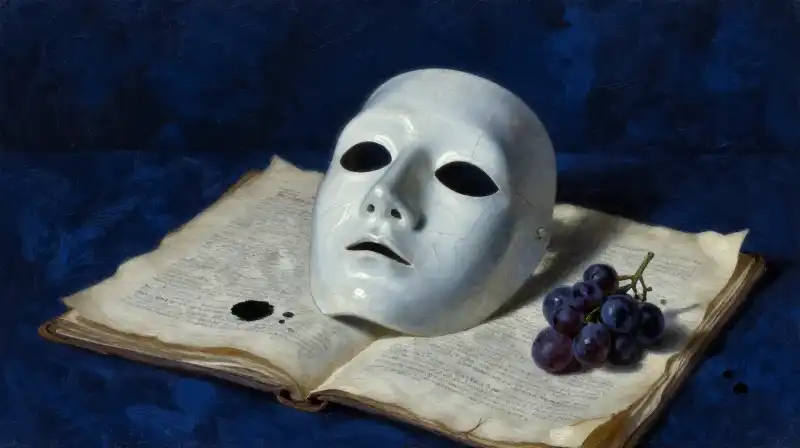
Readers often ask what the specific purpose of this fable is, or what its central moral message entails. At its most basic level, the story serves as a cautionary observation of human character. The moral is not about the grapes, nor is it truly about the fox; it is about the way humans rationalize failure.
The fable illustrates a psychological defense mechanism. When an individual is unable to achieve a goal they deeply desire, they may attempt to resolve the mental tension—the cognitive dissonance—by disparaging the goal itself [2]. By convincing himself that the grapes are “not worth gaping for,” the fox attempts to hold two incompatible ideas in balance: his intense desire for the fruit and his frustration at being unable to attain it [2]. The disparagement serves as a tool to reduce this internal friction [2].
From Fable to Idiom: The “Sour Grapes” Legacy
The fable’s most enduring contribution to the English language is the idiom “sour grapes.” While the phrase originated from the fox’s specific rationalization, its meaning has broadened over centuries. It has moved from describing a simple subjective rationalization to describing a specific type of “envious disparagement”—the act of belittling something simply because one cannot possess it [2].
This linguistic evolution shows how literature can provide the framework for social observation. We use the term to identify a specific social behavior: the person who criticizes a promotion they didn’t get, or a lifestyle they cannot afford, by claiming it was “undesirable” anyway.
Literary Evolution and Cultural Adaptations

While the core narrative remains remarkably stable, the fable has been reshaped by various poets and cultures to reflect different nuances and local contexts. The story is not a monolith; it is a living text that has been adapted for different audiences and eras.
Poetic Reinterpretations
- Phaedrus: The Greek poet provided a terse Latin version that maintained the story’s brevity and punch [2].
- Jean de La Fontaine: The French poet’s version is perhaps the most significant for the story’s enduring popularity. Notably, his retelling introduces a layer of sexual ambiguity; in both the French and the Greek (Babrius) traditions, the term “unripe” can be read as a metaphor for a young woman not yet ready for marriage [2].
- Aphra Behn: In her 1687 quatrain within Francis Barlow’s illustrated edition, Behn adds psychological depth, describing the fox forcing a “careless smile” while crying, “They’re sharp and hardly worth my while” [2].
- W. J. Linton: In Baby’s Own Aesop (1887), Linton reduced the narrative to a limerick, distilling the moral into a succinct observation: “The grapes of disappointment are always sour” [2].
Cultural and Regional Shifts
The fable’s ability to travel is evidenced by how different cultures have swapped the protagonist’s target to fit their own environments:
- Scandinavian Traditions: Versions in these regions often see the fox complaining about rowanberries rather than grapes [2].
- 12th-Century Variations: Some older European iterations depict the fox pursuing cherries [2].
- Russian Interpretations: The influence of Ivan Krylov’s translation has birthed two distinct expressions: “Green are the grapes” (Зелен виноград), used as a response to disparagement, and “Eye may see but tooth not taste” (Хоть видит око, да зуб неймет), used as a proverb for something desired but unattainable [2].
The Fable in the Visual Arts
Because the imagery of a fox and a vine is so striking, “The Fox and the Grapes” has enjoyed a massive visual legacy, moving beyond the page into sculpture, porcelain, and architecture.
| Medium | Example / Artist | Significance |
|---|---|---|
| Illustration | Gustave Doré (1870) | Provided a dramatic, high-art visual representation of the classic tale. |
| Sculpture | Pierre Julien | Created a statue of La Fontaine depicting the poet meditating near a gnarled tree with a vine and a fox. |
| Ceramics | Chelsea and Sèvres | The fable appeared on 18th-century English Chelsea candlesticks, Worcester jugs, and French Sèvres porcelain. |
| Architecture | Parisian Mansions | The imagery was even integrated into architectural medallions on grand French homes. |
Synthesis: Why the Fox Still Matters

The reason “The Fox and the Grapes” remains a staple of literary study is that it functions as a mirror. It does not merely tell a story about an animal; it provides a vocabulary for a specific human frailty. Through its various iterations—from the satirical poems of La Fontaine to the domestic proverbs of Russia—the fable continues to expose the gap between our desires and our dignity. It reminds us that when we cannot reach our goals, our first instinct is often not to improve our reach, but to change our opinion of the prize.
Sources
- Library of Congress Aesop Fables — read.gov
- The Fox and the Grapes — en.wikipedia.org
Frequently Asked Questions
What was the purpose of Aesop's fable "The fox and the Grapes"?
At its most basic level, the fable serves as a cautionary observation of human character. It functions as a masterclass in depicting cognitive dissonance and how humans use language and attitude to shield their egos from inadequacy.
What is the moral message of the story "The fox and the Grapes"?
The moral is about the way humans rationalize failure through a psychological defense mechanism. It illustrates how individuals may disparage a goal they cannot achieve to resolve the mental tension caused by their inability to attain it.
Related Articles