

Literary vs Commercial Fiction: Defining the Blurred Lines

Introduction
Imagine walking into a sprawling bookstore. In one aisle, the covers are bright, the character names are bold, and the back blurbs promise a gripping mystery or a heart-pounding adventure. In the next, the spines are understated, the titles are often singular nouns, and the descriptions hint at “profound explorations of the human condition.” This physical separation mirrors a long-standing, often contentious debate in the world of letters: the distinction between literary and commercial fiction.
For many readers, this divide feels like a judgment call. To label a book “literary” is often perceived as an invitation to intellectual rigor, while “commercial” can feel like a dismissive shorthand for “disposable” [1, 2]. Yet, these labels are rarely about the inherent quality of the prose and more often about the intended experience of the reader and the strategic positioning of the book within the marketplace [1, 2]. To understand the difference is not to learn how to rank books, but to understand the different ways a story can function—as a vessel for plot and momentum, or as a laboratory for language and character [1].
Defining the Divide: Plot vs. Prose
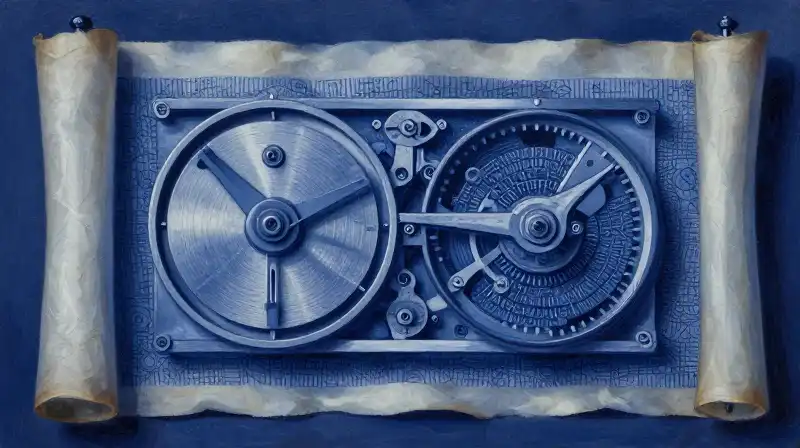
While the line is famously porous, critics and industry professionals generally differentiate the two categories by where they place their creative emphasis. If fiction is a machine, commercial fiction is built for speed and direction, while literary fiction is built for texture and depth.
The Hallmarks of Commercial Fiction
Commercial fiction is designed with accessibility and entertainment as its primary drivers. It often relies on established genre structures—such as the thriller, the romance, or the hard-boiled detective story—to provide a familiar framework for the reader [1, 2].
- Plot-Driven Momentum: The narrative is propelled by external conflict. The central question is often “What happens next?”
- Accessibility: The prose tends to be transparent, prioritizing clarity and pacing so that the reader can move through the story without being stalled by linguistic complexity [1].
- Genre Tropes: It utilizes recognizable patterns, such as the “meet-cute” in romance or the “ticking clock” in a suspense novel, to meet reader expectations [1].
The Hallmarks of Literary Fiction
Literary fiction shifts the focus inward. While a plot certainly exists, it often serves as a secondary vehicle for exploring complex themes or the psychological intricacies of a character [1].
- Character and Theme: The central preoccupation is often “Why does this happen?” or “How does this person change?” The narrative seeks to explore the nuances of identity, morality, and social structures [1].
- Language Craftsmanship: The prose itself is often a subject of scrutiny. Authors may use metaphor, unconventional syntax, or highly rhythmic language to create a specific aesthetic experience [1].
- Ambiguity: Unlike commercial fiction, which often seeks resolution, literary fiction frequently embraces ambiguity, leaving questions unanswered to reflect the complexities of real life [1].
At a Glance: Key Distinctions
| Feature | Commercial Fiction | Literary Fiction |
|---|---|---|
| Primary Focus | Plot and pacing [1] | Character and theme [1] |
| Narrative Goal | Entertainment and engagement [1] | Insight and exploration [1] |
| Prose Style | Transparent and direct [1] | Stylized and nuanced [1] |
| Conflict Type | External (Man vs. World/Other) [1] | Internal (Man vs. Self) [1] |
The Myth of the Binary: A Spectrum of Fiction

The most significant mistake a reader or writer can make is treating these two categories as a strict binary. In reality, most successful writing exists on a spectrum. There is a vast middle ground often referred to as “upmarket fiction,” which attempts to bridge the gap by combining the propulsive, page-turning momentum of a commercial novel with the cerebral, character-driven depth of literary work [1].
Consider the work of Cormac McCarthy. While his prose is undeniably dense and “literary” in its command of language, his narratives often possess the visceral, high-stakes tension found in the best of genre fiction [2]. Similarly, Ray Bradbury’s Fahrenheit 451 is frequently studied as a pillar of literary science fiction due to its thematic weight and poetic style, yet it was originally conceived within the framework of commercial, genre-driven storytelling [1].
This fluidity is also evident in how history treats “popular” works. Many books that are now considered indispensable literary classics may have been dismissed as “popular trash” or mere “genre fare” when they were first published [1]. The distinction is often a matter of time and changing critical perspectives.
Marketing Tools vs. Artistic Merit
It is essential to recognize that “literary” and “commercial” are as much labels of commerce as they are of craft. Publishers use these terms as strategic marketing tools to decide which shelf a book should occupy and which readers to target [1, 2].
Some critics argue that the term “literary fiction” has become a way to make certain books seem “rarefied and special,” almost as if the label itself confers a level of importance that the text might not inherently possess [2]. Novelist Elizabeth Edmondson has suggested that the distinction can act as a way to declare certain books as “Literature—and therefore Important, Art,” creating an artificial hierarchy [2].
For writers, understanding this is vital. When querying literary agents, the choice of label is a strategic decision. Writers must research an agent’s specific preferences and observe the commonalities in the works they represent to ensure their work is being pitched to the right audience [2].
Representative Examples

To see these distinctions in practice, it helps to look at how different authors occupy different spaces on the spectrum.
Commercial-Leaning Works
These works prioritize narrative drive and broad, accessible appeal, often utilizing high-concept premises:
- The Harry Potter series by J.K. Rowling: A masterclass in plot-driven momentum and world-building within the fantasy genre [1].
- The Hunger Games by Suzanne Collins: A high-stakes dystopian narrative focused on survival and external conflict [1].
- The works of Dan Brown: Fast-paced thrillers that rely heavily on mystery and immediate engagement [1].
Literary-Leaning Works
These works prioritize thematic depth, historical context, or linguistic experimentation:
- 1984 by George Orwell: While it functions as a political thriller, its primary impact lies in its profound sociological and psychological exploration of power [1].
- Frankenstein by Mary Shelley: A foundational text that uses the “monster” trope to explore deep philosophical questions regarding science, creation, and isolation [1].
- The writings of Mark Twain: While often entertaining, Twain’s work utilizes sophisticated satire and linguistic regionalism to critique American society [1].
Beyond the Labels
Ultimately, the distinction between literary and commercial fiction is a useful guidepost, but a poor cage. To limit a book to a single label is to ignore the ways in which a gripping plot can illuminate a profound truth, or how a beautiful sentence can drive a reader through a harrowing journey. The most enduring works of literature often refuse to stay in their lanes, proving that “importance” is not found in a category, but in the ability of a story to resonate, challenge, and linger in the mind long after the final page is turned.
Sources

- Literary vs. Commercial fiction—I wanna know what you think! : r/writers — reddit.com
- Answers to Writing Questions — writingclasses.com
Related Articles