Early Modern vs. Modernist Literature: Key Differences Explained


Introduction
In a literature classroom, a student might hear the term “modern” and assume it refers to the era of the existentialist, the fractured narrative, and the psychological deep-dive. However, in the lexicon of literary history, “modern” is a dangerous term because it exists in two entirely different centuries, describing two fundamentally different ways of seeing the world. To confuse “early modern” literature with “Modernist” literature is to mistake the birth of the novel for the shattering of the soul.
One movement represents a transition into the light of the Enlightenment and the rise of centralized European storytelling; the other represents a frantic, often desperate attempt to find meaning in a world where the old centers—religion, tradition, and social stability—have collapsed [2, 3]. Understanding this distinction is not merely an exercise in dating books; it is a way to understand how humanity’s relationship with truth, language, and identity has shifted over five hundred years.
The Early Modern Period: The Architecture of New Forms
The early modern period (roughly the 16th to the early 18th centuries) marks the bridge between the medieval world and the age of reason [1]. It was an era of expansion—geographically, politically, and formally. Literature during this time began to move away from the rigid structures of medieval allegory toward more complex, human-centric storytelling.
The Rise of the Novel and Drama
One of the most significant developments of this era was the emergence of the novel. While epic poetry still held sway, “novelty” began to seep into narrative structures. The most definitive example is Miguel de Cervantes’s Don Quixote de la Mancha (1605, 1615), which scholars often identify as the first modern European novel [1]. By parodying the outdated chivalric romances of his time, Cervantes signaled a shift toward realism and a more skeptical, observant way of chronicling human folly.
In the realm of drama, the early modern period saw a vibrant explosion of entertainment-focused plays. While William Shakespeare’s works define much of the English experience in this era, the period was globally diverse in its theatrical expression:
- European Drama: Alongside Shakespeare, the era saw the rise of improvised commedia dell’arte and the birth of opera, such as Jacopo Peri’s Dafne (c. 1597) [1].
- Japanese Edo Period: A flourishing of popular drama through kabuki and the development of yomihon (historical romance) [1].
- Mughal India: A period characterized by the linguistic rise of Urdu and Khariboli dialects [1].
Literary Modernism: The Fractured Mirror
If early modern literature was about building new forms, Modernist literature (late 19th to mid-20th century) was about breaking them [2]. Driven by the industrial revolution, rapid urbanization, and the profound psychological trauma of World War I, Modernism was a self-conscious rebellion against the perceived simplicity of 19th-century realism [2, 3].
The Collapse of the Center
The central tension of Modernism is the loss of a metaphysical “center.” As traditional structures of belief were eroded, writers sought to reflect a world that no longer felt coherent. This sentiment is famously captured in W.B. Yeats’s “The Second Coming”: “Things fall apart; the centre cannot hold” [3]. This was not just a philosophical stance; it was a stylistic mandate. To “make it new,” as Ezra Pound famously exhorted, writers had to move away from omniscient narrators who explained everything to a “de-centered” realism that acknowledged multiple, often conflicting, truths [2, 3].
Core Modernist Techniques
To represent the fragmented reality of the modern individual, writers turned to innovative craft techniques that moved the focus from external action to internal experience:
- Stream-of-Consciousness and Interior Monologue: Techniques used to mimic the fluid, often chaotic flow of human thought, exemplified by James Joyce in Ulysses (1922) and Virginia Woolf in Mrs Dalloway (1925) [3].
- Fragmentation and Allusion: T.S. Eliot’s The Waste Land (1922) utilizes broken imagery and obscure, scholarly allusions to mirror a sense of spiritual emptiness, forcing the reader to participate in the construction of meaning [2].
- Imagism: A subset of Modernism that rejected sentimentality in favor of precision. Led by Ezra Pound, Imagists sought to use sparse, direct language inspired by the brevity of Japanese haiku [2, 3].
Comparing the Eras: At a Glance
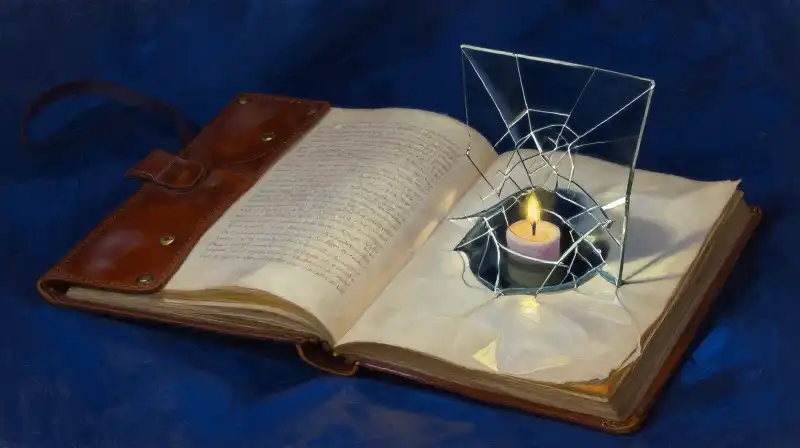
To clarify the distinction, we can compare the fundamental motivations and characteristics of these two periods.
| Feature | Early Modern Literature | Modernist Literature |
|---|---|---|
| Primary Era | 16th to early 18th century [1] | Late 19th to mid-20th century [2] |
| Core Objective | Establishing new genres (the novel, opera) [1] | Breaking traditional modes of representation [3] |
| View of Reality | Transitioning from allegory to realism [1] | Fragmented, subjective, and de-centered [3] |
| Narrative Focus | Character and plot development [1] | Psychological depth and consciousness [3] |
| Renaissance humanism, global exploration [1] | Freudian psychology, WWI, urban industrialization [3] |
Understanding the Nuance
What is early modernism in literature?
The term “early modernism” is often a point of confusion. In a strict historical sense, “Early Modern” refers to the period following the Middle Ages (Shakespeare, Cervantes) [1]. However, when readers ask about “early modernism,” they are often inquiring about the initial stages of the Modernist movement—the late 19th-century shifts that paved the way for the high Modernism of Joyce and Eliot, such as the “Modernismo” movement in Latin America led by Rubén Darío [2].
What are some examples of Modernist literature?
Modernism is best understood through its diverse global expressions:
- The Lost Generation: The expatriate writings of Ernest Hemingway and Gertrude Stein in post-WWI Paris [2].
- The Harlem Renaissance: The cultural flowering of African American writers like Langston Hughes, who sought to express Black identity without shame [2].
- High Modernist Prose: The complex, psychological works of Virginia Woolf and James Joyce [3].
What are the four elements of Modernist literature?
While “four elements” is not a fixed academic canon, scholars generally point to a set of recurring hallmarks that define the movement: fragmentation (broken narratives), subjectivity (focus on the internal over the external), experimentation (new forms and techniques), and disillusionment (a response to the breakdown of traditional values) [2, 3].
Synthesis: Why the Distinction Matters
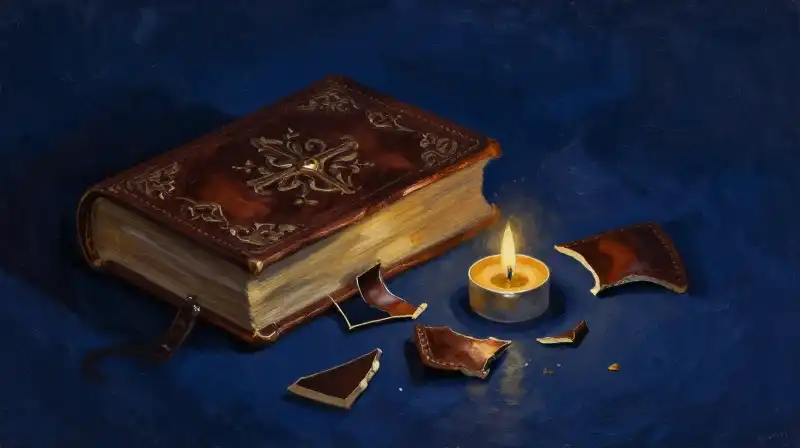
Understanding the difference between Early Modern and Modernist literature is about understanding the trajectory of the human voice. The Early Modern period was an era of discovery and expansion; it was the sound of writers finding the tools—the novel, the professional play, the nuanced dialogue—to map a rapidly changing world [1].
Modernism, by contrast, was the sound of those tools breaking. It was a movement that looked at the map provided by previous generations and found it insufficient to describe the psychological and social wreckage of the 20th century [3]. One built the house of modern storytelling; the other tore it down to see if something more honest could be built from the ruins.
Sources
- Early modern literature — en.wikipedia.org
- Examples, Characteristics, Books, Authors, Writers, & Facts — britannica.com
- Literary modernism — en.wikipedia.org
Frequently Asked Questions
What is early modernism in literature?
Strictly speaking, "Early Modern" refers to the period following the Middle Ages involving figures like Shakespeare and Cervantes. However, the term is often used to describe the initial late 19th-century shifts that led to high Modernism, such as the Latin American "Modernismo" movement.
Who are the famous early modern literature?
The article identifies Miguel de Cervantes and William Shakespeare as key figures of the early modern period. It also mentions Jacopo Peri in the context of the birth of opera.
What are some examples of Modernist literature?
Examples include the complex prose of Virginia Woolf and James Joyce, T.S. Eliot's "The Waste Land," and the expatriate writings of Ernest Hemingway and Gertrude Stein. It also encompasses the Harlem Renaissance works of writers like Langston Hughes.
What are the four elements of Modernist literature?
While not a fixed academic canon, scholars generally identify fragmentation, subjectivity, experimentation, and disillusionment as the recurring hallmarks of the movement.
Related Articles