
Best Postmodern Novels: A Guide to the Genres Essential Reads

The Architecture of Uncertainty
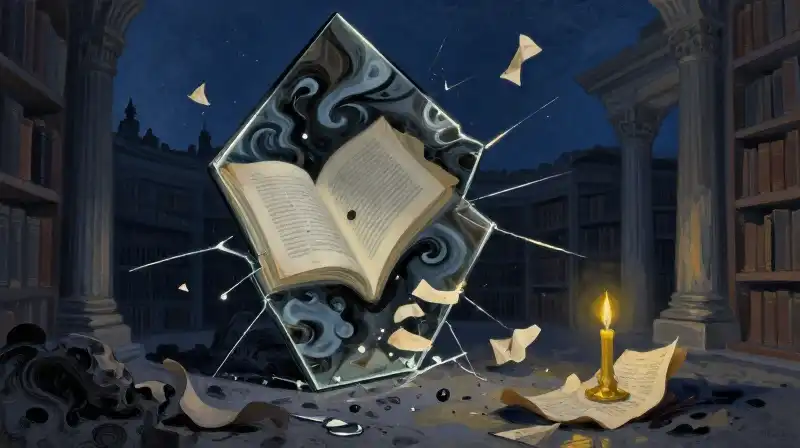
To read a postmodern novel is to enter a contract where the fine print is constantly being rewritten. Unlike the traditional realist novel, which seeks to hold a mirror up to nature, or the modernist novel, which often seeks to capture the fractured subjectivity of the individual, postmodernism turns its gaze toward the mirror itself. It is a literature that is deeply, often aggressively, aware of its own construction. It asks not just “what happened?” but “how can we know what happened through the medium of words that are inherently unstable?” [1]
For many readers, the term “postmodern” carries a connotation of difficulty or even pretension. This stems from the genre’s characteristic breakdown of established categories and its suspicion of “grand narratives”—the overarching stories (religion, science, progress) that we use to explain the world [1]. Instead, postmodernism offers a playground of pastiche, metafiction, and ontological instability, where the boundary between the reader, the writer, and the written word begins to blur [1].
What is a Postmodern Novel?
While scholars continue to debate the precise boundaries of the movement, several hallmarks distinguish postmodern literature from its predecessors. It is less a single style and more a set of skeptical attitudes toward reality and representation [1].
Core Characteristics of the Genre
- Metafiction: This is “fiction about fiction.” The narrative frequently interrupts itself to comment on its own artifice, reminding the reader that they are engaging with a constructed object rather than a window into a real world.
- Pastiche and Intertextuality: Rather than trying to create something entirely “original,” postmodern authors often use pastiche—imitating the styles of other genres or eras—to create new meanings through the collision of old forms [1]. This often involves heavy intertextuality, where a book exists in constant conversation with other texts.
- Fragmentation and Disjointed Narratives: Postmodern works often reject linear, chronological storytelling. Instead, they use disjointed narratives to weave together a new, complex explanatory whole that mimics the chaos of modern experience [1].
- Ontological Play: The genre frequently questions the nature of being. It asks: Which world is the “real” one? Is the character aware they are in a book? Is the reader part of the story?
- The Unreliability of Language: A central tenet is the idea that language acts as a barrier to accessing a “real world” rather than a transparent tool for describing it [1].
| Feature | Modernism | Postmodernism |
|---|---|---|
| View of Truth | Seeks deeper, often psychological, truths beneath the surface. | Questions whether “truth” or “objective reality” can even exist [1]. |
| Narrative Structure | Fragmented, but often seeking a sense of unity or epiphany. | Fragmented as an end in itself; celebrates the lack of a cohesive center [1]. |
| Authorial Tone | Often earnest, exploring the depths of human consciousness. | Often playful, ironic, or self-referential (metafictional) [1]. |
Essential Reads: A Guide to the Genre
Because postmodernism can be intimidating, it is helpful to categorize entry points by the “flavor” of experimentation they offer. Whether you prefer a gripping mystery, a genre-bending epic, or a linguistic puzzle, there is a path into this labyrinth.
The Accessible Entry Points
If you are wary of abstraction, start with works that use familiar genre frameworks to host their postmodern play.
- Umberto Eco, The Name of the Rose: This is a premier recommendation for those seeking an entry point because it functions as a Sherlock Holmes-style murder mystery set within a medieval monastery [1]. It uses the “detective story” to explore complex semiotic and historical questions without losing the reader in pure theory.
- David Mitchell, Cloud Atlas: For readers who enjoy “genre-mashing,” Mitchell’s work is a masterclass in blending various genres—from historical fiction to sci-fi—into a single, cohesive, yet structurally complex narrative [1].
The Architects of Complexity
For those who want to confront the genre’s most challenging and influential iterations, these works are foundational.
- Jorge Luis Borges: Often described as the “bridge between modernism and postmodernism,” Borges’s short stories create infinite labyrinths and philosophical paradoxes that paved the way for everything that followed [1].
- Thomas Pynchon, The Crying of Lot 49: Pynchon is a titan of the movement, and this novel is a quintessential example of the postmodern paranoia and the search for meaning in a world of overwhelming, potentially meaningless information [1].
- Don DeLillo, White Noise: DeLillo examines how media, consumerism, and technology shape our perception of reality, a central theme in the postmodern experience [1].
- Kurt Vonnegut, Breakfast of Champions: Vonnegut uses a playful, almost cartoonish style to deconstruct the novel form and comment on the absurdity of human existence [1].
- David Foster Wallace, Infinite Jest: Notable for its extreme “bookishness,” Wallace uses a playful use of form, language, and an overwhelming inclusion of fictional artifacts (like footnotes) to comment on the very act of reading and the complexities of contemporary life [2].
- Mark Danielewski, House of Leaves: A significant work for readers interested in how postmodernism can intersect with horror [1, 2]. It uses typographical experimentation and physical layout to mirror the psychological disorientation of its characters [2].
Understanding Postmodernism: Common Questions
What is considered a postmodern novel?
A postmodern novel is characterized by its self-consciousness. It is a book that “knows” it is a book. It typically rejects the idea of a single, objective truth and instead uses techniques like metafiction, pastiche, and non-linear structures to highlight the instability of language and reality [1]. If a novel actively plays with its own form or questions the possibility of telling a “true” story, it is likely operating in the postmodern tradition.
Who is the most famous postmodern author?
While “fame” is subjective, names like Thomas Pynchon, Don DeLillo, and Kurt Vonnegut are consistently cited as the movement’s heavyweights [1]. In terms of foundational influence, Jorge Luis Borges is often viewed as the progenitor who bridged the gap between the modern era and the postmodern explosion [1].
Why Postmodernism Matters
Postmodern literature is often criticized for being “difficult” or “cynical,” but to view it solely through those lenses is to miss its profound engagement with the modern condition. By breaking down the boundaries between high art and pop culture, and between the story and the storyteller, postmodernism reflects a world that has become increasingly mediated by screens, symbols, and infinite streams of information.
It challenges us to be active participants in the creation of meaning. When a text refuses to provide a neat, tidy ending or a single “correct” interpretation, it isn’t merely being difficult; it is being honest about the ambiguity of life. To read postmodernism is to accept that the map is not the territory, and that the stories we tell ourselves are often more interesting—and more fragile—than the truths they attempt to capture.
Sources
- Best Postmodern Literature? : r/books — reddit.com
- The Sixty-One Essential Postmodern Reads — newyorker.com
Related Articles