The Best History Novels of All Time: From Wolf Hall to Shogun

The Living Ghost: Why We Write History Through Fiction

History is often perceived as a collection of fixed points: dates, treaties, and the cold movement of armies across maps. Yet, the true essence of the past remains elusive to the historian’s ledger. While archaeology can uncover the physical remnants of a civilization, it cannot excavate the internal terror of a soldier in a trench or the quiet, calculated ambition of a courtier in a Tudor palace. This is where historical fiction performs its most vital function: it serves as a bridge between the narrative structure of real-world events and the profound emotional involvement of fiction, allowing readers to “meet the dead looking alive” [2].
To read a great historical novel is not merely to learn what happened, but to understand how it felt to be alive when it happened. The genre functions as a laboratory of human experience, testing whether the psychological realities of the past remain consistent with our own. From the sweeping, multi-generational sagas that attempt to capture the soul of a nation to the tight, psychological portraits of singular figures, the best history novels do more than recount the past—they reconstruct the human condition within it.
Architects of Immersion: Scale and World-Building
Readers often approach historical fiction seeking a sense of “elsewhere”—a complete immersion into a lost world. This is achieved through two distinct literary modes: the expansive epic and the meticulous reconstruction of daily life.
The Sweeping Epic and the Family Saga
Some authors aim for a panoramic view, attempting to capture the sheer momentum of history. These works often mirror the scale of classic literature, such as Tolstoy’s War and Peace, by intertwining individual destinies with the tides of global conflict.
- Vasily Grossman’s Life and Fate: A profound WWII account that draws heavily on the author’s firsthand experiences as a journalist in Stalingrad and Berlin [2]. It functions as an epic that refuses to look away from the sheer scale of human suffering and endurance.
- James Michener: Often regarded by readers as a foundational figure in the genre, Michener is celebrated for his expansive, sweeping works like Alaska and Hawaii, which attempt to trace the very bones of a place through time [1].
- Hala Alyan’s Salt Houses: Rather than focusing on battles, this work utilizes a family saga approach, tracking a lineage from the 1960s to the modern day to show how history carves its mark on the domestic and the personal [1].
Meticulous Realia and World-Building
Other writers achieve immersion through the “smallness” of detail—the textures, smells, and social hierarchies that define an era. This level of detail can rival the world-building found in high fantasy.
- James Clavell’s Shogun: A masterclass in cultural immersion, providing a level of detail that makes the feudal Japanese landscape feel as tangible as any fantasy realm [1].
- Gore Vidal’s Historical Works: Vidal is noted for his use of meticulous “realia”—the specific, lived details of daily life—which grounds his sweeping narratives in a palpable reality [2].
Reimagining the Past: Perspective and Subversion
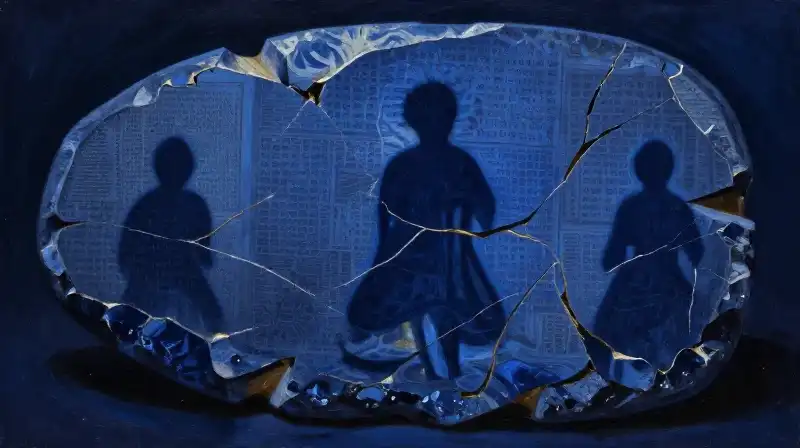
The most celebrated historical fiction does not merely repeat the history books; it interrogates them. It looks at the gaps in the record and asks, “What if?” or “Who was silenced?”
The Revisionist Lens
Hilary Mantel’s Wolf Hall trilogy stands as a landmark in this regard. By reimagining the 1530s through the eyes of Thomas Cromwell, Mantel does not provide a standard historical novel; instead, she offers a work with a “profound knowledge of how that era functioned” [2]. She moves past the caricature of the statesman to find the heartbeat of a man navigating a shifting political landscape. Similarly, Manda Scott’s novels about Boudica reach into the Iron Age to bring “mythical, spiritual things” to life, exploring the psychological and spiritual dimensions of history that archaeology alone cannot reach [2].
Storytelling Within Stories
Complexity can also be achieved through structure. Gore Vidal’s Creation utilizes a Persian emissary to explore the “big what-ifs” of the 5th-century ancient world and the Axial Age, employing a sophisticated “storytelling within stories” technique to navigate the interconnectedness of the ancient world [2].
Categorizing the Historical Experience
Because “historical fiction” is a broad umbrella, readers often find themselves looking for specific narrative textures. The following table contrasts several common subgenres to help orient your reading.
| Subgenre | Primary Focus | Representative Example |
|---|---|---|
| Historical Thriller | Tension and plot-driven momentum set against a historical backdrop. | Robert Harris’s Imperium (the decline of the Roman Republic) [2]. |
| Historical Horror | The intersection of historical accuracy and the uncanny or terrifying. | Dan Simmons’s The Terror (Arctic exploration) [1]. |
| Classical Fiction | Deep research into the Greco-Roman world and its foundational myths. | Mary Renault’s Alexander trilogy or Steven Pressfield’s Gates of Fire [2]. |
| Social/Political Drama | The impact of war or shifting social systems on specific communities. | Chimamanda Ngozi Adichie’s Half of a Yellow Sun (Nigerian Civil War) [1]. |
Addressing the Reader’s Inquiry
What is considered the best novel in history?
There is no singular answer to this question, as “best” is a subjective metric involving aesthetic, cultural, and technical criteria. However, in the context of historical fiction, “greatness” is often measured by a work’s ability to remain relevant while remaining period-accurate. Works like Grossman’s Life and Fate or Mantel’s Wolf Hall are frequently cited because they do not just recount history; they expand our understanding of it through superior prose and psychological depth.
Synthesis: Why the Genre Endures
The enduring power of historical fiction lies in its ability to make the distant feel immediate. Whether it is the “cloak-and-dagger action” of Arturo Pérez-Reverte’s Captain Alatriste series, which emphasizes cultural nuance through movement [1], or the “clear-eyed and true account” of the Korean War found in Ha Jin’s War Trash [1], the genre succeeds when it respects both the facts and the human spirit. It reminds us that the people of the past were not statues or footnotes; they were complex, frightened, ambitious, and profoundly alive. By reading these works, we do not just escape the present—we find a deeper way to inhabit it.
Sources

- Best historical fiction? : r/booksuggestions — reddit.com
- Historical Fiction Recommended by Historians — fivebooks.com
Frequently Asked Questions
What is considered the best novel in history?
There is no singular answer to this question because "best" is a subjective metric. However, in historical fiction, greatness is often measured by a work's period accuracy, relevance, and psychological depth.
Related Articles