Literary Devices in The Story of an Hour: Symbolism and Irony


Introduction
In a mere few hundred words, Kate Chopin manages to compress a lifetime of repression and a sudden, violent awakening into a single hour of narrative time. “The Story of an Hour” is a masterclass in economy, a short story that functions with the precision of a clockwork mechanism to dismantle the domestic expectations of the late 19th century. When we read it today, we are not merely observing a woman reacting to the news of her husband’s death; we are witnessing the terrifying, ecstatic collision between social duty and individual identity.
To understand the power of this text, one must look past the plot—the sudden news of a train accident and the subsequent unexpected return of a husband—and instead examine the architectural elements Chopin uses to build it. Through a deliberate application of literary devices, Chopin transforms a brief domestic drama into a profound allegory for the lack of female autonomy in a patriarchal society [1].
The Architecture of Irony
Irony is the engine of “The Story of an Hour.” Chopin does not rely on mere coincidence; she utilizes situational irony to challenge the reader’s assumptions about grief and survival. While the traditional narrative arc of a widow involves a descent into sorrow, Louise Mallard experiences an ascent into selfhood.
The narrative structure relies on a devastating reversal of events. After Louise has spent the hour processing the reported death of Brently Mallard and embracing a vision of her future, the sudden appearance of her husband—who was, in fact, nowhere near the accident—shatters her newfound world [1]. The irony is twofold: first, the man she believed lost is alive, and second, the “life” she had just begun to envision is instantly extinguished by his return. The story’s conclusion, where Louise dies of heart disease, is the ultimate ironic twist; the doctors believe she died of “the joy that kills,” but the reader understands she died from the sudden, crushing loss of her freedom [1].
Symbolism: The Language of Liberation
Chopin uses physical objects and settings to externalize Louise’s internal psychological shift. Rather than relying solely on internal monologue, she allows the environment to speak for her character’s evolving state of mind.
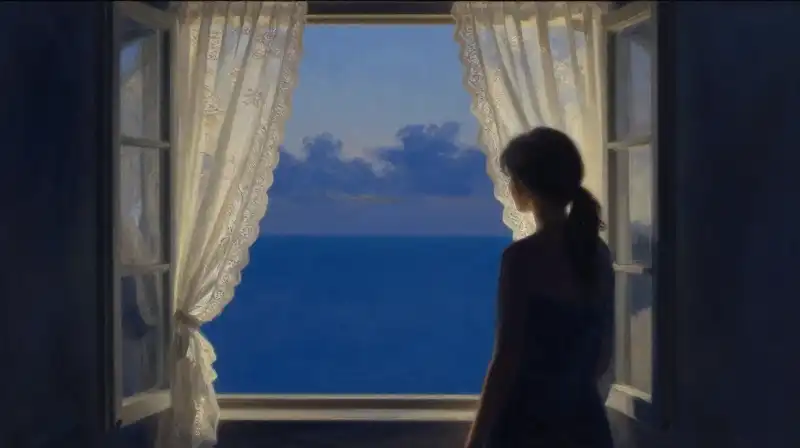
- The Open Window: This is perhaps the most vital symbol in the story. It represents the threshold between Louise’s confined domestic life and the vast, unknown possibilities of the outside world [1]. Through this window, she perceives a world that is moving, breathing, and alive, mirroring her own internal awakening.
- The Comfortable, Roomy Armchair: As Louise retreats to her room, the chair functions as a symbol of both the physical and psychological comfort that true independence provides [1]. It is a space where she can finally settle into herself, away from the performative roles of wife and social figure.
- Heart Trouble: Louise’s “heart trouble” is a dual symbol. Literally, it is a medical condition that foreshadows her eventual death [1]. Symbolically, however, it represents the emotional constriction and the “toxic” dynamics of a marriage that lacks true partnership or autonomy [1].
Literary Techniques and Emotional Intensity

Beyond symbolism and irony, Chopin employs specific linguistic tools to heighten the reader’s connection to Louise’s experience. These techniques ensure the story feels visceral rather than purely intellectual.
Personification and Imagery
Chopin uses personification to make Louise’s abstract emotions feel tangible and predatory. She describes physical exhaustion as something that “haunts her body,” and more strikingly, she depicts her burgeoning sense of liberation as something “creeping out of the sky” [1]. This imagery suggests that freedom is not something Louise chooses, but something that happens to her—an elemental force that is as inevitable as the weather.
Repetition and Rhythm
To emphasize the intensity of Louise’s emotional shift, Chopin utilizes repetition. The rhythmic, almost chant-like repetition of phrases such as “free, free, free!” and “Free! Body and soul free!” serves to illustrate the overwhelming nature of her realization [1]. The repetition mirrors the heartbeat of a woman who is, for the first time, truly alive.
Addressing Common Questions
What literary movement is The Story of an Hour?
While Kate Chopin is often associated with **Realism** due to her unflinching look at social structures and domestic life, “The Story of an Hour” also touches upon elements of **Feminist Literature**. It focuses on the internal lives of women and critiques the systemic limitations placed upon them. Some scholars also see traces of **Naturalism**, particularly in how the characters are shaped by environmental and social forces beyond their control.
What is an example of an allusion in The Story of an Hour?
While the story is primarily driven by its immediate symbols, the “heart trouble” and the sudden, overwhelming nature of Louise’s realization can be seen as an allusion to the broader Romantic tradition of the “sublime”—the idea of an experience so vast and powerful that it is both beautiful and terrifying. However, most scholars focus on the story’s use of internal symbolic language rather than external classical allusions.
The Weight of the Hour: Why It Matters
The brilliance of “The Story of an Hour” lies in its ability to be both a personal character study and a sharp social critique. By focusing on the internal landscape of a single woman during a single hour, Chopin exposes the universal struggle for agency. The story remains remarkable because it refuses to offer a comfortable resolution. It does not end with a triumphant escape or a peaceful passing; it ends with a collision between a woman’s newly discovered soul and a world that has no place for her independence. This tension is what gives the work its enduring, haunting power.
Sources
- The Theme of Death and the Use of Literary Devices in Kate Chopin’s “The Story of an Hour” — studycorgi.com
Frequently Asked Questions
What literary movement is The Story of an Hour?
The story is associated with Realism due to its look at domestic life, and it also touches upon elements of Feminist Literature. Some scholars also see traces of Naturalism in how environmental and social forces shape the characters.
What is an example of an allusion in The Story of an Hour?
The story's depiction of Louise's overwhelming realization can be seen as an allusion to the Romantic tradition of the "sublime." This concept describes an experience that is both beautiful and terrifying due to its vast power.
Related Articles