Dickenss The Old Curiosity Shop: Themes, Characters and Legacy

Introduction
In 1841, as the final installments of Charles Dickens’s The Old Curiosity Shop arrived in New York, the fervor was so intense that readers reportedly stormed the wharves to secure their copies [1]. It was a moment of pure literary mania, signaling the arrival of a narrative that had, for a time, captured the global Victorian imagination. Yet, if you were to look at Dickens’s collected works today, you might find this novel occupies a curious, somewhat contested space in his canon. While some readers view it through the sentimental lens of a fairy tale, modern critics often relegate it to a “second tier” of his output, sitting alongside Pickwick Papers but trailing behind the heavyweights like Bleak House or Great Expectations [2].
To understand The Old Curiosity Shop is to understand the tension between the sentimental and the grotesque. It is a story of profound virtue met by profound cruelty, a narrative that oscillates between the “weedy,” uncomplaining innocence of its protagonist and the chaotic, vibrant energy of its supporting cast [2]. It is not merely a Victorian melodrama; it is a study in how characters are driven to ruin by the intersection of vice and circumstance.
The Framing Device and the Disappearing Narrator
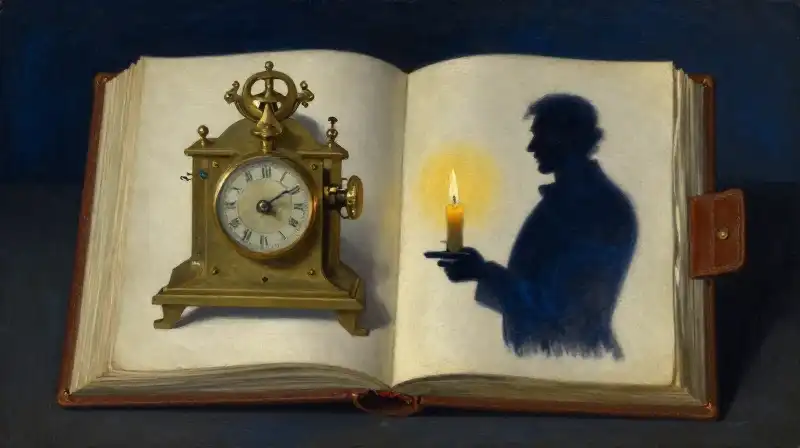
The novel was originally released as part of the weekly serial Master Humphrey’s Clock [1]. Dickens employed a complex, if ultimately inconsistent, framing device: a narrator named Master Humphrey who introduces the stories. However, in a move that has puzzled editors and readers alike, Dickens abandoned this first-person narration after the third chapter [1].
Dickens later attempted to resolve this structural gap by suggesting that the “single gentleman” encountered within the story was, in fact, Master Humphrey himself [1]. While some scholars treat this as a convenient post-hoc explanation rather than a rigorous literary device, the abandonment of the frame highlights the novel’s internal drift toward a more direct, immersive storytelling mode that eventually leaves the reader alone with the characters.
Archetypes of Virtue and Vice
The engine of the novel is the collision between characters who represent extreme moral poles. The narrative is often described as a “book of two halves” [2]: one half dedicated to the quiet, almost saintly endurance of Nell Trent, and the other to a more kinetic, often much darker, world of social maneuvering.
Nell Trent and the Weight of Virtue
The heart of the story lies with Nell Trent, a virtuous orphan, and her grandfather, a man whose life is dismantled by a crippling gambling addiction [1]. Nell serves as a “princess”-like figure, an archetypal symbol of purity navigating a world designed to corrupt her [2]. Her character resonates with the Victorian ideal of “uncomplaining” virtue, a quality that makes her journey particularly harrowing for the reader.
Daniel Quilp: The Grotesque Antagonist
Opposing the softness of Nell is the jagged, terrifying presence of Daniel Quilp. A “malicious, grotesquely deformed, hunchbacked dwarf moneylender,” Quilp is more than a mere thief [1]. He is a psychological predator who takes a sadistic delight in the suffering of others, particularly through his manipulation of Nell’s grandfather [1]. Unlike villains who seek wealth for its own sake, Quilp is defined by a “false charm” and a desire to witness the breakdown of those around him [1].
Dick Swiveller: The Bridge of Transformation
Providing a necessary counterweight to the heavy tragedy is Dick Swiveller. Initially presented as a “shiftless” character who is “in love with language”—a man more interested in witty wordplay than moral substance—Swiveller undergoes a significant arc [1, 2]. His evolution from an idle youth into a “strong force for good” serves as a vital bridge between the novel’s disparate worlds of villainy and virtue [1, 2].
Themes: The Fairy Tale and the Tragic Reality
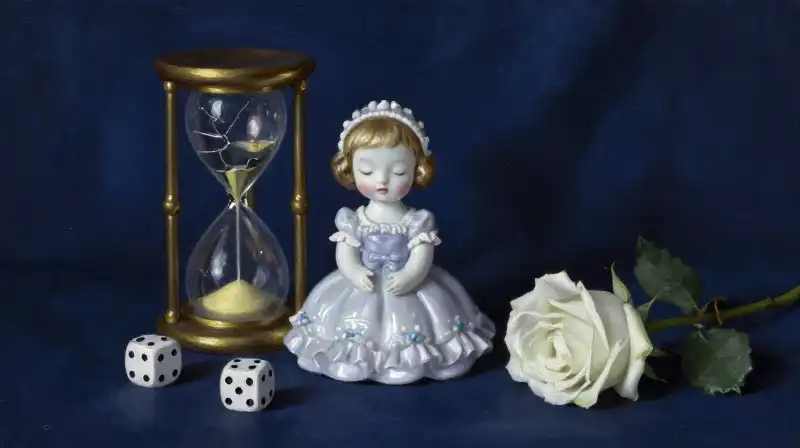
Critics often debate whether The Old Curiosity Shop should be read as a gritty social commentary or a dark fairy tale. The evidence supports both readings, as Dickens weaves archetypal elements into a realistic depiction of poverty and addiction.
- The Fairy Tale Structure: The presence of an evil dwarf, a virtuous maiden, and a perilous journey through strange lands gives the book the rhythm of a fable [2].
- The Perils of Vice: The novel acts as a cautionary tale regarding the destructive nature of gambling and the predatory economic systems that target the vulnerable [1].
- The Tragic End: Moving away from the “happily ever after” typical of fables, the novel concludes on a devastating note. After an arduous journey intended to find safety, Nell dies, leaving her mentally infirm grandfather to wait by her grave until his own death [1].
Common Queries Regarding the Work
Is “The Old Curiosity Shop” a real place?
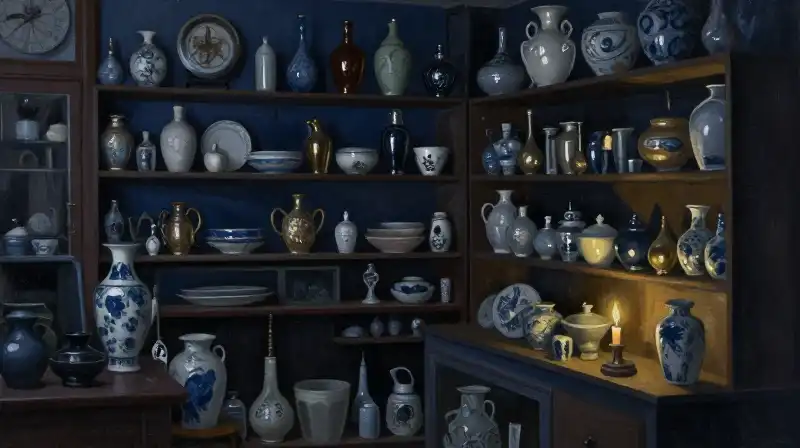
While the shop serves as a central setting, it is a fictional construct used by Dickens to ground his narrative in a sense of antiquity and clutter. However, the atmosphere is deeply rooted in the Victorian London environments that Dickens knew intimately.
Where was Dickens’s old curiosity shop?
The shop itself is not a historical landmark, but Dickens’s descriptions of London streets and the surrounding villages reflect the real-world geography of 19th-century England, providing a sense of place that feels tangible to the reader.
The Legacy of a Polarized Masterpiece
Why does The Old Curiosity Shop matter if it is not considered one of Dickens’s “greatest” works? Its importance lies in its ability to evoke intense, almost visceral emotion through characterization. It marks a period where Dickens was perfecting the art of the “grotesque”—creating characters so vivid and physically distinct that they become symbols of moral states.
Whether viewed as a sentimentalized fairy tale or a harrowing look at the ruin of an innocent life, the novel remains a testament to Dickens’s power to command an audience. It sits in that essential “second tier” of his literature because it captures the raw, unrefined energy of his early success, even as it begins to grapple with the profound psychological complexities that would define his later masterpieces.
Sources
- The Old Curiosity Shop — en.wikipedia.org
- People’s thoughts on The Old Curiosity Shop? : r/charlesdickens — reddit.com
Frequently Asked Questions
Is "The Old Curiosity Shop" a real place?
No, the shop is a fictional construct used by Dickens to ground his narrative. However, the atmosphere is deeply rooted in the Victorian London environments that Dickens knew intimately.
Where was Dickens old curiosity shop?
The shop itself is not a historical landmark. While the specific shop is fictional, the descriptions of London streets and villages reflect the real-world geography of 19th-century England.
Related Articles