Classic Winnie-the-Pooh: A.A. Milne’s Legacy and Characters

The Hundred Acre Wood: More Than a Nursery Tale
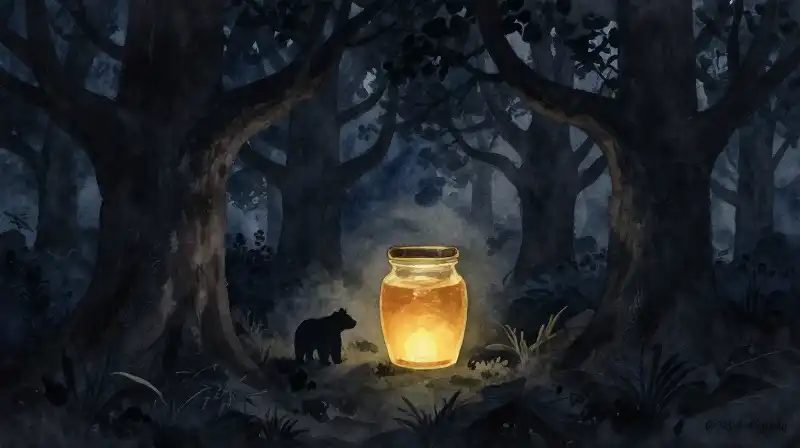
To many, the name Winnie-the-Pooh evokes a soft-focus memory of honey pots and gentle strolls through a sun-dappled forest. Yet, beneath the surface of these stories lies a masterful piece of character-driven prose that has maintained a profound literary legacy for over ninety years [1]. What began as a private collection of stories written by A.A. Milne for his son, Christopher Robin, evolved into a cornerstone of children’s literature that transcends the nursery [1].
The enduring power of the work is not merely found in its charm, but in the specific, almost psychological depth of its cast. These are not merely archetypes of “good” or “bad”; they are explorations of temperament, social anxiety, and the peculiar logic of childhood. When we look closely at the original Winnie-the-Pooh book, we see a text that balances the whimsical with a quiet, observant realism about how individuals—even stuffed ones—navigate the world.
The Symbiosis of Text and Image
The identity of the Hundred Acre Wood is as much a visual achievement as a linguistic one. While Milne provided the narrative framework, the distinct personalities of the characters were significantly shaped through the illustrations of Ernest H. Shepard [1]. This collaboration created a seamless marriage between word and image, where the physical appearance of a character—the slump of Eeyore’s shoulders or the frantic bounce of Tigger—serves to reinforce the author’s prose.
This interplay is essential for understanding why the works feel so “lived-in.” The illustrations do not just decorate the text; they provide the physical weight and spatial reality that allow the reader to inhabit the forest alongside the characters. This aesthetic cohesion is a primary reason why modern collectors often seek out a vintage Winnie the Pooh book set or a replica of the first American edition from 1926 [1].
The Anatomy of an Ensemble
The brilliance of Milne’s writing lies in his ability to assign distinct, often contradictory, human traits to a small ensemble of animals. Each character functions as a different way of being in the world, creating a micro-society that feels both complete and relatable.
- Winnie-the-Pooh: The “Bear of Very Little Brain” serves as the emotional center. His simplicity is not a lack of intelligence, but a form of profound presence. He lives entirely in the moment, driven by simple needs and a gentle, unshakeable kindness.
- Piglet: Representing the spectrum of anxiety, Piglet’s smallness is a constant source of trepidation. Through him, Milne explores the courage required to exist in a world that feels much larger and more frightening than oneself.
- Eeyore: A masterclass in melancholic characterization. Eeyore is not merely “sad”; he possesses a resigned, philosophical temperament that provides a necessary counterweight to the more energetic characters.
- Tigger: The embodiment of pure, kinetic energy. Tigger’s character explores the concept of exuberance and the social friction that occurs when one’s natural temperament is at odds with the quietude of others.
- Owl: The self-appointed intellectual. Owl’s character often satirizes the way adults use language and “wisdom” to assert authority, even when that wisdom is slightly misplaced or overly complex.
From Private Play to Global Classic
Understanding the trajectory of these books requires looking at their transition from personal artifacts to published classics. The stories were born from the lived experience of Milne’s family, specifically the relationship between father and son [1]. This intimacy is what prevents the books from feeling like manufactured commercial products; there is an inherent warmth that suggests the author is sharing a secret rather than selling a commodity.
A major milestone in this journey was the publication of the first American edition in 1926 [1]. This move helped solidify the characters’ place in the global consciousness, moving them beyond the British domestic sphere and into the realm of universal mythology. Today, the market for original Winnie-the-Pooh books remains robust, with collectors looking for first editions that capture this specific moment in literary history.
Why the Legacy Endures
Why does a collection of stories about stuffed animals continue to matter in an age of high-concept digital storytelling? The answer lies in the craft of the prose and the honesty of the themes. Milne does not patronize his readers. He acknowledges that the world can be confusing, that friends can be frustrating, and that sometimes, being “very small” is a difficult thing.
The work sits at a unique intersection of genres. It functions as a fable, using animal characters to explore social dynamics, but it also possesses the warmth of a memoir, rooted in the real-world observations of a father watching his child grow. It is this duality—the ability to be both a fantastical escape and a grounded reflection of reality—that ensures the Hundred Acre Wood remains a place where readers of all ages find something worth returning to.
Synthesis: The Architecture of Childhood
The legacy of Winnie-the-Pooh is not merely a matter of nostalgia. It is the result of a perfect alignment between A.A. Milne’s empathetic prose and Ernest H. Shepard’s iconic visual language [1]. By creating a cast of characters that mirror the complexities of human temperament, Milne moved beyond simple children’s entertainment to create a sophisticated study of companionship and identity. Whether through the lens of a collector seeking a classic Winnie the Pooh book or a reader discovering the forest for the first time, the work continues to offer a profound meditation on the beauty of a simple, well-lived life.
Sources
- Winnie-the-Pooh Hardcover Book: Classic Gift Edition — storiarts.com
Related Articles