
Sci-Fi vs. Fantasy: How to Distinguish Science from Magic

Introduction
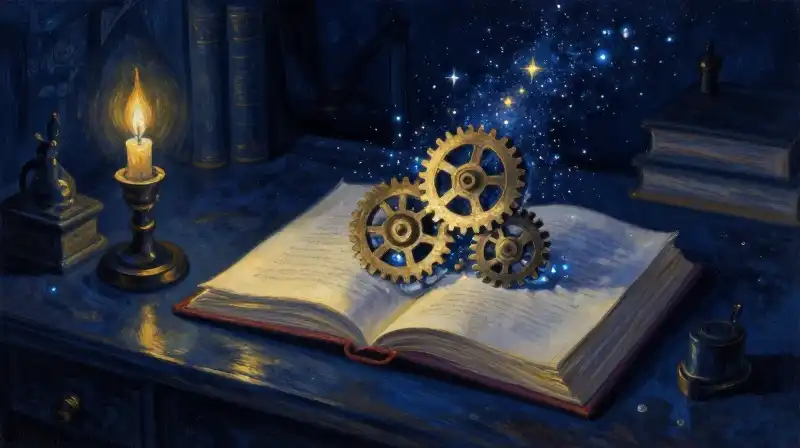
A reader picks up a novel. They encounter a world where humanity has colonized the moons of Jupiter using fusion propulsion. This is an exploration of the “improbable made possible”—a logical extension of our current trajectory into the unknown [3]. A few shelves away, another reader opens a book where a young protagonist discovers they can command the elements through ancient incantations. This is the “impossible made probable”—a leap into the supernatural that operates by rules entirely divorced from our physical reality [3].
The distinction between science fiction and fantasy is one of the most enduring debates in literary circles. While the two genres often share a common love for world-building and escapism, they are driven by fundamentally different engines of causality. One relies on the “might be,” grounding its wonders in the speculative application of scientific laws [1]; the other relies on the “isn’t,” inviting us to accept a reality where magic or myth dictates the terms of existence [1]. To understand the difference is not merely to label a book, but to understand how an author intends to challenge our perception of possibility.
The Mechanics of Possibility
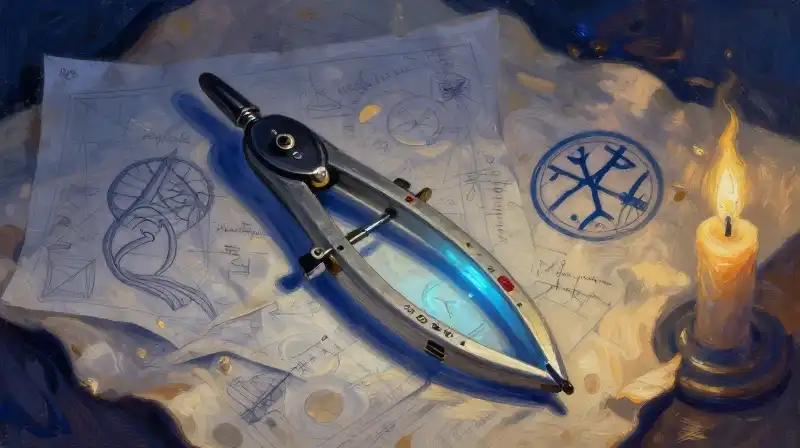
At its core, the divide between sci-fi and fantasy is a question of how the “impossible” is justified within the narrative. Science fiction functions as a mathematical or logical projection of what could occur if our understanding of the universe were pushed to its limits [1, 2]. It uses scientific principles to weigh on the human condition, asking how technology, biology, or physics might reshape our ethics and societies [2].
Fantasy, conversely, frequently centers on the mystical. Rather than asking “how does this work?”, fantasy often asks “what does this mean?” through the lens of values, collective beliefs, and the power of the individual [1]. While science fiction might look at the impact of a new energy source on global geopolitics, fantasy might look at how a single hero’s moral choice can break a curse [1].
Comparing Core Genre Traits
| Feature | Science Fiction | Fantasy |
|---|---|---|
| Foundational Logic | Scientific extrapolation; the “improbable made possible” [3]. | Supernatural elements; the “impossible made probable” [3]. |
| Temporal Direction | Often “looking ahead” toward the future [1]. | Often “looking back” toward myth and legend [1]. |
| Scope of Power | Frequently explores “collective power” and civilization-wide shifts [1]. | Frequently centers on the “power of the individual” [1]. |
| Setting | Maintains a connection to known environments or scientific laws [1]. | Creates self-contained worlds with internal, non-physical rules [1]. |
The Blurred Line: Science Fantasy
The boundaries between these genres are rarely hermetic. In many instances, authors utilize “science fantasy” (or sci-fantasy) to create a hybrid experience. This genre provides a “scientific veneer of realism” to elements that are inherently impossible, allowing the narrative to benefit from the scale of space travel while maintaining the emotional weight of magic [3].
Star Wars stands as the quintessential example of this hybridization. While it takes place in a galaxy far, far away, it is frequently classified as space opera or science fantasy because it features what can be described as “magical wizard samurais in space” [1, 3]. George Lucas himself has characterized the work more as a “fantasy film and a space opera” than a strict work of science fiction [3].
Similarly, the Star Trek franchise often occupies a contested space. While it is rooted in the exploration of the future and technological advancement, certain elements—such as the god-like, near-supernatural capabilities of the character “The Q”—lead some critics to argue it veers into science fantasy [3].
Common Questions of Genre
Can something be both fantasy and sci-fi?
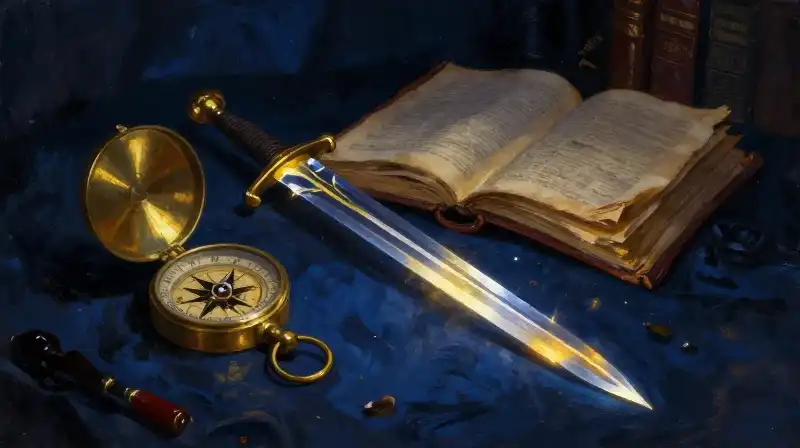
Yes. The existence of the science fantasy genre proves that these categories are not mutually exclusive. A story can use the setting of a spaceship (sci-fi) to tell a tale about a predestined hero wielding a mystical sword (fantasy). Authors like Anne McCaffrey have practiced what is sometimes called “crypto sci-fi,” using fantasy-like elements in works such as Pern to “smuggle in” deeper science fiction themes [1].
At what point does sci-fi become fantasy?
The transition usually occurs when the internal logic of the story shifts from extrapolation to imposition. If a problem is solved through a better understanding of physics or a new technological invention, it remains science fiction. If the problem is solved by an element that ignores the known laws of the universe—such as magic, prophecy, or divine intervention—the work has crossed into fantasy [3].
The Craft of World-Building
For writers, the distinction is a tool for managing reader expectations. How an author handles “unlikely” events determines the genre’s texture.
- Logical Systems: Some authors bridge the gap by applying a scientific attitude to fantasy subjects. Brandon Sanderson is a notable example; he constructs intricate magic systems that, while not based on real-world science, remain strictly logical and well-explained within the story’s context [1]. This provides the reader with a sense of “internal plausibility” even in a magical world.
- Sociological Studies: In science fiction, the “wonder” is often a tool for social commentary. Ray Bradbury’s Fahrenheit 451 utilizes the plausible advancement of technology—such as the predatory “mechanical hound”—to conduct a sociological study of a future shaped by censorship and mass media [2].
- Mythic Archetypes: In fantasy, the “wonder” is often a tool for exploring the human psyche or archetypal journeys. The focus is frequently on the individual’s struggle against overwhelming, often inexplicable, forces [1].
Synthesis: Why the Distinction Matters
While it is tempting to view the debate of sci-fi vs. fantasy as a search for a perfect definition, the real value lies in recognizing what each genre asks of us. Science fiction asks us to look at our current trajectory and imagine the consequences; it is a literature of consequence and causality. Fantasy asks us to look at our timeless myths and imagine the essence of the human spirit; it is a literature of meaning and archetype.
Whether a story uses the “improbable” or the “impossible,” the most successful works are those that respect their own internal rules. Whether through the rigorous logic of a hard sci-fi setting or the deep, consistent magic of a high fantasy realm, the goal is the same: to create a world that, once established, feels undeniably real to the reader.
Sources
- What do you think is the fundamental difference between science fiction and fantasy in terms of how the stories are told? : r/sciencefiction — reddit.com
- Answers to Writing Questions — writingclasses.com
- Science fantasy — en.wikipedia.org
Frequently Asked Questions
Can something be both fantasy and sci-fi?
Yes, the existence of the science fantasy genre proves these categories are not mutually exclusive. A story can combine sci-fi settings, like spaceships, with fantasy elements, such as a hero wielding a mystical sword.
At what point does sci-fi become fantasy?
The transition occurs when the internal logic shifts from extrapolation to imposition. If a problem is solved via physics or technology, it is science fiction, but if it is solved by elements that ignore known laws—like magic or prophecy—it becomes fantasy.
Related Articles