
Literary Rhetorical Devices: A Guide to Tropes, Schemes, and Craft


Introduction
When we read, we often assume we are simply absorbing a story—a sequence of events involving characters and conflict. But beneath the surface of every compelling narrative lies a hidden architecture of influence. A writer does not merely state facts; they shape perception. They might use a sudden shift in sentence structure to unsettle a reader, or a specific choice of imagery to evoke a sense of longing that the characters themselves cannot name. This is the realm of rhetoric: the art of using language to influence an audience, win arguments, or evoke specific emotional and aesthetic responses [2, 3].
To master the study of literature is to move beyond asking “what happened” and begin asking “how was this effect achieved?” This requires distinguishing between the elements that build a world and the elements that steer the reader’s soul. While literary devices like imagery serve to draw a reader into a story, rhetorical devices are specifically engineered to invoke responses or manipulate the tone of a work [2]. By understanding these tools, we move from being passive consumers of text to active participants in the craft of meaning.
Tropes vs. Schemes: The Anatomy of Language
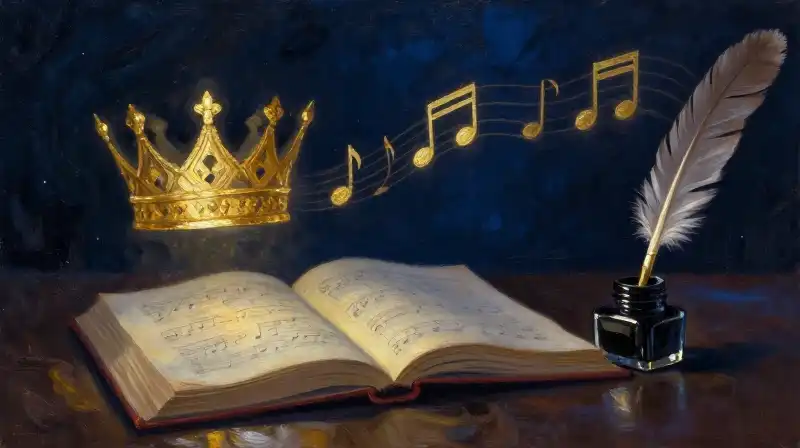
In technical scholarship, the vast array of linguistic tools is often divided into two primary categories: tropes and schemes [3]. This distinction is vital for any reader attempting to deconstruct a text’s persuasive power or aesthetic beauty.
- Tropes: These are “deviations” from ordinary or literal language. A trope takes a word or phrase and turns it away from its dictionary definition to create a new, figurative meaning. When a writer says “the crown issued a decree,” they are using a trope to represent a complex institution through a single object.
- Schemes: Unlike tropes, schemes do not change the meaning of individual words; instead, they play with the expected sequence or order of those words [3]. A scheme is a structural pattern—a way of arranging language to create rhythm, emphasis, or surprise.
A helpful way to visualize this is to think of a building. The tropes are the specialized materials—the stained glass, the marble, the intricate carvings—that change the character of the space. The schemes are the blueprints—the symmetry of the columns or the unexpected curve of a staircase—that dictate how you move through it.
The Four Master Tropes
The American literary theorist Kenneth Burke identified four “master tropes” that form the bedrock of everyday discourse and sophisticated literature [3]. These are the most frequent ways we deviate from literalism to communicate complex truths.
| Trope | Mechanism | Example/Application |
|---|---|---|
| Metaphor | Directly equating two unrelated things to highlight a shared quality. | Comparing a character’s grief to a “heavy shroud” to imply it is both suffocating and dark. |
| Metonymy | Replacing the name of a thing with the name of something closely associated with it. | Using “the pen” to represent writing or “the White House” to represent the US Presidency [3]. |
| Synecdoche | A specific type of metonymy where a part is used to represent the whole (or vice versa). | Referring to a fleet of ships as “fifty sail” [1, 3]. |
| Irony | A disconnect between appearance and reality, or expectation and outcome. | A character’s tragic downfall caused by the very trait they believed would save them. |
The Nuances of Irony
Irony is perhaps the most versatile rhetorical tool, manifesting in three distinct ways that can fundamentally alter a reader’s relationship with the text [3]:
- Verbal Irony: When a speaker says the opposite of what they mean, often manifesting as sarcasm.
- Situational Irony: When an event unfolds in a way that is diametrically opposed to what was expected. A classic example is found in John Steinbeck’s The Pearl, where the pursuit of wealth intended to secure a future leads to total devastation.
- Dramatic Irony: When the audience possesses crucial knowledge that the characters lack. This creates tension and empathy, as seen in the tragic inevitability of Shakespeare’s Romeo and Juliet, or the psychological dread in Edgar Allan Poe’s “The Tell-Tale Heart.”
Schemes and the Rhythm of Emphasis

If tropes provide the color, schemes provide the heartbeat. Writers use repetition and structural inversion to ensure certain ideas resonate more deeply than others.
Repetition and Flow
Repetition is not merely redundant; it is a tool for building momentum. Two common forms include:
- Anaphora: The repetition of a word or phrase at the beginning of successive clauses. This creates a sense of inevitability and grandeur, famously utilized by Martin Luther King Jr. in his “I Have a Dream” speech [1].
- Epistrophe: The repetition of words at the end of successive clauses, which can provide a sense of finality or rhythmic closure [1, 2].
Sophisticated Wordplay
Advanced prose often employs complex schemes to challenge the reader’s intellect or create witty, memorable lines:
- Chiasmus: An inverted relationship between parallel phrases, often creating a “criss-cross” effect (e.g., “Ask not what your country can do for you; ask what you can do for your country”) [1, 3].
- Zeugma: A single word (usually a verb or adjective) modifies two or more words in different senses, often blending the literal with the figurative. A classic example is: “She blew my nose and then she blew my mind” [1, 3].
The Craft of Diction and Understatement
Beyond large-scale structures, the smallest unit of rhetoric is diction: the writer’s choice of words. Every word carries both a denotation (its literal dictionary definition) and a connotation (its emotional or social associations) [3]. A writer who chooses “strolled” instead of “marched” is using diction to establish a specific tone and pace for the narrator [3].
Sometimes, the most powerful rhetorical move is to say less. Understatement can be achieved through:
- Litotes: Expressing an affirmative by negating its contrary. Saying someone is “not a bad singer” to suggest they are actually quite talented [1, 2].
- Meiosis: Using euphemism or belittlement to minimize the significance of something, often to create a sense of detachment or irony [1, 2].
Why Rhetoric Matters to the Reader
Understanding these devices is not an exercise in labeling; it is an exercise in seeing. When we recognize a scheme like anaphora, we understand why a speech moved us to tears. When we spot a trope like synecdoche, we see how an author uses a fragment of a world to make a vast setting feel intimate.
Classical rhetoricians categorized these operations into addition, omission, transposition, and permutation [3]. In every instance, the goal is the same: to move beyond the literal and touch the profound. By studying these tools, we gain the ability to decode the intentions of authors and, ultimately, to better understand the subtle ways language shapes our reality.
Sources
- 31 Common Rhetorical Devices and Examples | Merriam-Webster — merriam-webster.com
- The Top 41 Rhetorical Devices That Will Make Your Words Memorable — thesaurus.com
- Literary device — en.wikipedia.org
Related Articles