Historical Fiction Book Club Picks: Themes, Tropes & Trends

Introduction
A book club selection often serves as a bridge between the personal and the political, a way for readers to inhabit a world that is simultaneously unrecognizable and deeply familiar. In historical fiction, this bridge is built through the careful reconstruction of lost eras, using the specificities of the past to illuminate the perennial struggles of the present. Whether it is the political intrigue of Louis XIV’s Versailles or the chaotic aftermath of a ruined post-war Japanese city, historical narratives provide the high-stakes backdrops necessary to explore universal human themes like survival, paranoia, and the weight of conscience [1].
For those seeking historical fiction book club picks, the appeal lies not just in the “costume drama” aspect of the genre, but in the sophisticated literary techniques authors use to make history feel alive. Modern historical fiction has moved far beyond simple period reenactment; it now employs speculative premises, dual timelines, and subversive retellings to challenge our understanding of what “actually happened” and whose voices were silenced by the official record [1].
Core Themes Driving Modern Historical Fiction
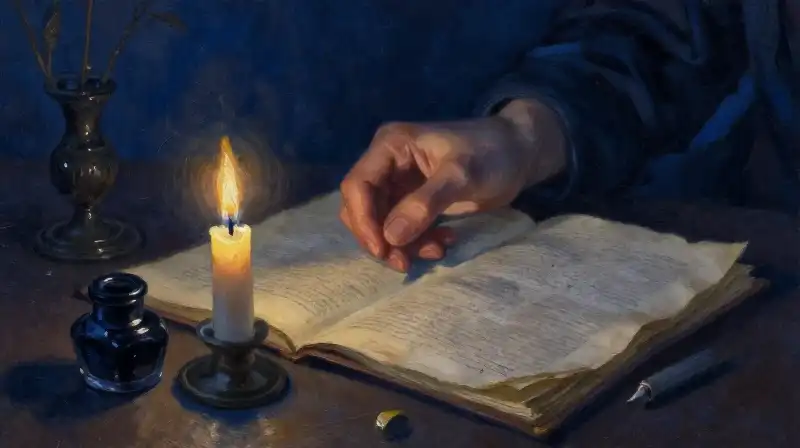
When selecting books for a reading group, looking for specific thematic pillars can help spark deeper discussion. The most successful historical novels often center on the tension between the individual and the institution.
Female Agency and Identity
A recurring movement in contemporary historical fiction is the reclamation of female agency within restrictive social or political structures. Rather than presenting women as mere bystanders to historical events, authors are increasingly focusing on their intellectual and political evolution. For example, Ann Y. K. Choi’s All Things Under the Moon traces a woman’s journey in 1920s occupied Korea, depicting her transition from a rural villager to a dedicated advocate for literacy [1]. This focus on the intersection of private domesticity and public upheaval allows readers to explore how gendered identities are forged in the heat of revolution or social change [1].
The Legacy of Memory and Secret Histories
Many readers are drawn to stories that investigate how the past haunts the present. This is often achieved through the use of dual timelines, which allow an author to examine how family secrets or social movements echo across generations. Brooke Lea Foster’s Our Last Vineyard Summer utilizes this technique, moving between 1965 and 1978 to explore the enduring legacy of the women’s movement [1]. By bridging these eras, the narrative examines how personal evolution is inextricably linked to broader social shifts.
Subversive Myth and Reimagined Narratives
A contemporary subset of the genre involves the feminist and queer reimagining of classical myths. These works use the scaffolding of ancient stories to critique modern power dynamics. Caro De Robertis’s The Palace of Eros is a notable example, reframing the myth of Psyche and Eros through a lens that includes a nonbinary deity, thereby challenging traditional heteronormative interpretations of classical lore [1].
Literary Techniques: How Authors Build Tension
To move a book from “period piece” to “page-turner,” authors employ specific craft techniques that manipulate pacing and perspective. Understanding these can help book clubs discuss not just what happened in a story, but how the author shaped the reader’s experience.
- Speculative Historical Premises: Some authors use “what if” scenarios to heighten tension by altering a known historical fact. Samuel Hawley’s Daikon posits a world where three atomic bombs—rather than two—were delivered to the Pacific theater during World War II [1]. This creates a sense of profound instability that drives the narrative forward.
- Detective Pacing: While historical fiction is often associated with sweeping prose, some works adopt the rhythmic tension of a mystery. Daikon has been described by The Wall Street Journal as unfolding like a detective novel, focusing on the granular exploration of duty, anger, and conscience [1].
- The Story Within a Story: This technique allows a novel to comment on the act of storytelling itself. Clare Pollard’s The Modern Fairies utilizes a Parisian salon where intellectuals perform contes de fées (fairy tales) to explore the blurring lines between a character’s reality and the tales they tell [1]. This adds a layer of metafictional complexity that is excellent for analytical discussion.
Comparing Historical Fiction Styles
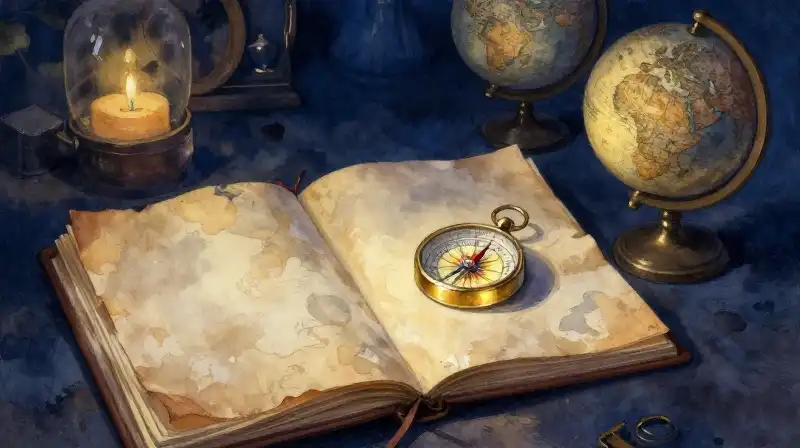
Not all historical fiction serves the same purpose. Depending on the interest of the book club, a group might prefer a character-driven literary approach or a high-concept speculative approach.
| Feature | Character-Driven/Literary | Speculative/High-Concept |
|---|---|---|
| Primary Focus | Internal psychological growth and social nuances [1]. | The “what if” impact on the course of history [1]. |
| Narrative Goal | To humanize the past and explore identity [1]. | To create tension through historical deviation [1]. |
| Example Mode | A journey from a village to a political network [1]. | An alternate World War II scenario [1]. |
Understanding the Market: Classics and Republications
For those searching for “best historical fiction books,” it is worth noting that the genre is not solely composed of new releases. There is a significant movement toward the republication of “classic” historical novels that have maintained dedicated fanbases despite being out of print [2]. Publishers like Chicago Review Press often seek out these titles to bring them back to modern readers [2].
When these older works are reintroduced, they are frequently given new context—such as updated covers or new forewords—to bridge the gap between the original era of publication and the contemporary reader [2]. This process ensures that works like Kathleen Winsor’s Forever Amber remain accessible and relevant to new generations of book lovers [2].
How to Choose Your Next Historical Fiction Read
If you are looking for a specific type of experience, consider these guiding questions for your next selection:
- Do you want to explore social change? Look for books focusing on literacy, suffrage, or revolutionary networks (e.g., Choi’s work) [1].
- Do you prefer mystery and suspense? Seek out works with “detective” pacing or speculative premises (e.g., Hawley’s work) [1].
- Do you want to deconstruct tradition? Choose subversive myth retellings (e.g., De Robertis’s work) [1].
- Do you want a multi-generational saga? Look for dual timelines that connect different decades (e.g., Foster’s work) [1].
Synthesis: Why Historical Fiction Matters
Historical fiction endures because it provides more than mere escapism. By grounding universal struggles—such as the search for identity, the burden of secrets, or the fight for agency—in a concrete, documented past, authors allow us to view our own complexities through a different lens. Whether through the “artfully composed” narratives of literary salon dramas [1] or the “pulse-pounding” tension of speculative war stories [1], the genre challenges us to recognize that while the settings change, the fundamental questions of human conscience and survival remain constant.
Sources
- Historical Fiction for Book Clubs | Simon & Schuster — simonandschuster.com
- Historical Fiction Book Club — chicagoreviewpress.com
Related Articles