New Historical Fiction Books: 2026 Trends and Must-Read Titles

The Expanding Map of the Past
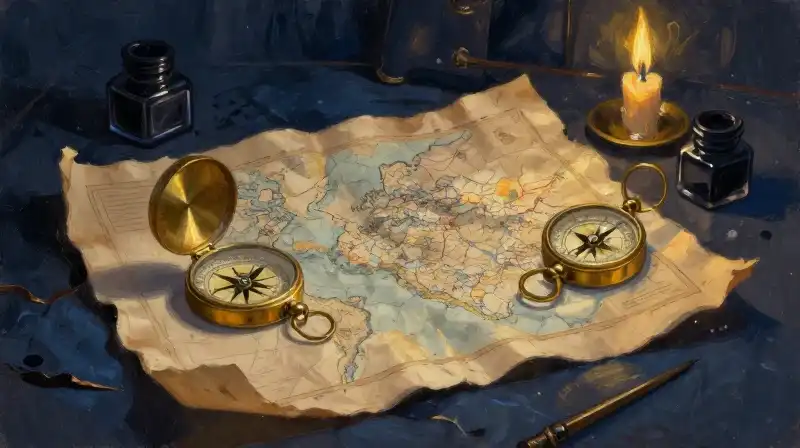
For decades, the historical fiction genre has often functioned as a tour of the well-trodden: the battlefields of Napoleonic Europe, the gilded halls of the Regency era, or the familiar trenches of the Great War. However, the literary horizon for 2026 suggests a profound shift in how authors approach the concept of “history.” Rather than inhabiting the grand, sweeping movements of empires, the upcoming cohort of novels is turning its gaze toward the “nooks and crannies”—those quieter, less documented pockets of time where the personal meets the political in unexpected ways [1].
This movement is not merely a change in setting, but a change in lens. We are seeing a move away from the “Great Man” theory of history toward a more granular social history, where the experiences of marginalized voices, suppressed social programs, and the domestic resistance of women take center stage [1]. As readers look for what historical fiction should I read next, the answer in 2026 lies in the peripheries: the isolated corners of Tibet, the forgotten exiles of Nova Scotia, and the unrecorded lives of women navigating restrictive societal structures [1].
Structural Devices: Dual Timelines and Generational Echoes
To navigate these complex layers of time, authors are increasingly employing sophisticated structural devices that bridge the gap between the historical event and its modern resonance. The 2026 landscape is characterized by two primary frameworks: the dual-timeline narrative and the multi-generational “sister story.”
The Dual-Timeline Bridge
The dual-timeline structure allows a novel to investigate how a historical mystery or artifact continues to haunt the present. This technique prevents the story from feeling like a mere museum piece, instead making the past a living, breathing influence on contemporary identity. A prime example is Louise Fein’s Book of Forbidden Words, which uses the enigmatic Voynich manuscript to weave a connection between 1552 Paris and 1952 New York [1]. By oscillating between these eras, the narrative explores how knowledge and censorship transcend centuries.
Multi-Generational Frameworks
While dual timelines focus on two points in time, multi-generational frameworks track the slow, transformative arc of identity across decades or even centuries. This allows for a study of “social inheritance”—the ways trauma, resilience, and culture are passed down through lineages.
- Gabriella Saab’s The Star Society: This work utilizes a sweeping scope to connect the urgent, high-stakes tension of the Dutch Resistance to the complex, curated identities of post-war Hollywood [1].
- Nikesha Elise Williams’ The Seven Daughters of Dupree: A profound exploration of matrilineal history, tracking seven generations of women within the American South to illustrate the evolving nature of identity and agency [1].
Thematic Shifts: Agency, Identity, and the Unseen
The thematic preoccupation of 2026’s most anticipated titles reveals a genre deeply interested in the friction between individual willpower and systemic constraint. This is manifest in several key areas:
Female Resistance and Professional Struggle
A recurring motif in the upcoming season is the exploration of female agency within tightly controlled environments. This is not always presented as grand rebellion, but often as the quiet, necessary work of survival and professional assertion. Jennifer Chevalier’s The Winter Witch examines the lives of the filles du roi in 17th-century Quebec, focusing on how these women carved out lives in a rugged, restrictive new world [1]. Similarly, Audrey Blake’s All In Her Hands provides a window into the medical history of 1849 England, following a woman’s grueling journey to become the nation’s first female surgeon [1].
Lived Experiences of the Marginalized
The genre is moving toward a more rigorous interrogation of the lived experiences of those often left in the margins of official histories. This includes:
- Forced Migration and Diaspora: Eleanor Shearer’s Fireflies in Winter depicts the 1796 exile of Jamaicans to Nova Scotia, centering the narrative on the displacement and resilience of a community in transit [1].
- The Impact of Conflict: Sadeqa Johnson’s Keeper of Lost Children explores the precarious existence of mixed-race children in post-WWII Germany, while Clay Cane’s Burn Down Master’s House examines the brutal realities of enslaved people during the American Civil War [1].
- Political Isolation: Deepa Anappara’s The Last of Earth utilizes the isolation of 1869 Tibet to examine the intersection of personal identity and global political upheaval [1].
The Blurring of Boundaries: Folklore and Social History
The traditional boundaries between historical fiction, fantasy, and biography are also beginning to dissolve. We are seeing a rise in works that blend strict historical accuracy with elements of myth, or that use the tools of biography to reconstruct the lives of cultural icons.
| Approach | Definition | Representative 2026 Works |
|---|---|---|
| Historical Folklore | Blending documented history with local legends or mythic elements. | The Sea Child by Linda Wilgus (Cornish merman legends in the 1800s) [1]; Fire Sword & Sea by Vanessa Riley (the legendary pirate Jacquotte Delahaye) [1]. |
| Biographical Fiction | Using a historical figure’s life as a framework to explore cultural shifts. | With Love From Harlem by ReShonda Tate (the rise of jazz performer Hazel Scott) [1]. |
| Social History Focus | Highlighting specific, often suppressed, government or social programs. | Women of a Promiscuous Nature by Donna Everhart (the 1940s “American Plan” in North Carolina) [1]. |
Why the Shift Matters
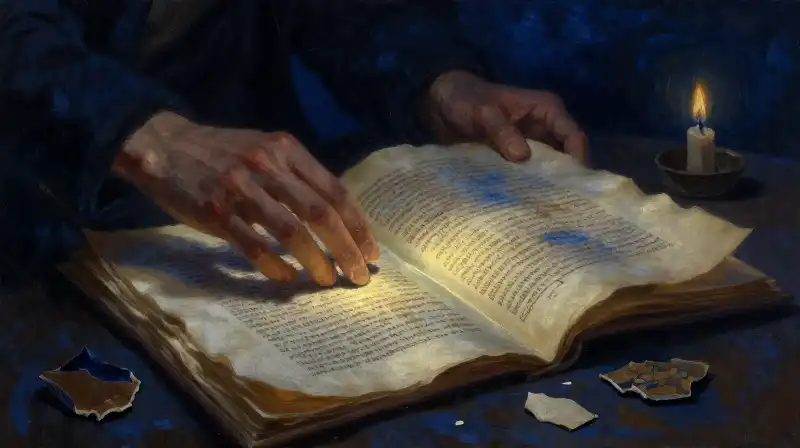
The trends emerging in 2026 suggest that historical fiction is moving toward a more “restorative” purpose. By focusing on the “nooks and crannies” of the past, authors are not just providing escapism; they are performing an act of literary archaeology. They are unearthing the voices of the displaced, the professional pioneers, and the cultural dissidents who shaped the world as we know it, often without receiving credit in the history books.
Whether through the lens of a photographer deconstructing a Hollywood icon in Lynn Cullen’s When We Were Brilliant, or through the lens of a researcher decoding a medieval manuscript, these works demand that we see the past not as a static sequence of dates, but as a complex, contested, and deeply human tapestry [1]. For the reader, this means that the “best historical fiction books 2026” will likely be those that challenge our assumptions about who makes history and how much of it remains to be told.
Sources
- New & Upcoming Historical Fiction Books: A 2026 Reading Guide — perpetualpageturner.com
Frequently Asked Questions
What historical fiction should I read next?
According to the article, the answer for 2026 lies in the peripheries, such as the isolated corners of Tibet, the forgotten exiles of Nova Scotia, and the unrecorded lives of women. Readers may also find interest in works exploring social history, marginalized voices, and dual-timeline narratives.
Related Articles