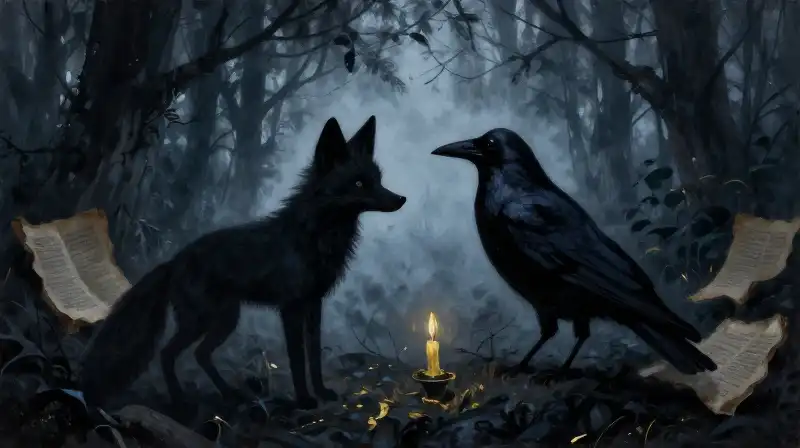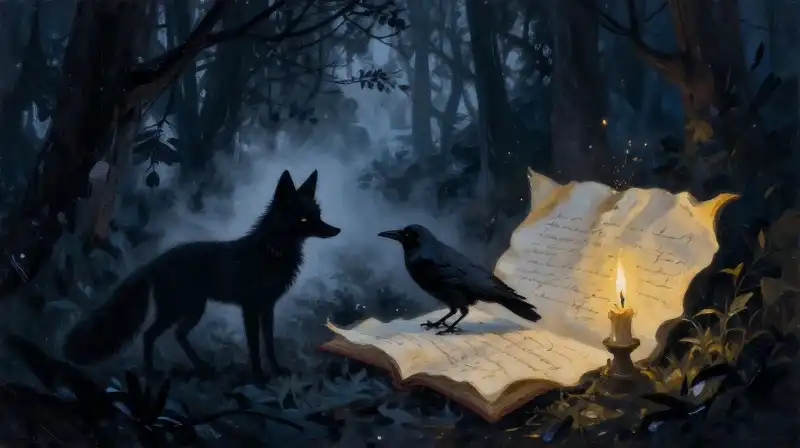
Aesops The Fox and the Crow: Themes, Variations, and Morals

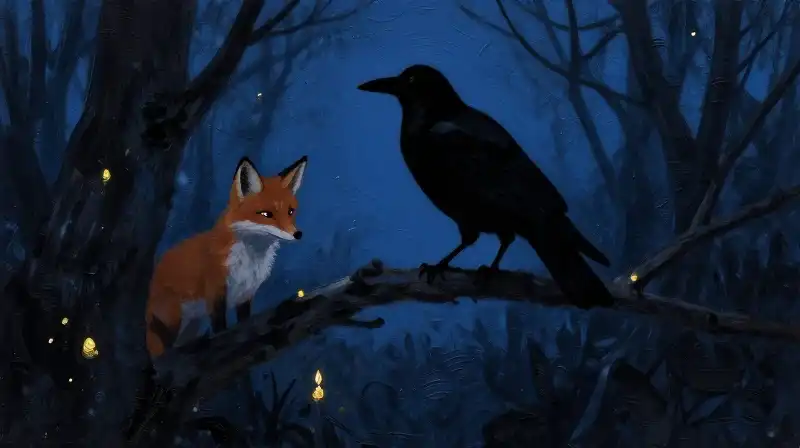
The Anatomy of a Deception
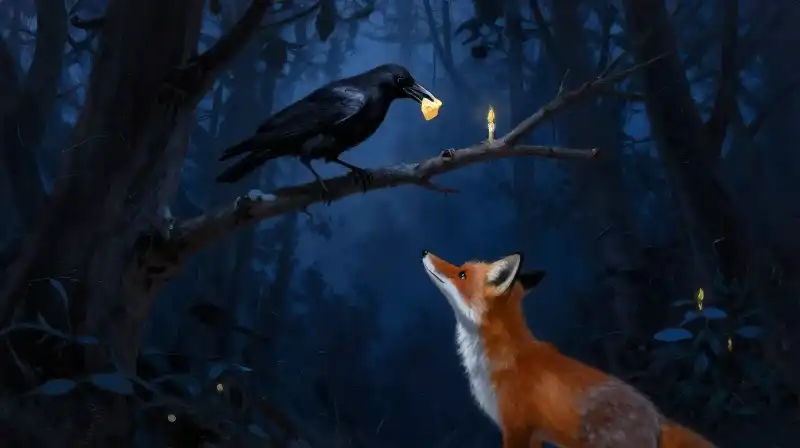
In the canopy of a tree, a Crow sits perched, clutching a prize—usually a piece of cheese or a morsel of meat [1, 2]. Below, a Fox watches, not with hunger alone, but with a calculated intent. He does not attack; he does not climb. Instead, he speaks. He weaves a tapestry of compliments, praising the luster of the bird’s feathers and the perceived grace of her form [2]. This is the quintessential moment of Aesop’s “The Fox and the Crow,” a fable that has functioned for centuries as a psychological blueprint for the mechanics of flattery.
While often relegated to the nursery as a simple moral lesson, the fable is a sophisticated study of vulnerability and the predatory use of language. It explores how external validation can override internal reason, transforming a creature of instinct into a victim of its own vanity. To understand this story is to understand the “wily stratagem” that defines one of literature’s most enduring archetypes: the deceiver who uses truth—or the semblance of it—to achieve a selfish end [2].
Structural Variations: From Cheese to Meat
Though the core engine of the plot remains constant, the specific details of the setting and the object of desire have shifted through various historical iterations. These variations reflect the changing contexts of the audiences for whom the stories were told.
- The Prize: While the most ubiquitous version features a Crow with cheese, historical variations describe the bird stealing meat from a cottage window or a domestic table [2].
- The Protagonist: In some traditional literary circles, the Fox is elevated to “Master Reynard,” a name steeped in folklore that lends the character a more sophisticated, albeit rogue-like, persona [2].
- The Stylistic Approach: The delivery of the tale varies wildly across the literary canon. Some versions utilize the rhythmic, poetic verse of Jefferys Taylor, while others follow the more structured, pedagogical prose found in Library of Congress collections [1, 2].
The Mechanics of Flattery and Vanity
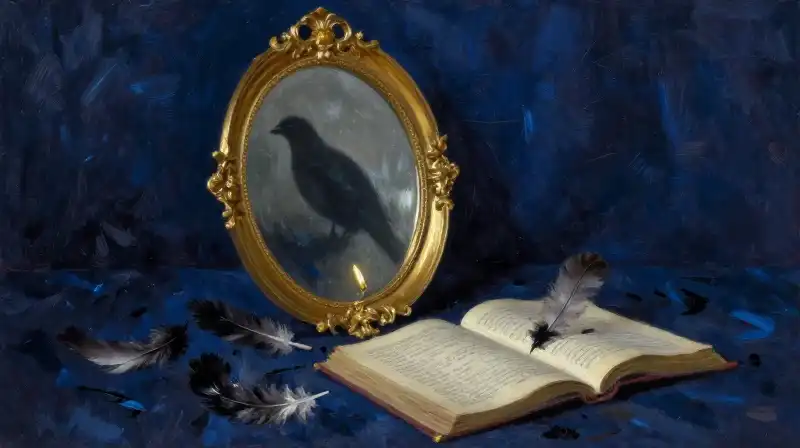
The fable operates through a specific sequence of psychological manipulation. The Fox does not simply lie; he targets the Crow’s ego. By complimenting her “delicate white” plumes or her physical grace, he creates a cognitive dissonance in the Crow: she is presented with a version of herself that is so perfect she feels compelled to prove it [2].
The climax of the story is a masterclass in narrative timing. The Fox suggests that if her appearance is so magnificent, her voice must surely be equally divine [2]. This specific prompt is the trap. The moment the Crow attempts to “caw vigorously” to demonstrate her vocal prowess, she abandons her physical hold on reality—and her meal [1, 2].
Beyond the Moral: A Warning to the Self-Aware
Most readers recognize the primary moral: “Do not trust flatterers” [2]. However, deeper literary analysis suggests a more nuanced, and perhaps more unsettling, interpretation. C. Whittingham, writing in 1814, argued that the fable serves as a warning that even those who believe themselves immune to vanity are susceptible to its “ambuscade” [2].
This reading suggests the fable isn’t just about the “bad” person (the Fox) or the “foolish” person (the Crow), but about the universal fragility of human judgment. Whittingham proposes that the only defense against such manipulation is a rigorous, impartial self-examination of one’s own true qualities [2]. In this light, the Crow’s failure is not just a lack of wits, but a failure of self-knowledge.
Visual Identity and the Craft of the Fable
The way we “see” this fable is largely due to the influence of great illustrators. Most notably, Randolph Caldecott’s 1883 engravings helped cement the visual identity of the characters in the collective imagination [2]. These artistic interpretations transform the text from a mere “maxim in the schools” into a vivid, theatrical event [2].
| Element | Function in the Fable |
|---|---|
| The Fox | The catalyst of action; represents the predatory use of intellect and social manipulation. |
| The Crow | The object of deception; represents the vulnerability of ego and the cost of vanity. |
| The Song | The turning point; the physical action that facilitates the loss of the prize. |
| The Moral | The pedagogical takeaway; intended to serve as a social warning or a “maxim” for character building. |
Why the Fable Endures
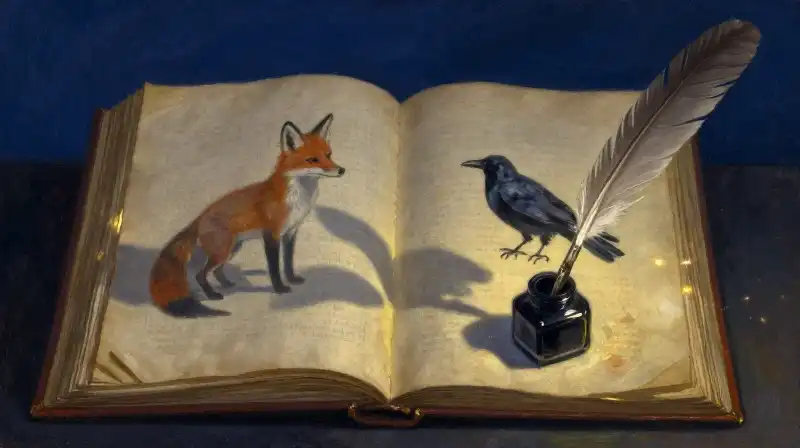
The enduring power of “The Fox and the Crow” lies in its economy. In a few short beats, it captures a fundamental truth about human interaction: words can be weapons. It remains a staple of literature because it does not just tell us that flattery is dangerous; it demonstrates the precise mechanism of how it works. By stripping away the complexities of human social maneuvering and reducing them to the encounter between two animals, Aesop provides a clear, unadorned mirror for the reader to examine their own susceptibility to praise. It is a study of the gap between who we are and who we wish to be perceived as, and the high price that gap can sometimes demand.
Sources
- Library of Congress Aesop Fables — read.gov
- The Fox and The Crow — fablesofaesop.com
Related Articles